What really happens to skin after thirty
Skin does not age suddenly. It is not a moment or a crisis. It is a long-lasting, silent metabolic process that begins long before anyone notices its first signs in the mirror. Collagen is central to this story — or rather, to what gradually stops working properly with it.
Fibroblasts are cells in the dermis. Their main role is collagen and elastin production. They work throughout life, but their efficiency declines. From around the age of twenty-five, the body begins to produce slightly less collagen each year. During the first years, the difference cannot be seen with the naked eye. Yet tissue gradually loses density. It becomes thinner and less elastic. Skin does not become dramatically dry. It simply regenerates more slowly and recovers less easily after stress.
- Collagen and elastin — the framework. Their network makes skin elastic and resistant to stretching. With age, there is less of it and it becomes weaker. This leads to a loss of firmness and density, even before wrinkles appear.
- Hyaluronic acid — internal water. Naturally produced by the skin, it binds many times its own weight in water. Its level in the skin declines with age. This is one of the first reasons why the face can begin to look “tired”, even after a good night’s sleep.
- Fibroblasts — the skin’s factories. The older the fibroblast, the slower it works. They are responsible for regeneration and building new collagen. When they slow down, the whole production chain shortens. Skin boosters work partly at this stage — stimulating cells into activity.
- The skin barrier — the first line of defence. When it weakens, skin loses water faster, becomes more reactive and tolerates environmental stress less well. This is an ongoing process — but it can genuinely be slowed down.
What skin boosters are — and what they are not
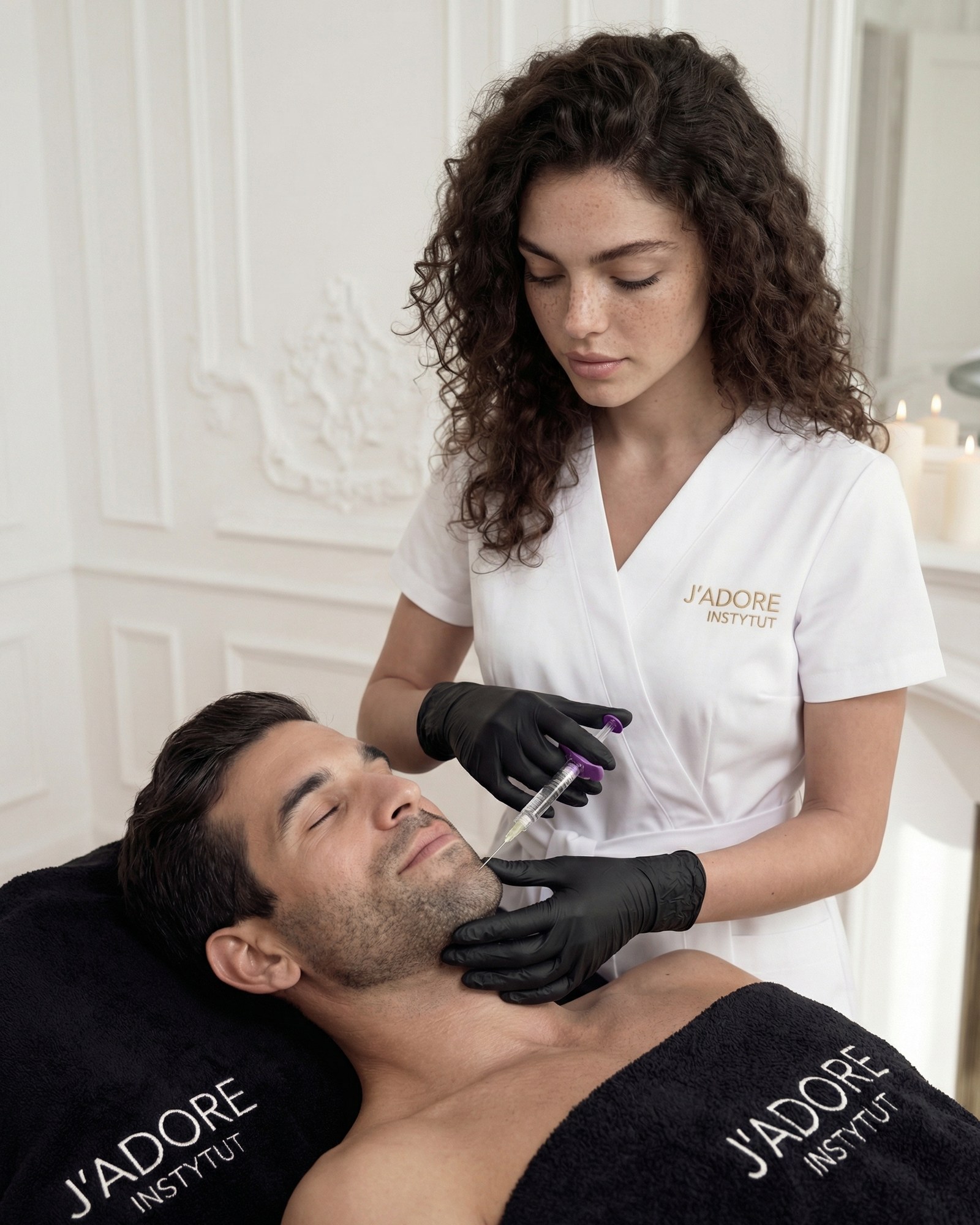
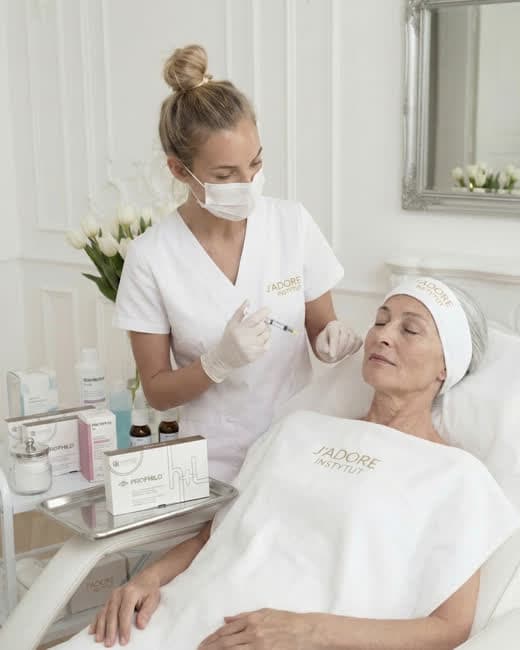
Skin boosters is an umbrella term for preparations delivered into the dermis. Their purpose is to replenish or stimulate what declines with age: hydration, collagen, firmness and density. They are not a single technology. The term includes preparations with different compositions and mechanisms of action. Yet they share one feature: they work from within the tissue, not from the outside.
Skin booster / biostimulator
works deep within the dermis
- Delivered into the dermis through micro-injections
- Replenishes hyaluronic acid or stimulates fibroblasts to produce collagen
- Purpose: tissue density, hydration, quality and firmness
- The result develops gradually over several weeks
- Preventive and corrective — works on skin before and after problems arise
Hydrating cream / serum
works on the surface of the epidermis
- Applied to the skin — penetration into deeper layers is very limited
- Hydrates the surface and supports the skin barrier
- An important element of skincare — it does not replace support from within
- Works while it remains on the skin — the result does not build within the tissue
This difference is fundamental and often misunderstood. A skin booster is not a “stronger cream”. It works in an entirely different way. A cream works on the outermost, thinnest layer, and does this well. A skin booster works where cream cannot physically reach. They are not competitors — they are two different levels of the same structure.
When it is truly worth starting — and why thirty is not too early
The most common question about skin boosters is: “is it not too early?”. It is a well-intentioned question — nobody wants to do something unnecessary. Yet its logic is reversed. The right question is different: is it worth waiting until there is something to correct?
Prevention in aesthetic dermatology works differently from most medical interventions. The earlier you start — and the better your skin quality at baseline — the more you can do for the future. Skin supported regularly retains for years the quality that neglected skin will later try to rebuild. And rebuilding is more difficult, more expensive and slower than maintenance. It is a simple equation used in many other areas of healthcare, yet still underestimated in Aesthetic Medicine.
- Age 25–30 — early prevention. Skin still “manages on its own”, but collagen loss is already underway. This is the best time to build a habit of regular skin support, when results will accumulate most effectively over time.
- Age 30–40 — prevention proper. Visible signs may begin to appear: skin is less elastic, thinner than a few years ago and lacks radiance. Skin boosters address specific deficiencies while building quality for the next decade.
- Age 40+ — maintenance and regeneration. Tissue needs more intensive support. Results remain achievable, but require consistency. Well-managed skin in this group may look better than the skin of someone in their twenties who has neglected it for years.
How biostimulators work — beyond hydration
Within the broad family of skin boosters, biostimulators have a special place. These preparations do more than hydrate the skin. Rather than delivering water or volume, biostimulators stimulate the skin to work on its own. They encourage fibroblasts to produce new collagen, elastin and hyaluronic acid. This is a fundamental difference. Instead of replacing what has been lost, they help the skin rebuild it itself.
The mechanism is elegantly simple. A preparation delivered into the dermis comes into contact with fibroblasts and triggers a cascade of cellular signals that stimulate collagen synthesis. The skin responds with increased cellular activity. This is why results are gradual and natural. It is not external filling, but internal regeneration. The skin does the work itself — the treatment encourages it to do so.
What to do with this — where to start
Once you understand the mechanism, it is easier to see why there is no single universal skin booster protocol for everyone. Skin at thirty needs something different from skin at forty-five. Dehydrated skin responds differently from skin losing firmness. Skin with a history of intense sun exposure requires a different approach from skin shaped mainly by a genetic “collagen scenario”.
This is why consultation is always a good starting point. Not to “sell a treatment”, but to understand the stage your skin is at and what genuinely makes sense at that moment. Sometimes the answer will be a biostimulator. Sometimes it will be combined with a hydrating skin booster. At other times, something entirely different may be the priority. An article can explain the mechanism. Assessing your individual skin requires an individual assessment.
Below, we have gathered treatments from the skin booster and biostimulator categories. They are grouped by the main concern they address. This is not a complete list of all options. It is a starting point for discussing what may be appropriate for you.