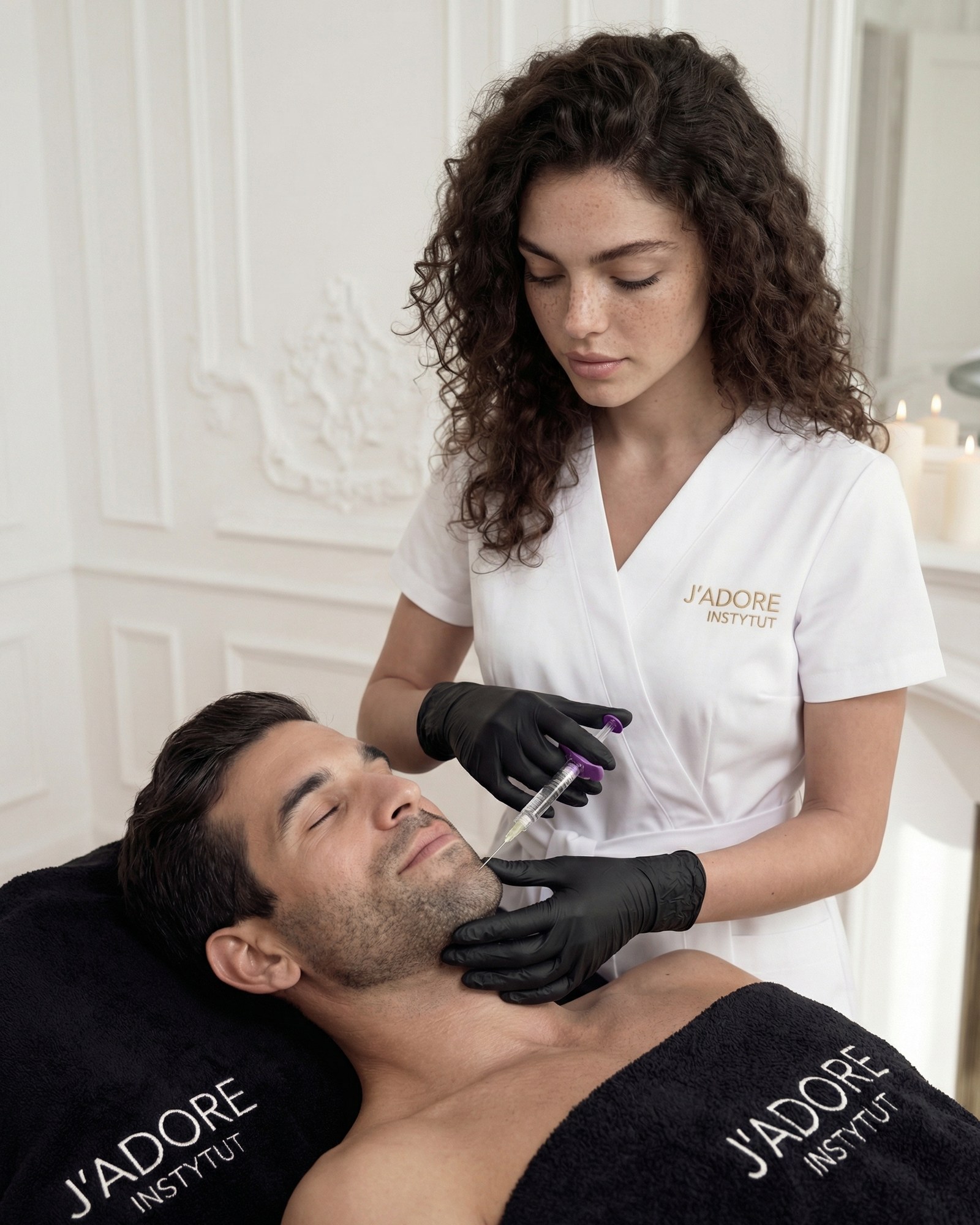

Where the problem comes from — what's really happening to your skin
Before we look at the preparations, it helps to understand what precedes the decision to have biostimulation. Skin doesn't age suddenly — it's a slow, multi-year process that starts long before you notice it. Three proteins play a key role: collagen, elastin and hyaluronic acid. The first two build the skin's scaffolding and give it its bounce. The third acts as a natural "water buffer" — it binds water and maintains volume.
Production of these components starts to gradually decline from around the age of twenty-five. The pace depends on genetics, lifestyle, sun exposure and many other factors. You only notice the effects years later: skin loses hydration and elasticity, your face looks tired even after a good night's sleep, and the first lines appear even without smiling.
Biostimulators and boosters address exactly this decline. Some deliver missing components directly (such as hyaluronic acid or amino acids). Others stimulate skin cells to produce their own collagen and elastin. Some do both at once. This distinction matters — it affects when you'll see results, how long they last, and who's the best candidate.
How the available preparations differ
Instead of treating Sunekos, Jalupro, skin biostimulator and Sculptra as variants of the same treatment, it helps to see them as different tools in the same workshop. Each one was designed for a different need, a different depth of action and a different patient profile.
Amino acid boosters (Sunekos, Jalupro)
Nourishment and regeneration from within
- Blends of hyaluronic acid with amino acids — the "building blocks" for collagen and elastin
- Stimulate fibroblasts (skin cells) to produce their own proteins
- Results build gradually over several weeks after the series
- Suit tired, lax skin with fine lines, among other concerns
Skin biostimulator
Bioremodelling — intensive hydration plus firmness
- An exceptionally high concentration of pure hyaluronic acid, with no cross-linking
- Spreads through the tissue and hydrates intensively from within the skin
- Stimulates collagen and elastin production — a skin "plumped from within" effect
- Given at a few points on the face — a quick protocol, usually 2 sessions a month apart
Sculptra
Collagen biostimulator — long-term rebuilding
- Contains poly-L-lactic acid — a collagen biostimulator, not hyaluronic acid
- Works by stimulating natural collagen production at the injection site
- Results build up over several months and last for several years
- Suited to visible volume loss, sagging contours and deeper changes
The key practical difference: boosters and skin biostimulator focus mainly on improving skin quality and hydration — ideal when skin is "depleted", rough or lacking firmness, but the face hasn't yet clearly lost volume. Sculptra addresses a deeper, more advanced stage of loss — when the face is visibly sagging, the contour has changed shape, and the cheeks have lost their filled-out form. Both categories can be used alongside each other or sequentially — the doctor decides based on assessment.
How to approach biostimulation — step by step
Rather than choosing a preparation because you saw it advertised, or because "a friend had skin biostimulator and it looked great", work through this plan. Every step matters — skipping any of them usually ends in disappointment, or, at best, money spent on a course of treatment that answered a different question.
- 01
Step 1 — Understand what you're looking for
Start with yourself, not with the name of a preparation. Is your skin dry, dull, lacking radiance — are you looking for hydration and a "glow effect"? Do you notice your face has lost fullness, that your contour has changed shape, that your skin is "sagging"? Are you concerned about fine lines? Each answer points in a different direction.
- 02
Step 2 — Medical consultation (don't skip this)
Biostimulators and boosters are injections — performed by a doctor. Before any treatment, you should have a consultation where the doctor assesses your skin condition, identifies the stage of ageing, takes a health history and proposes a specific protocol. Not three options to choose from — a specific plan for you.
- 03
Step 3 — Understand the timeline and be patient
Biostimulators don't work like filters on your phone. Sunekos and Jalupro are given as a series of several sessions, a week or two apart. Skin biostimulator — usually two sessions a month apart. Sculptra — several sessions a few weeks apart, with results building over months. Before committing to a course, make sure you understand its schedule and a realistic timeframe for results.
- 04
Step 4 — One preparation at a time (to start)
It's tempting to combine everything at once — a bit of skin biostimulator, a bit of Sunekos, maybe something else too. For your first course, it's better to start with one, well-chosen preparation, see how your skin responds, and assess the results. An experienced aesthetic doctor may later suggest a protocol combining preparations — but deliberately, with a plan, not because "more equals better".
- 05
Step 5 — Home care as the foundation
No treatment replaces the basics: sun protection (daily, all year round), hydration and regular skincare. Biostimulators work more effectively, and their results last longer, when your skin is well cared for day to day. This isn't optional — it's a condition.
Pay particular attention to steps two and three. The most common mistakes are deciding without a consultation and expecting results after the first session. Biostimulation is an investment spread over time — and that's precisely why it works long-term.
What NOT to do — biostimulation pitfalls
The aesthetic treatment market is full of promises, and the cost of getting it wrong — financially and for your skin — can be high. Here's a list of mistakes worth avoiding.
When it's worth seeing a specialist
Biostimulation isn't only for people of a certain age. It covers a broad range of needs, and can start quite early — you don't need to wait for a clear problem to appear. Here are situations where a consultation makes sense now, not in a few years.
- Your skin looks "tired" day to day — dull, lacking radiance, despite good sleep and hydration.
- You notice your skin has lost bounce — it takes longer to spring back after being pressed, and feels "less dense".
- Your facial contour has changed — you notice slight sagging, a change in cheek shape, deeper nasolabial folds.
- Fine lines are starting to appear, especially under the eyes, on the neck, on the décolletage.
- You're over 35 and have never had any preventive treatment — this is a good time to find out where you stand, before deeper changes appear.
- You want to understand what options you have now — no pressure, no decision at the first visit, just to know.
A consultation with an aesthetic doctor starts with a skin assessment and a conversation. Not every visit has to end in a treatment — sometimes it's enough to understand what stage you're at and what's worth doing in a year's time. Knowing your own skin is a result of the visit too.