Where all the enthusiasm for home LED devices comes from
Photobiomodulation therapy — stimulating tissue with light at specific wavelengths — has solid scientific grounding in trichology. Studies suggest the right light can support hair follicle activity, improve scalp microcirculation and influence the hair growth phase. This isn't homeopathy or an empty promise — it's a mechanism that genuinely exists.
The problem starts when clinical results get attributed to any device that emits light. The home gadget market has grown rapidly — and not every manufacturer is precise about what their product actually does versus what it merely implies. Add to that the logic of "more expensive means professional" — which doesn't necessarily hold true in this category.
Five myths we hear most often
Myth 1: "A home LED cap works the same as a salon treatment — just slower." This is the most convenient myth, because it holds a grain of truth (they work on a similar principle) but stretches it too far. Salon and home devices differ not only in power but often in treatment protocol — the combination of wavelengths, exposure time and treatment sequence. They also differ in whether they've undergone clinical trials at all. The "slower but the same" idea assumes these parameters are comparable — and that assumption rarely holds.
Myth 2: "Just wear the cap every day and your hair will grow back." Light therapy — regardless of the source — is one of many factors affecting follicle health. On its own, it won't "grow" hair if the hair isn't there, or if the cause of hair loss is unknown. Hair loss has dozens of possible causes: hormonal, nutritional, autoimmune, stress-related, thyroid-related — and each requires a different approach. An LED cap used without a diagnosis is like taking a supplement without knowing what your body actually needs. It might help. It might do nothing. It might just create the illusion that "something is being done."
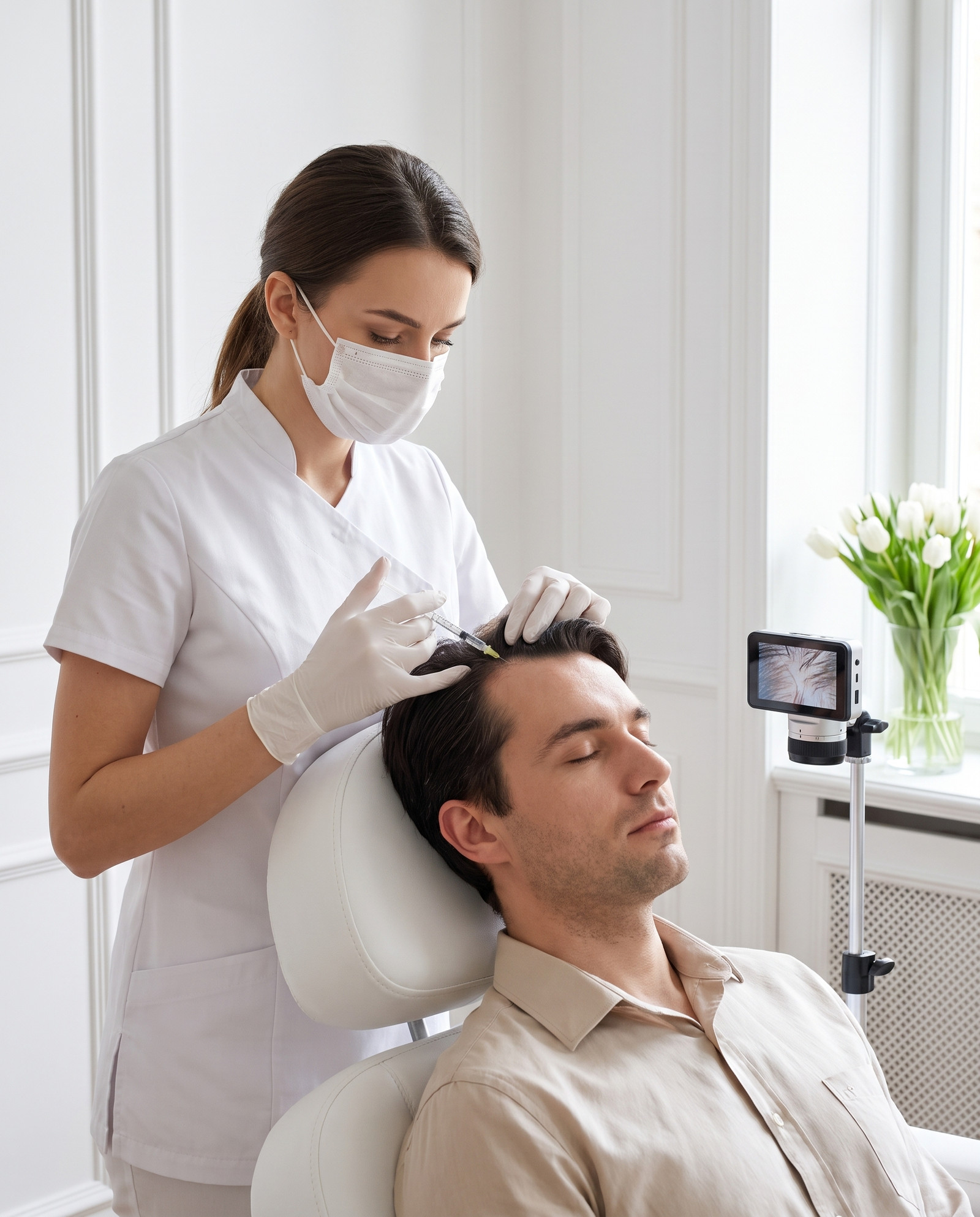
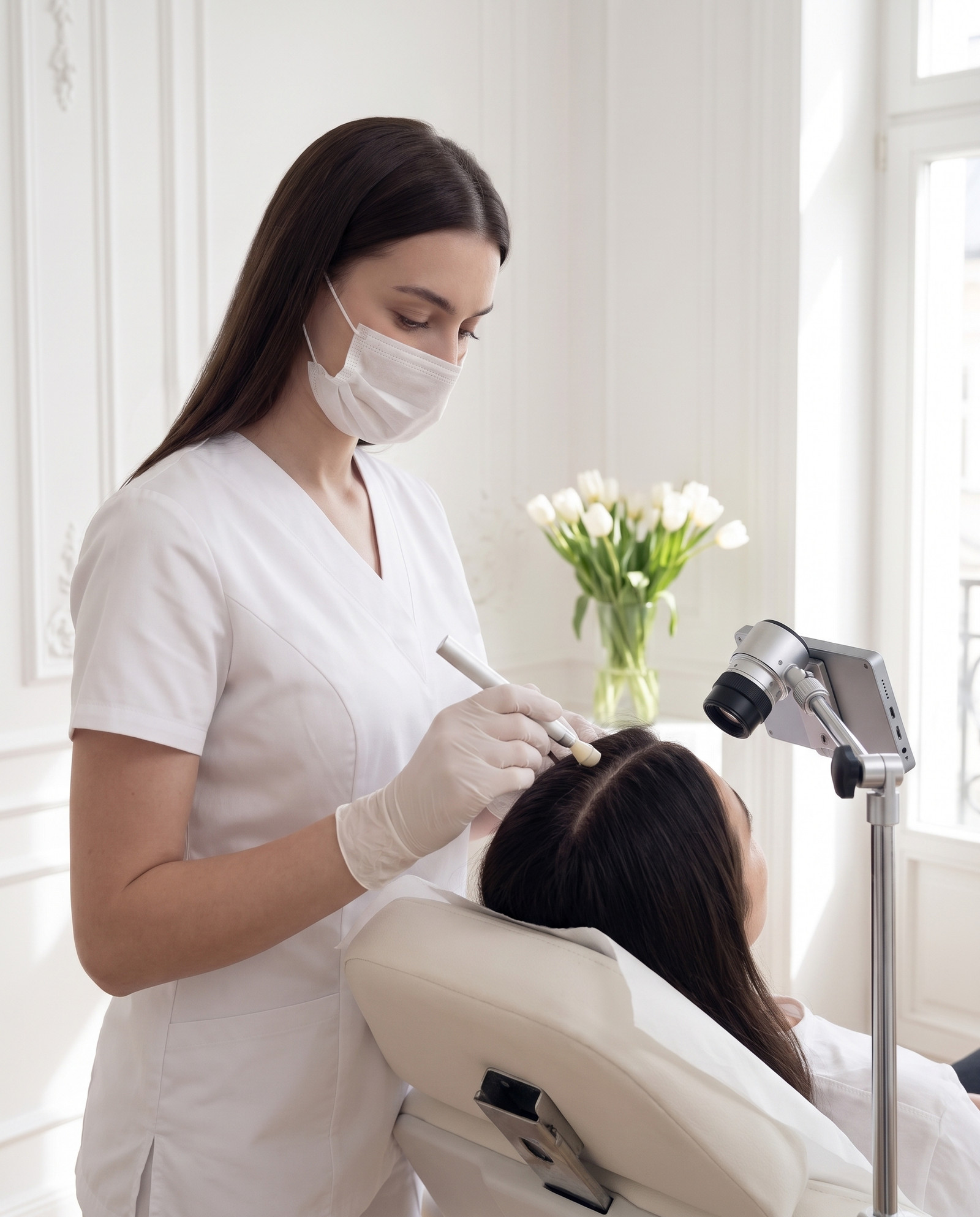
Myth 3: "The salon does the same thing, just more expensively than at home." Trichologists and hair specialists in a salon don't just use different devices — above all, they assess the scalp and hair follicles beforehand. Trichoscopy, density assessment, growth-phase analysis, a review of your hair-loss history — this is a diagnosis, not just a light session. Based on this, they choose the right treatment or combination of treatments, set priorities and track progress. No home device can do this — even one that costs more than the salon visit.
Myth 4: "An LED cap is enough — I don't need anything else." Light therapy is a supportive tool, rarely sufficient on its own. Even in a salon setting, it's combined with other methods — needle or needle-free mesotherapy, carboxytherapy, sonophoresis, products applied directly to the scalp. For hormonal hair loss or deficiencies, pharmacotherapy and supplementation come into play too. An LED cap replacing everything else is a bit like drinking mineral water for serious dehydration — it makes sense, but it's not enough.
Myth 5: "If it worked for hair in the US / for an influencer, it'll work for me." Worth stressing: there's no single treatment protocol that suits everyone. Scalps vary in density, follicle type and degree of hair miniaturisation. What gives one person visible results within weeks might not work for another — for reasons that have nothing to do with the device itself. Trichology is individual medicine — and no cap can shortcut that.
What sets a salon treatment apart — specifically
Home LED cap
Self-administered care
- Convenient for daily use
- Available at any time
- Can complement a salon programme
- No diagnosis or progress assessment
Salon treatment
Professional trichological therapy
- Preceded by trichoscopy and a consultation
- Tailored to the specific cause of the problem
- Methods can be combined in a single session
- Progress monitored and protocol adjusted
The difference isn't just the device itself — it's the context in which it's used. The same tool, used without a diagnosis or an understanding of the underlying cause, gives unpredictable results. So the question "should I buy a cap or book a treatment" assumes a false choice — it's not a choice between two versions of the same thing. It's a choice between acting alone and acting with expert knowledge.
When a home LED device makes sense — an honest answer
We're not saying home devices are useless — that would be just as imprecise. They have a legitimate place in a routine, especially when:
- You already have a diagnosis and know which cause of hair loss you're addressing
- A trichologist has recommended the home device as a complement to salon therapy
- You want to maintain results between visits, not replace salon treatments
- You use it as a preventive measure at the first signs of thinning, not as your main therapy
The word "complement" is key. A home LED routine can be sensible and worthwhile — but the treatment plan should come from a specialist who understands what's actually happening with your hair. Not from a gadget's instruction manual.
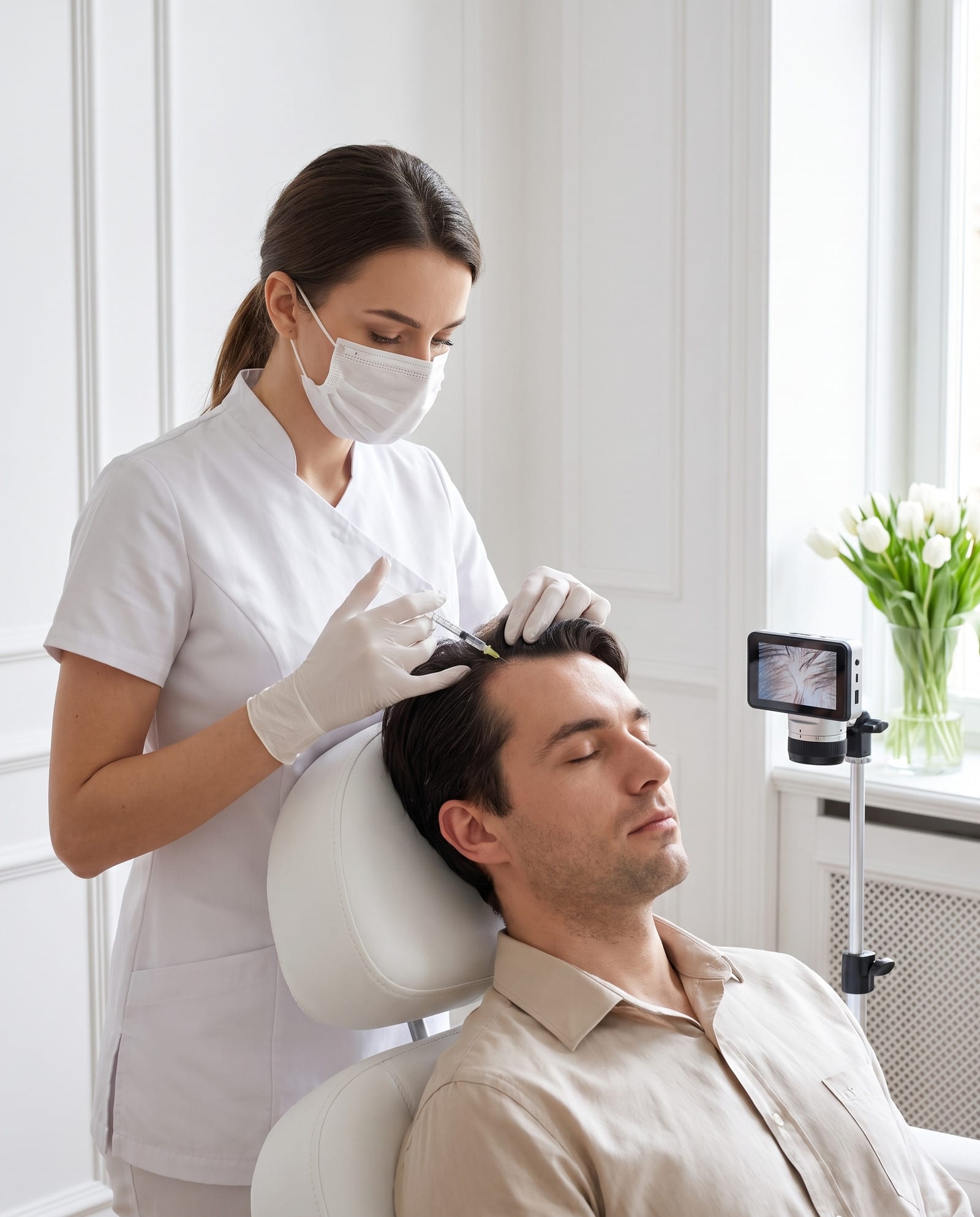
What happens during a professional scalp therapy session
Follow-up visits aren't about repeating the same treatment — they're about monitoring progress and adjusting the therapy. If density improves in certain zones but not others, that's important information that can change the plan. No home device, however expensive, can offer this kind of dynamic assessment.
In summary: two different tools, not substitutes
A home LED cap and professional trichological therapy in a salon aren't two versions of the same thing — they're two different tools that can work together, but don't replace each other. The first is convenient and can complement a treatment programme. The second starts with a diagnosis and adapts methods to the specific problem.
If your hair is falling out, thinning, or losing density — start by understanding why. The answer to that question matters more than any gadget. And that answer is exactly where every visit to a trichologist begins.