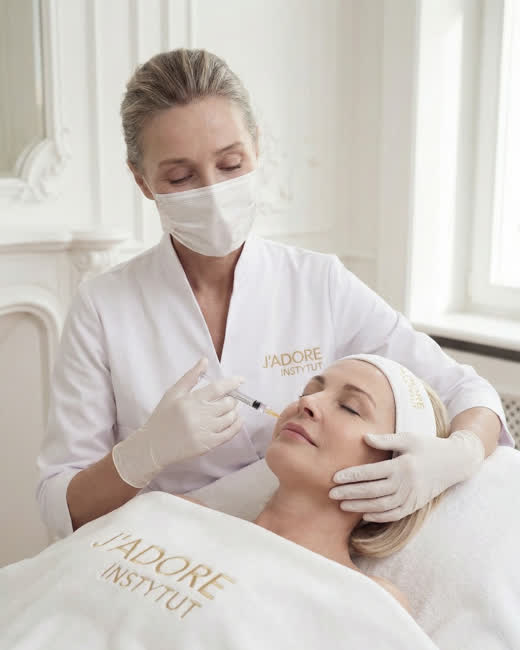
Where the myth of "equivalent" cocktails comes from
The market for mesotherapy products is large, varied, and — compared with the pharmaceutical market — far less transparent for the average consumer. Alongside reputable manufacturers with full clinical documentation, you'll find products with unclear registration status, uncertain distribution chains and compositions that can't be verified. Price doesn't always reflect quality, but a very low price is almost always hiding something. Before we get to the myths, one sentence worth remembering: micro-punctures open the skin to whatever is injected. If the product is wrong, the skin won't reject it at the door — it will absorb it.
Six myths, in order
MYTH 1: "A cocktail is a cocktail — it's always the same thing." Fact: composition, ingredient concentration, raw material purity and manufacturing technology vary between products to a degree comparable to the difference between a medicine and a supplement. Two products both labelled "vitamin mesotherapy" can have completely different action profiles, different bioavailability and different reaction risks. Reputable manufacturers publish clinical documentation; products without clinical studies are a gamble, not a choice.
MYTH 2: "If something's gone off, you'd be able to tell." Fact: product degradation is, in most cases, invisible to the naked eye. Hyaluronic acid that has lost its photolytic stability — after improper storage — looks exactly the same as an intact batch. Its molecular structure and effectiveness change, but the packaging gives no warning signs. That's why the cold chain isn't an excuse — it's a condition for the product to work at all.
MYTH 3: "A good specialist can compensate for a weak product." Fact: injection technique matters enormously — depth, spacing, volume and speed all determine how the product distributes through the skin. But good technique can't fix poor composition. If a cocktail contains active ingredients at too low a concentration, or its pH is wrong, precise injection won't change the outcome — much like the best cook can't make a good sauce from bad ingredients. Technique and product need to be at the same level.
MYTH 4: "Unregistered products work just the same — they're only cheaper." Fact: registering a medicinal product or medical device isn't a formality — it's an independent verification of composition, purity, sterility and manufacturing documentation. Products sold as "cosmetic" or "for personal use" skip this process entirely and aren't required to meet the same standards. Injecting them under the skin is an off-label use — one for which neither the manufacturer nor the salon carries formal liability if something goes wrong.
MYTH 5: "A reaction after the treatment is a side effect of mesotherapy itself, not the product." Fact: a degree of redness and mild swelling after injections is a normal reaction — the skin responds to mechanical puncturing and to new ingredients. But prolonged inflammation, granulomas, acne-like changes or asymmetric swelling are signals that point to a specific product or its dilution, not to the mesotherapy technique itself. In reputable salons, such symptoms are rare and prompt an immediate response protocol; with products of unknown origin, diagnosis is far harder.
MYTH 6: "The more ingredients in the cocktail, the better the result." Fact: a long ingredient list on the packaging is a common marketing trick that doesn't translate into effectiveness. Every ingredient's concentration needs to be clinically justified — a product with twenty ingredients in "trace amounts" can perform worse than a four-ingredient formula at optimal concentrations. Choosing the right cocktail starts with the therapeutic goal: hydration, stimulation, radiance or regeneration are different indications, calling for different formulas.
What makes one product safer than another
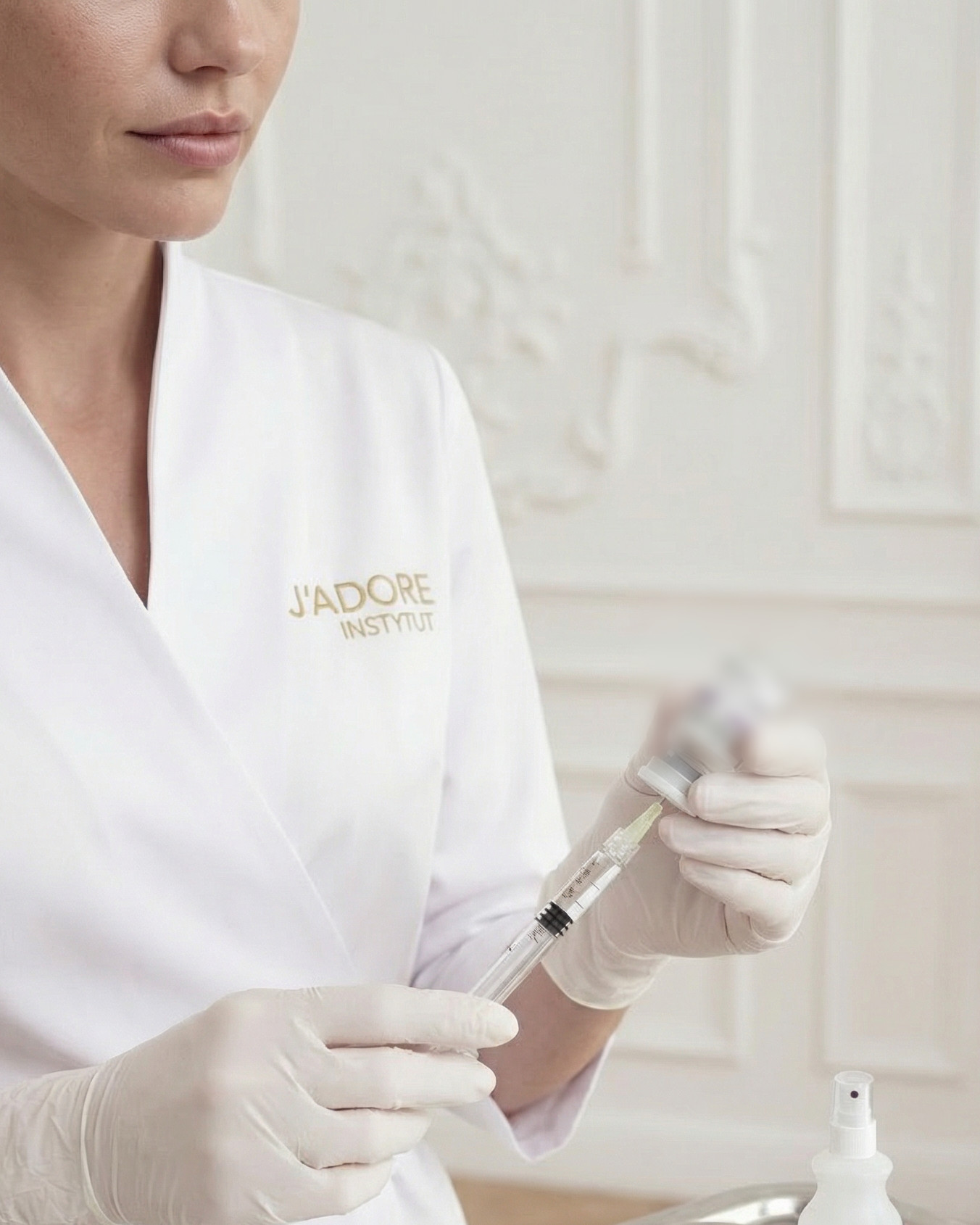
In practice, three criteria separate a safe product from a risk in a vial. The first is registration status. A product injected under the skin should be a medical device or medicinal product — with a CE certificate or marketing authorisation, composition documentation and safety studies. Asking "is this product registered?" is just as valid as asking about a specialist's qualifications. The second is the distribution chain. A product bought through a trusted distributor, direct from the manufacturer, has a traceable history — unlike one ordered from an anonymous online source. Temperature requirements for storing cocktails aren't a technical detail: most products lose their properties after exposure to heat. The third is salon transparency. A salon that takes you seriously will tell you which product it uses, where it comes from and why that one was chosen. Not getting that information — or hearing "we can't disclose that" — is a red flag.
Different for her, different for him — but the same principle
Needle mesotherapy is one of the few treatments used with equal effectiveness on women and men — which is exactly why the myth of "one cocktail for everyone" is so tempting. In reality, a good protocol accounts for skin differences, because they matter. Women's skin is, on average, thinner, loses hydration faster and shows the first signs of collagen loss earlier; cocktails chosen in this context often place a stronger emphasis on hydration and support for the extracellular matrix. Men's skin is thicker and more prone to oiliness, which affects absorption — protocols may call for different concentrations or formulas that help regulate sebum. What doesn't change in either case: product quality and verification of its origin. Thin skin absorbs contaminants just as readily as active ingredients, and thick skin is no barrier against a poor-quality cocktail.
Before you decide — three questions worth asking
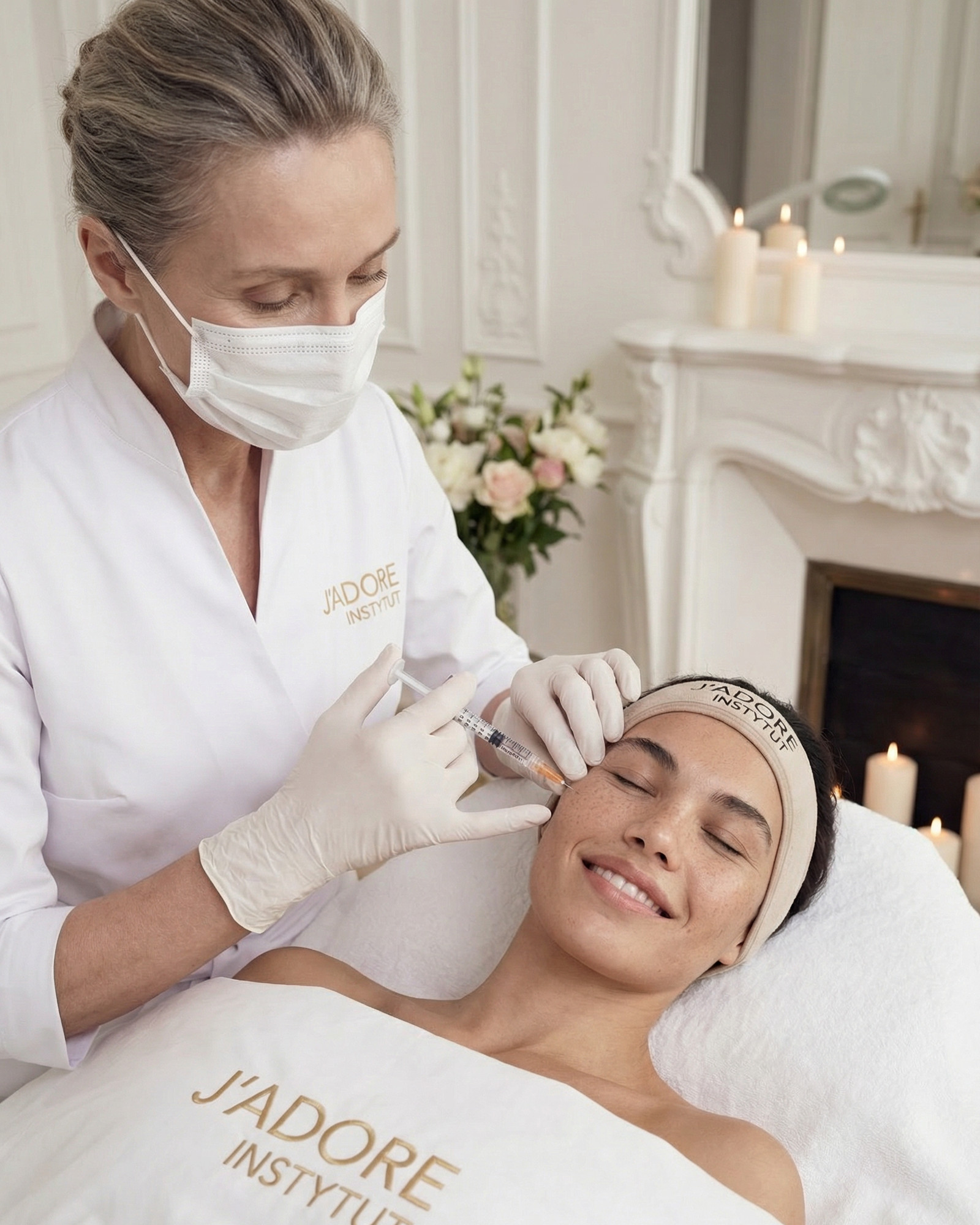
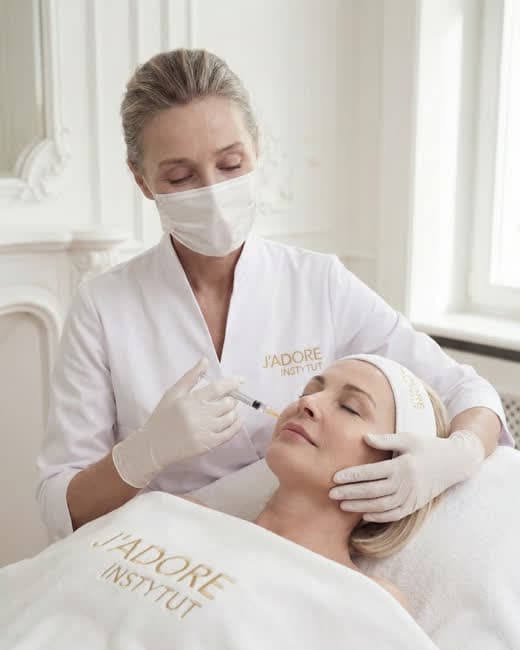
A good decision about needle mesotherapy starts with a consultation, not a price comparison. Before booking, it's worth asking three questions that will tell you more than any description online. First: which product will be used, and what's its registration status? This is a question about facts, not opinion. A good salon knows the answer and gives it without hesitation. Second: what is this specific treatment's goal? Hydration, stimulation, brightening, revitalisation — each indication calls for a different cocktail composition. A salon offering a single mesotherapy treatment "for everything" is skipping a key step of the protocol. Third: is a touch-up possible after the treatment? Mesotherapy is a series, not a one-off intervention. A salon that takes the result seriously will plan not just the first session, but the protocol that follows — assessing the skin's response and adjusting where needed.
Needle mesotherapy, done well, is one of the most flexible and well-documented skin revitalisation protocols available. Its effectiveness isn't marketing — it's backed by clinical studies and decades of clinical practice. That's exactly why it's worth not wasting on a product from an unknown source, or on a specialist who doesn't ask questions before the treatment. Cocktail quality isn't a luxury — it's the condition that makes everything else worthwhile.