How it actually works — in one sentence
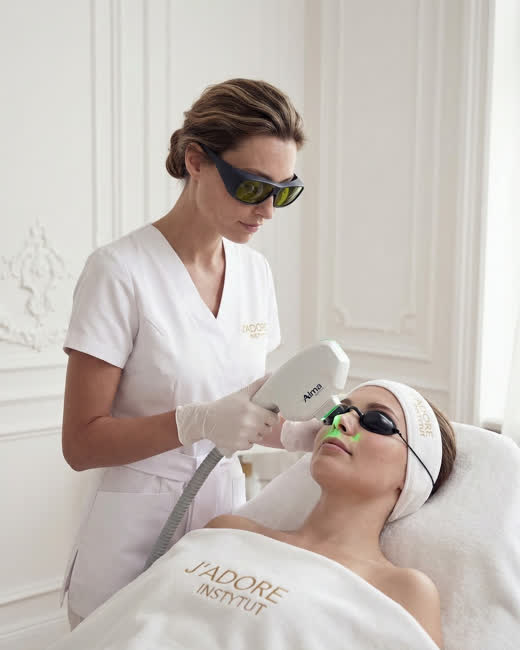
Light at the right wavelengths penetrates tissue and activates natural cellular processes — it stimulates collagen production, works as an anti-inflammatory, supports healing and regulates sebaceous gland activity. This isn't marketing or magic; it's photobiomodulation, documented in thousands of clinical studies. The result depends on three things at once: the right wavelength, the right energy density and the right exposure time. Remove one of these — and instead of therapy, you just have light.
Six myths about LED therapy
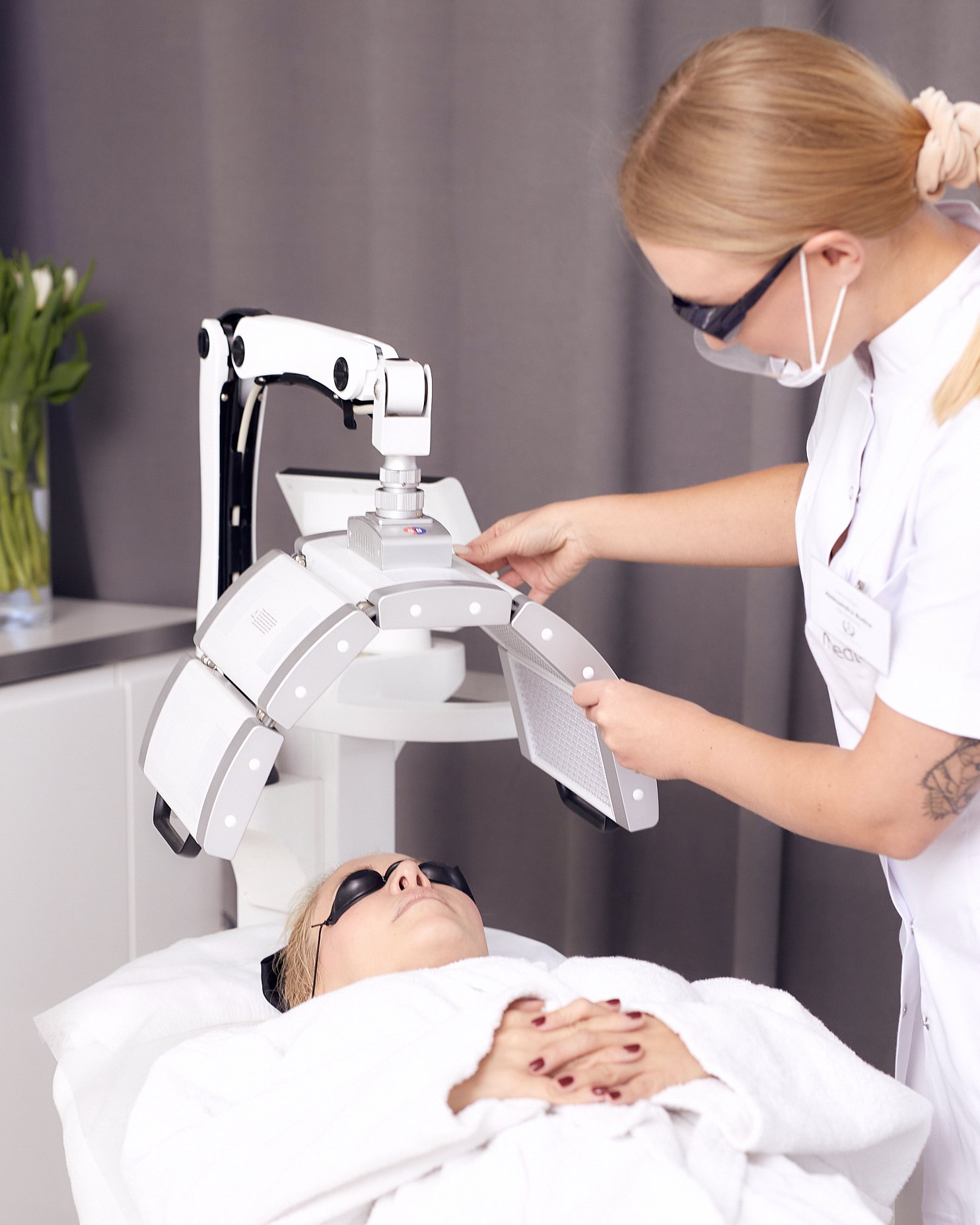
MYTH 1: "A home LED lamp is the same as a clinic device — just cheaper." Fact: professional and consumer devices differ mainly in the energy density delivered to the tissue — that is, how much actual photobiological energy reaches each square centimetre of skin in a given time. Home masks and lamps are deliberately designed to be safe for an average user managing the device alone, so their power output is limited by regulation. Clinics use medical-grade devices, calibrated and serviced, with parameters set by a specialist. It's a bit like comparing a home massage gadget with professional lymphatic drainage — both have "massage" in the name, both feel pleasant, but the physiological effect is completely different.
MYTH 2: "The longer I shine the light, the better the result — so I'll top up my clinic treatment with my own lamp." Fact: LED therapy doesn't work on a "more is better" basis. There's a phenomenon known as the bimodal effect — excessive exposure can actually reverse the beneficial effect and inhibit the processes being stimulated. A professional treatment has a precisely defined duration, based on the specific device's characteristics and the clinical protocol. Shining a home lamp "as much as you like" is, at best, neutral — and at worst, counterproductive.
MYTH 3: "Red is for anti-ageing, blue is for acne — just pick a colour." Fact: this is a fair simplification, but only a simplification. Different wavelength ranges act on different tissue depths and different cellular processes — and which protocol to choose depends on your skin condition, your current concerns and the stage of your treatment plan. Inflammatory acne and acne-prone skin in a quiet phase are two different scenarios. Skin with fresh inflammation reacts differently from skin with post-acne changes. A specialist doesn't "pick a colour" — they select a protocol based on diagnosis.
MYTH 4: "LED results are instant — if you don't see anything after the treatment, it's not working." Fact: photobiomodulation works at cellular level and in cascades — stimulated fibroblasts start producing more collagen, but the collagen itself needs time to organise within the tissue. The first noticeable results — better firmness, more even skin tone, reduced inflammation — usually appear after a series of sessions, not after one. Someone who "sees nothing" after their first visit is exactly where they should be.
MYTH 5: "LED is for everyone and always safe — there's nothing to discuss with a cosmetologist." Fact: LED therapy has contraindications. Active skin infection, certain autoimmune conditions, use of photosensitising medication (including common antibiotics and retinoids), photosensitive epilepsy — these are cases where light exposure can be risky. A professional treatment always starts with a health assessment. A home lamp asks nothing.
MYTH 6: "LED treatment is for women — it's pointless for men." Fact: the indications are identical regardless of sex — and men have several reasons to take LED treatment seriously. Male skin is thicker and produces more sebum, which predisposes it to inflammation and enlarged pores. Men shave regularly, which means repeated micro-trauma to the epidermis. And more and more men turn to regenerative treatments after intense lifestyles, sport or long periods of stress. LED works the same way, regardless of who's lying under the panel.
Where these myths come from — a short diagnosis
LED therapy is a victim of its own success. Once research began confirming its effectiveness, the market quickly filled with consumer devices — from masks costing several hundred PLN to lamps costing just a few dozen. Marketing for these products borrows the language of medicine: "clinically proven", "NASA technology", "dermatologically tested". Some of these claims are true in a narrow sense — LED diodes really were used, some kind of testing really was done. But "the same technology was used" doesn't mean "the same result was achieved". The gap between the LEDs in a toy and a medical-grade panel is as wide as the gap between the colour of a doctor's coat and an actual medical degree.
The second problem is the lack of clinical context. A home lamp doesn't come with a health assessment, a skin diagnosis or a specialist who can judge what stage of treatment you're at and whether the protocol needs adjusting. LED therapy at the clinic is usually part of a broader plan — combined with a peel, mesotherapy or hydrating treatments, because different methods can reinforce each other's effects. A lamp at home doesn't know that you have active inflammation, that you've just switched antibiotics, or that you're flying off for a sun-drenched holiday in three weeks.
When home LED makes sense — and when it doesn't
This isn't about demonising home devices. A certified consumer device, used regularly, can be a good complement to a professional treatment — as simple maintenance care between visits. The key word is complement, not replacement. If someone has finished a clinic series and occasionally uses a home lamp to "maintain" the result, that's a sensible strategy. But if someone expects a drugstore lamp to replace a diagnosis and a specialist protocol — disappointment is almost guaranteed.
At the clinic, LED treatment can be tailored to a specific goal: calming acne needs a different protocol than stimulating collagen in mature skin, and working on skin with hyperpigmentation or after laser treatments is different again. A specialist decides not only on the wavelength and exposure time, but also on how to combine LED with other methods — because a lamp working on its own can't achieve that synergy.
Who benefits most — and why it's worth talking to us
Professional LED treatment works particularly well in several situations. Skin prone to inflammation and acne — especially for people who don't want or can't use aggressive chemical treatments. Mature skin with reduced density — as part of an overall plan to rebuild collagen. Skin recovering from other treatments — laser, peels, mesotherapy — where LED shortens healing and calms the reaction. Sensitive skin prone to redness, where many other methods are too aggressive. But there's no single answer for everyone — which is why any treatment should start with a conversation.
If you haven't yet tried LED therapy at the clinic — or you tried a home device and the results were weak — it's worth asking during your consultation: does LED fit into a plan for my skin, and how? There's no wrong answer to that question. It might turn out that LED is exactly what your skin needs right now. It might be a good addition to something else. Or there might be other methods that would work better for you. A lamp won't tell you that. A specialist will.