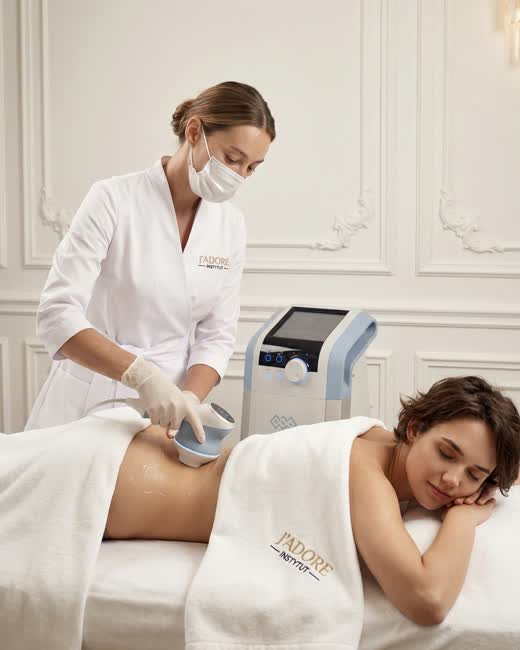
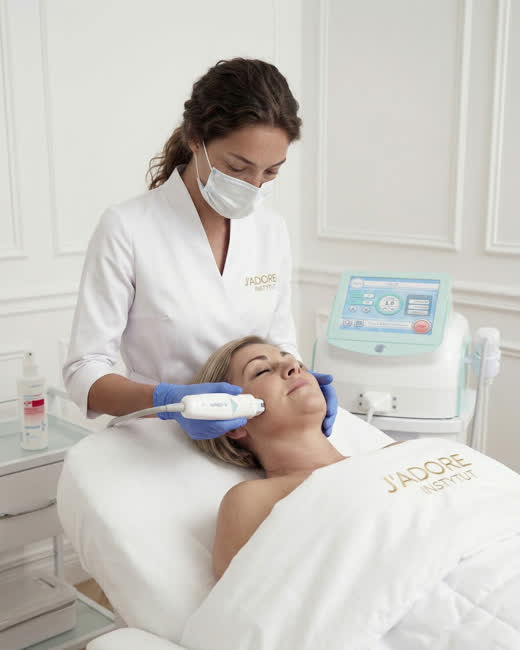
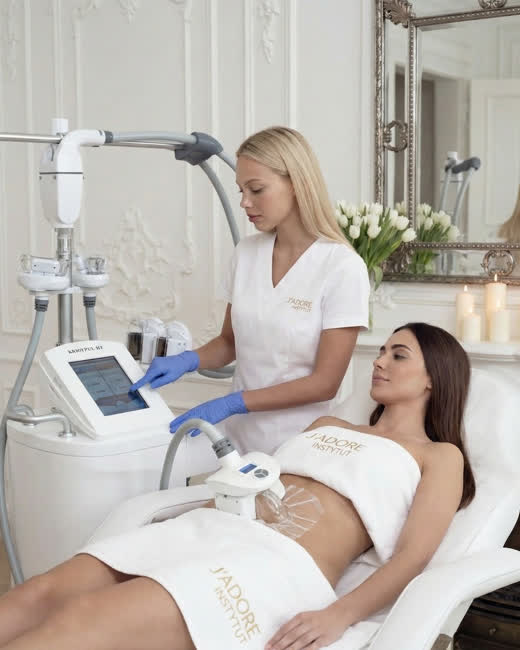
A treatment room at J'adore
LASER THERAPY / HIGH-TECH / REMOVAL
Acne scars that stay on the cheeks despite years of skincare. Enlarged pores, uneven, "rough" texture, skin that has lost its smoothness and looks tired.
These are skin texture issues — and a cream or peel only work on the surface. Non-ablative fractional laser goes deeper: instead of removing the epidermis, it creates a grid of microscopic thermal columns beneath it, triggering intensive collagen remodelling — without an open wound and without a week off life. This is its main advantage over ablative lasers: real texture improvement with usually just 1–3 days of mild redness. At J'adore Instytut, the treatment is performed by a doctor or experienced cosmetologist certified by the device manufacturer. Below you'll find everything worth knowing before you decide.
series of several treatments every few weeks; full results 3–6 months after the last session
How it works
"Fractional" means the laser doesn't treat the whole surface with a uniform beam. Instead, it splits the energy into a grid of microscopic points (fractions). Each point is a tiny thermal column in the skin, and the tissue between them stays intact and healthy — this acts as a cell reservoir and speeds up healing. That's why skin recovers much faster than after a treatment covering the entire surface.
"Non-ablative" is the key to this treatment: the laser doesn't vaporise the epidermis and doesn't create an open wound on the surface. It works beneath the epidermis — it warms the dermis and builds thermal columns there, triggering a controlled repair process: the body produces new collagen and remodels the skin's structure. That's why there's no week of peeling afterwards, just usually 1–3 days of mild redness.
The result isn't immediate, and it shouldn't be — this is remodelling, not erasure. Fresh collagen matures over weeks, so skin keeps improving long after the last session. We assess the full result only after a few months.
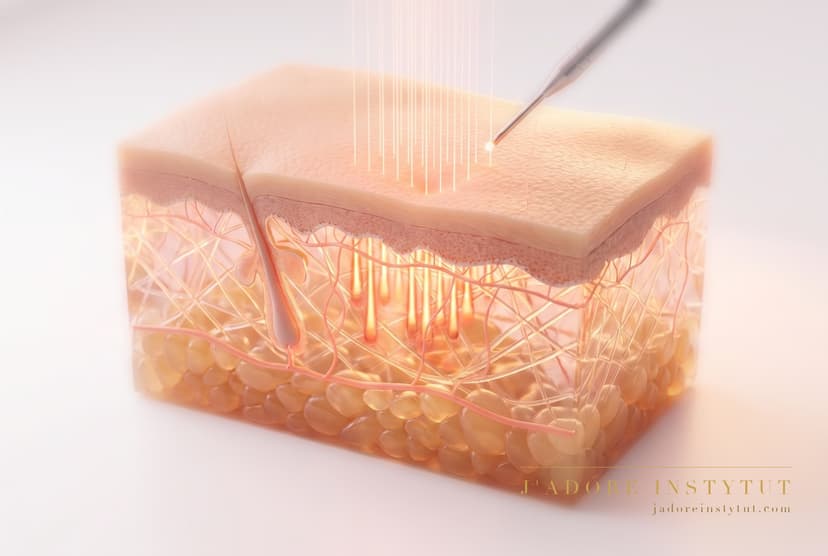
Interesting fact: this is the same logic that lets a cut heal and "close over" with new, smoother skin. Fractional laser does this deliberately and under control — it triggers a micro repair stimulus at thousands of points at once, but shallow and precise enough that, to everyone around you, you simply look a little flushed for a few days.
Ideal for
What this treatment won't do: it won't add volume (that's a job for fillers), won't stop an expression line "in motion" (that's a job for Botox), and won't remove deep ice-pick scars as aggressively as an ablative CO2 laser. It's a tool for skin quality and texture — and in that, it's very good.
Women's zone and men's zone
Non-ablative fractional laser in women is most often aimed at achieving smooth, "glass" skin: even texture, smaller pores, a brighter, more uniform tone and gentle rejuvenation. We often combine it with skincare and skin stimulation to make the effect more comprehensive.
What we work with
Men's skin is thicker and oilier, which encourages clogged pores and deeper marks from inflammation — hence acne scars and enlarged pores are common concerns. Non-ablative fractional laser for men delivers real improvement in skin structure without missing work — no week off at all.
What we work with
Interesting fact: the exact same fractional technology helps with scars, stretch marks and general rejuvenation — because everywhere, it does the same thing: it triggers controlled collagen remodelling. Only the zone, intensity and number of sessions change, and a specialist tailors these to your issue.
Safety
With fractional laser, results and safety depend on a few things worth asking about in any salon:
At J'adore, the treatment is carried out by a doctor or experienced cosmetologist certified by the manufacturer of the device. A specialist assesses your skin, selects the technology and parameters, and manages the series.
A fresh tan and a darker phototype increase the risk of hyperpigmentation — that's why we ask about sun exposure, self-tanners and recent holidays. Sometimes the right decision is to postpone the appointment.
A good specialist says it plainly: fractional laser can soften scars and clearly improve texture, but it won't erase them 100% and won't do it in a day. This takes a series and time.
Red flag: "one session and the scars will disappear", or a treatment with no consultation · Promises of completely removing scars in a single treatment, no questions about sun exposure, medications or past treatments, no assessment of skin phototype — these are warning signs. You have the right to ask what device a salon uses, whether it's non-ablative or ablative, and who performs the treatment. A professional salon will answer without hesitation and will start with a consultation.
Contraindications
Some contraindications are permanent, others temporary — in that case, we simply postpone the treatment until the situation passes. With fractional lasers, we're especially careful about sun exposure and cold sores.
Two issues that are most often taken too lightly. Cold sores — even "just on the lips", for a facial treatment: an active virus risks reactivation, so we postpone the appointment (and for recurrences, we add preventive treatment). Fresh sun exposure — tanned skin + laser means a risk of hyperpigmentation. Better to postpone by a few days to a couple of weeks than to treat hyperpigmentation afterwards.
This isn't a complete list — we'll review your medications, health conditions, recent treatments and sun plans individually during consultation. SPF 50+ is essential after the treatment, without exception.
Aftercare
Good aftercare in the first few days really affects the result and shortens discomfort. The rule: gentle, cool, protected from the sun.
J'adore reception stocks regenerating and protective products (including dermocosmetic lines) — a specialist will put together a set for your skin and your stage of recovery.
The visit
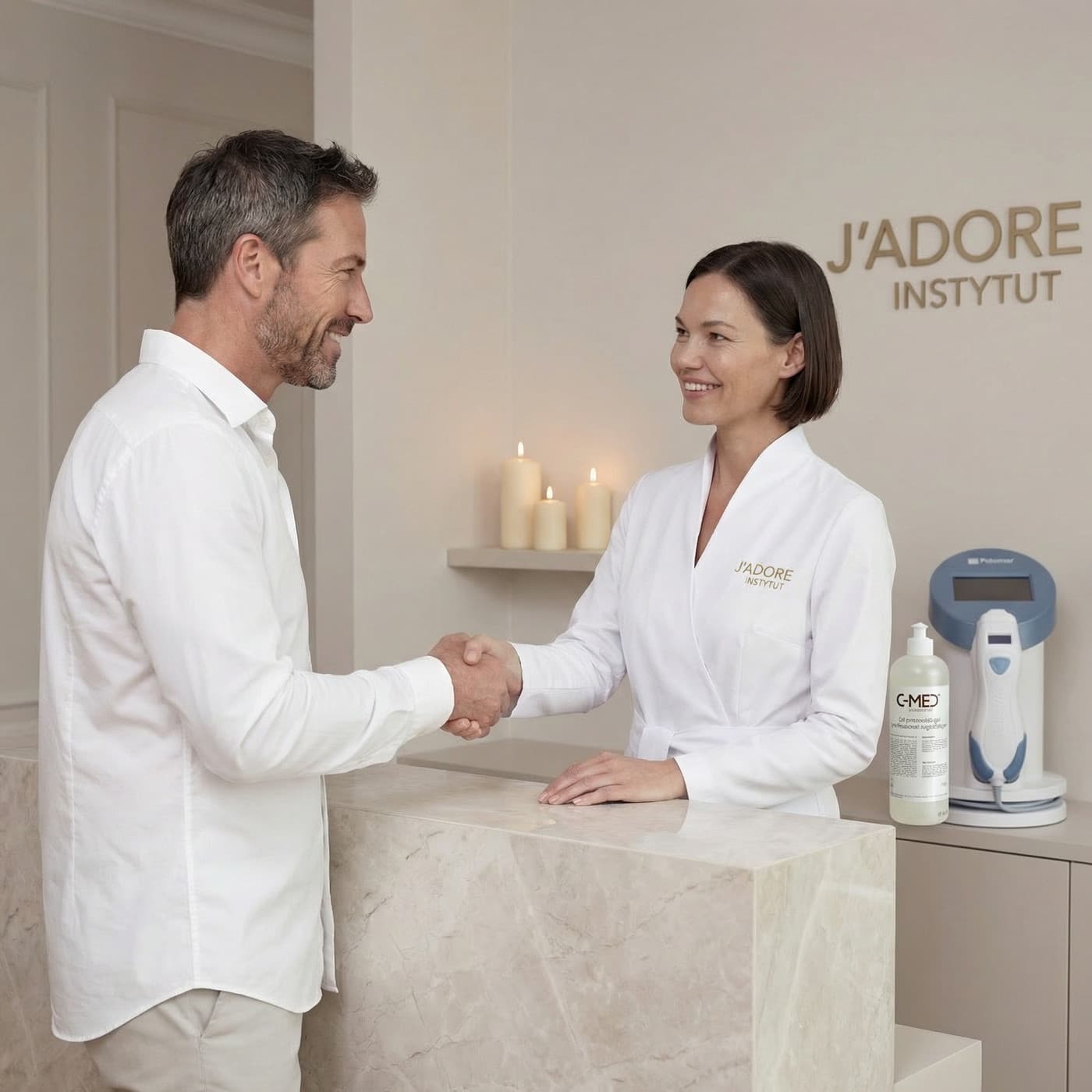
Consultation & skin assessment
a specialist assesses the type and depth of scars, texture, phototype and your expectations, rules out contraindications and sets the series plan.
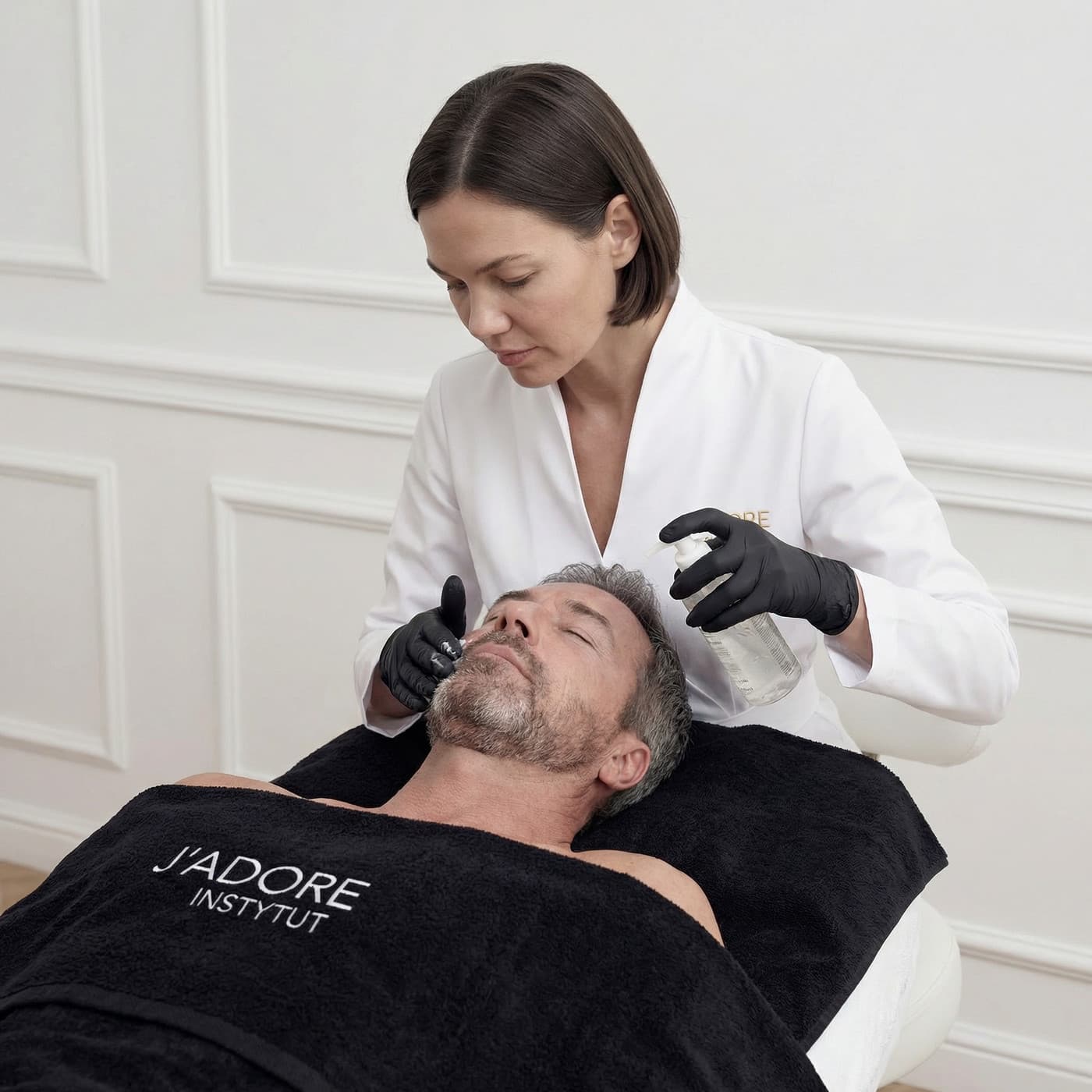
Preparation
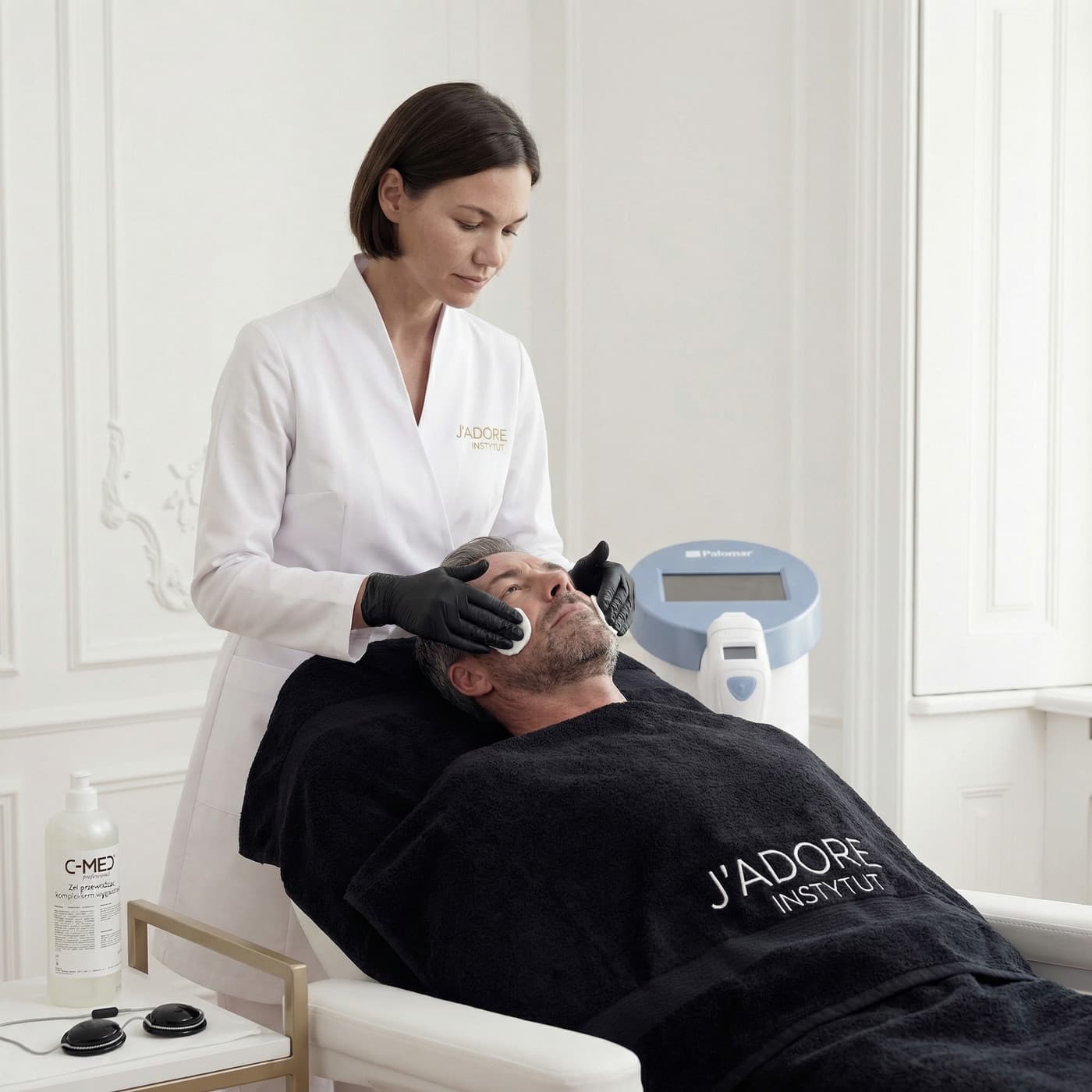
skin is cleansed and makeup removed; numbing cream is applied to the area (it works for some time before the treatment). Protective glasses for both of you.
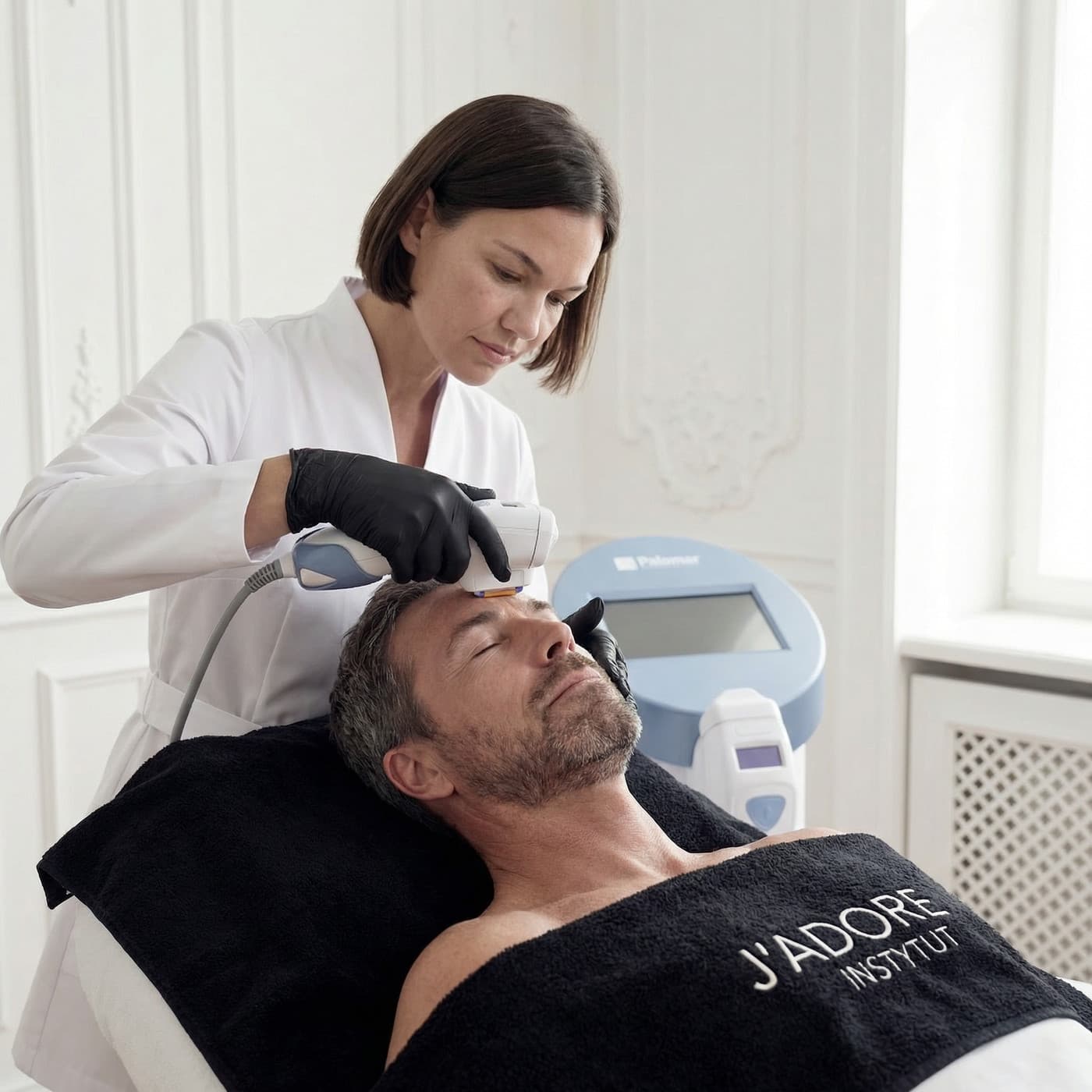
Laser session
the handpiece is moved evenly across the area. You'll feel mainly warmth and slight tingling — sensations are gentler with the non-ablative version than with ablative lasers.
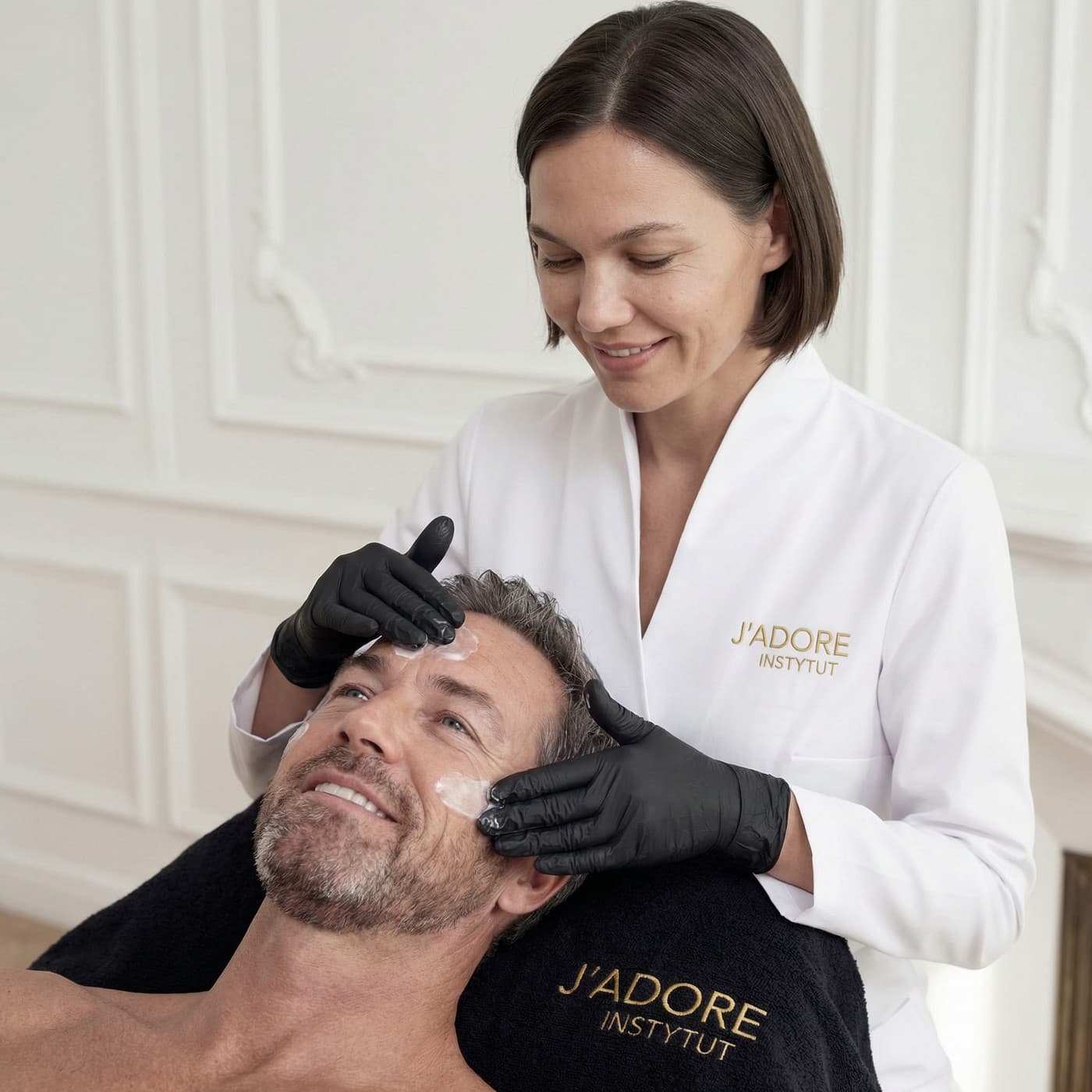
Cooling and aftercare plan
after the treatment, skin is cooled; you receive clear instructions (gentle cleansing, hydration, SPF 50+).
Subsequent sessions in the series
spaced a few weeks apart, so skin has time to remodel collagen between treatments.
What to expect
Most important: you won't see results right away, and right after the session, skin will be red. This is normal and temporary. Real improvement comes later, as new collagen matures.
The most common call goes: "I had it two days ago and I don't see a difference." That's completely normal — fractional laser works on collagen, and collagen builds over weeks. That's why we assess results after the series and after a few months, not after the first session. Before-and-after photos help — the change is often bigger than it seems day to day.
Portfolio
A record of the work in our salons — the place where we publish treatment frames and, after photo sessions, results.
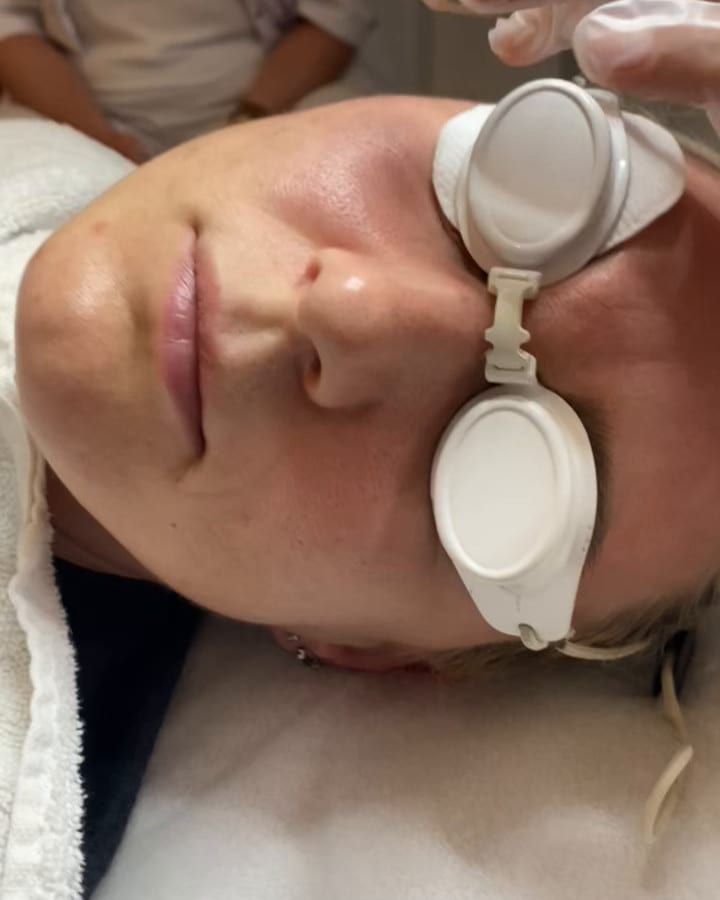
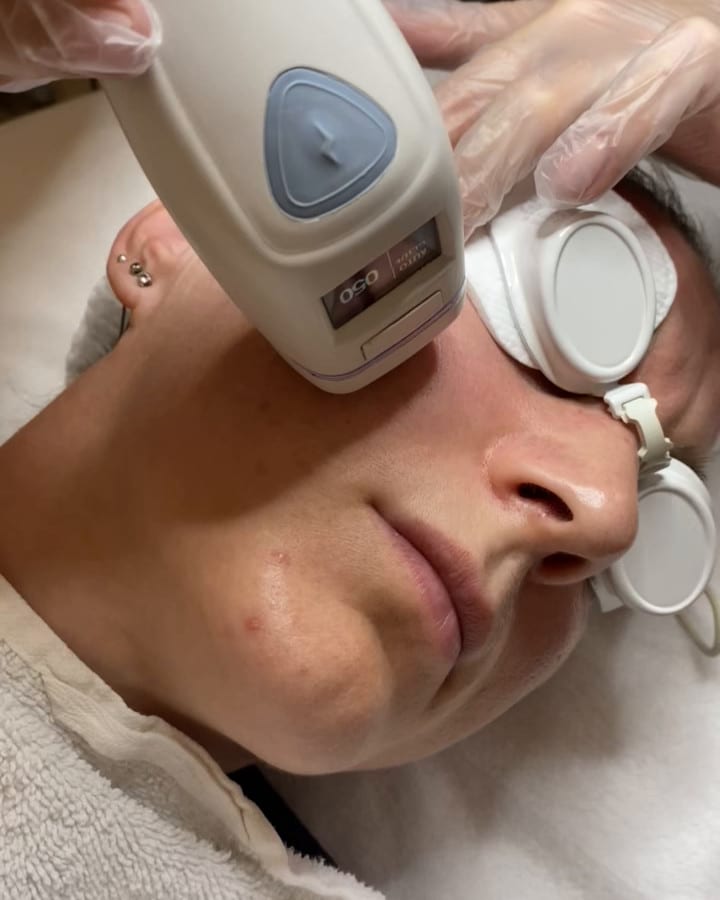
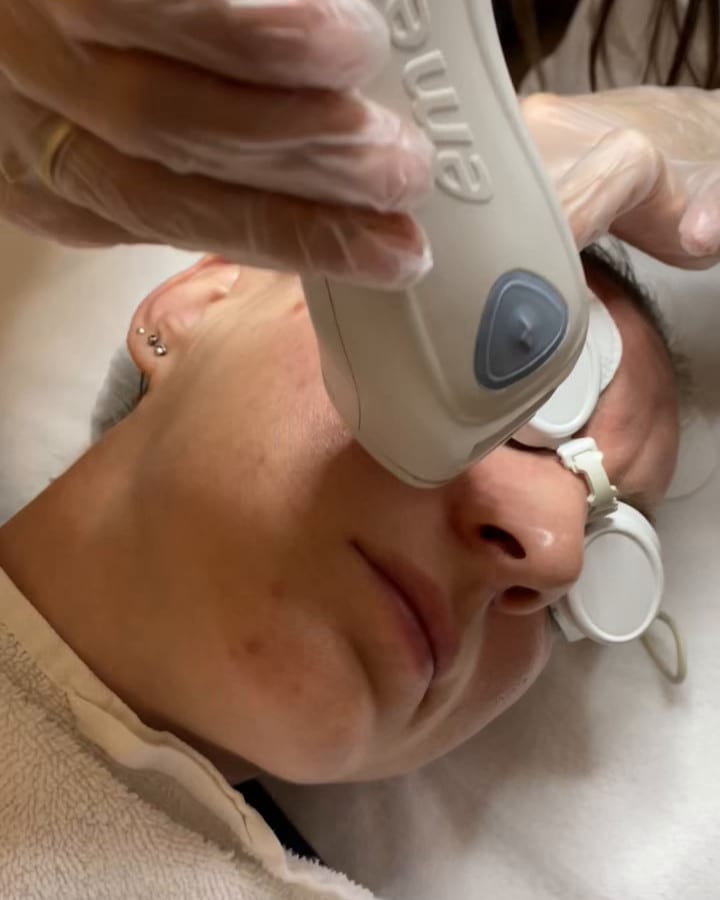
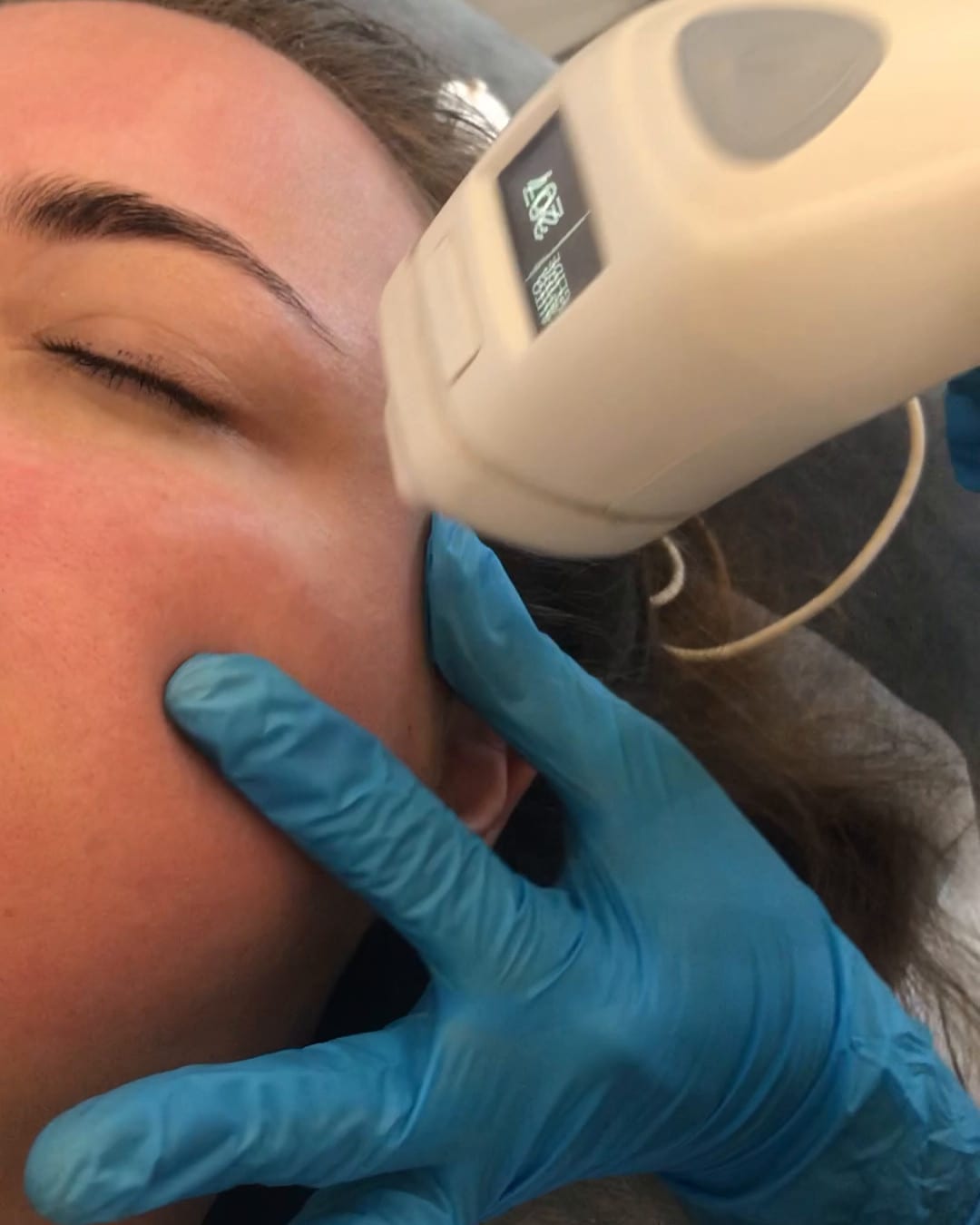
A record of results — in preparation. We publish photographs of our clients only with their consent.
The collagen produced stays in the skin, and softened scars don't "deepen" again. Natural ageing continues, so after some time, it's worth considering a refresher session — but you'll be starting from a better place.
Laser and your lifestyle
The most common questions aren't about the treatment itself, but about what comes after: sun, sauna, makeup, training, active skincare. There's one rule — in the first few days, skin is regenerating, so we protect it from UV, heat and irritating ingredients.
This is an absolute priority. Skin after laser treatment is sensitive to UV, and sun exposure risks hyperpigmentation. Avoid exposure for a few weeks, skip sunbeds entirely, and apply SPF 50+ without exception, every day. A fresh tan before the treatment means postponing the appointment.
Right after the treatment, we skip makeup to avoid irritating the skin. Return to makeup — as advised by your specialist, usually from the next day, once the strongest redness has faded.
High temperatures, chlorine and sweat increase irritation. Postpone the sauna, pool and long hot showers for about a week.
Hard exercise and sweat right after treatment irritate the skin. Skip intense training for a few days, and return once skin has calmed down.
Retinol, vitamin C, AHA/BHA acids and mechanical exfoliants — pause before and after the treatment (as advised). We focus on simple, regenerating and hydrating formulas.
Gentle cleansing with cool/lukewarm water without rubbing, and deep hydration with a regenerating cream, are actually recommended. Don't scrape off any micro-flaking — let it shed on its own.
Fractional NON-ABLATIVE laser
There's a fair amount of confusion around "fractional laser". The key distinction is ablative vs non-ablative, alongside a related mechanical method — needle mesotherapy / microneedling. They share the same core mechanism (collagen remodelling), but differ in intensity and healing time:
remodelling beneath the epidermis, no wound
won't work as aggressively as CO2 on very deep scars; usually needs a series
stronger, deeper remodelling with resurfacing
longer healing (from several days up to a couple of weeks with CO2) — downtime needs to be planned
mechanical collagen stimulation + delivery of active ingredients
doesn't give resurfacing as intense as ablative laser for strong scars

Combine with
Fractional laser gives the best results as part of a plan, not a single "shot". A specialist decides the order and spacing during consultation, but the general logic stays the same:
The simplest rule I keep repeating: little time for healing plus shallow/moderate scars → non-ablative (Emerge). Deeper scars, ready for a few days off → ablative. And if skin is sensitive or you're starting "from zero", we often begin gently and add intensity in later steps. We make the decision together, after examining your skin — not from a price list.
What we use
At J'adore Instytut, we perform the non-ablative version of fractional laser using Palomar Emerge (USA). Its role in our arsenal: real skin remodelling with minimal recovery time. Alongside it, we also have ablative lasers (Er:YAG and CO2) — stronger, but with longer healing — so a specialist chooses the technology to match your issue, not the other way round.
Creates microscopic thermal columns beneath the epidermis, without disrupting the skin's surface — hence the short healing time (usually 1–3 days of redness). This is the technology described on this page.
Dla kogoAcne scars (shallow and moderate), texture, enlarged pores, fine lines — when results without downtime matter to you.
The ablative version — controlled micro-vaporisation of the epidermis. A more intense effect, but with several days of healing (redness, peeling).
Dla kogoMore demanding scars and resurfacing, when you accept longer healing — we describe it in a separate tab "ablative fractional laser".
The most intensive fractionation in our arsenal — deeper remodelling, but the longest recovery time.
Dla kogoDeep scars and "full" resurfacing — the decision is always made after a skin assessment; separate page.
Fact: Why do prices differ? Based on the area treated (face alone vs face + neck + décolletage), the number of sessions in the series (deeper scars = more sessions), and the type of technology (non-ablative vs ablative). That's why we set prices and the series plan during consultation — amounts are in our current price list, and we price the series individually.
Price list
Checking free hours…
From the magazine
Editorial pieces on how this treatment works in practice — what happens during the session, how to prepare, where the limits are and what the first days after look like.
See also
The result lastsresults build over months and last well (depending on aftercare and skin age)J’adore Instytut
Health information. Non-ablative fractional laser is a beauty treatment within aesthetic cosmetology / paramedical care; at J'adore Instytut it is performed by a doctor or an experienced cosmetologist certified by the device manufacturer. This text is for informational purposes only and does not constitute medical advice. Indications, technology and parameter selection, and contraindications are determined by a specialist during an individual, free consultation. Results vary from person to person.
Home care
Cosmetics matched to what your skin needs after a treatment — so the clinic effect lasts longer.
 post-treatment regenerationCell Fusion CDermagenis pH Biome SerumView in the shop(opens in a new tab)
 sun protectionDermaQuestSunArmor SPF50 30 mlView in the shop(opens in a new tab)
 sensitive skinSesdermaSERENITY mask 50 mlView in the shop(opens in a new tab)
 post-treatment regenerationMedMelanoSkinbiotic Elixir Probiotic Repair Serum 50 mlView in the shop(opens in a new tab)
 sun protectionSkeyndorProtective cream SPF 50+ – Age Photo DefenseView in the shop(opens in a new tab)
 post-treatment regenerationVagheggiEmozioni Plus — Anti-Stress Face Mask 75mlView in the shop(opens in a new tab)
 sun protectionCell Fusion CAquatica Sunscreen 100 SPF 50+/PA++++View in the shop(opens in a new tab)
 post-treatment regenerationMesoesteticMesohyal Post-Procedure Gel CreamView in the shop(opens in a new tab)