

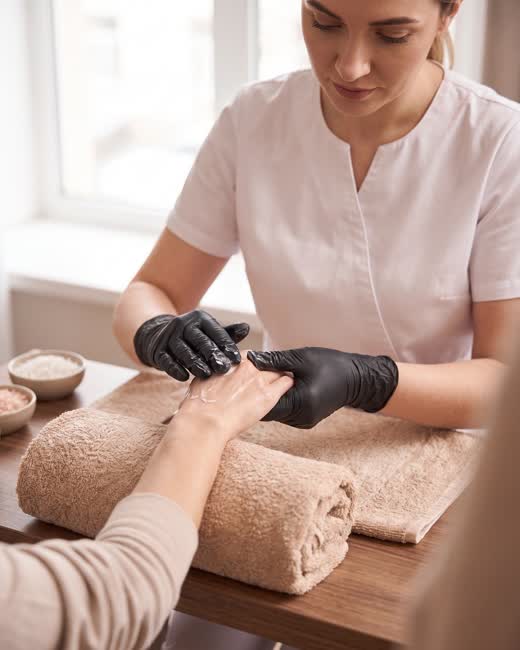
The first hour is for assessing skin temperature and reaction to the ingredients.
After standing up, sit for a moment, especially if you are prone to drops in blood pressure. Your skin may be slippery, moisturised, and warmer to the touch. Wear loose clothing and be careful on the floor and with footwear if your feet were massaged.
Check the areas where you felt the most heat. Uniform, light pinkness should subside. Sharp, localised pain, a blister, whitening, or a dark change in colour may indicate thermal damage. Cool the area with running cool water, not ice, and seek appropriate help.
In the evening, do not wash off the oil with a scrub or a hot bath.
If the salon recommends leaving the product on, you can wait with washing. If the composition or scent bothers you, use lukewarm water and a mild cleanser without scrubbing. Rubbing with a towel, a brush, or a scrub will not improve absorption; it will increase irritation.
Avoid the sauna, very hot baths, intense training, and tanning on the same day. Your skin has already received heat, pressure, and a cosmetic product. Adding more temperature will not prolong the relaxation.
The first night reveals part of any fragrance or contact reaction.
Itching, hives, increasing redness, or swelling may indicate irritation or an allergy. Wash off the residue gently, do not apply essential oils, and contact the salon. Note the name of the candle and any cosmetics used later.
Shortness of breath, swelling of the tongue or throat, or a generalised, rapid reaction require urgent help. Do not wait until morning and do not try to cover the symptoms with another balm.
The day after the massage may bring tenderness, but it should not restrict movement.
After more intense work, muscles may be sensitive, as they are after moderate exercise. Gentle movement, normal hydration, and sleep are usually sufficient. There is no need to drink excessive amounts of water or use a "detox".
Increasing pain, an extensive bruise without explanation, numbness, or restricted movement require contact. A massage should not leave an injury, and a bruise is not a measure of quality.
Days two and three are a return to your usual skincare without experiments.
If your skin is calm, return to your standard cleansing and balm. It is better to postpone a new acid, retinoid, strong peel, or hair removal, especially if the surface is still sensitive. Do not test several new cosmetics at once after a reaction.
If you notice individual spots, check if the cause could be occlusion, clothing friction, or a known ingredient. Do not squeeze the lesions. If the rash spreads, hurts, or oozes, an assessment is needed.

Days four to seven do not require special maintenance of the effect.
The softness of the skin after oils is temporary. It is maintained by your regular skincare tailored to your skin, not by another layer of candle at home. Massage will not permanently reshape your silhouette or remove chronic pain.
If the goal is relaxation, choose the frequency according to your well-being and skin tolerance. If the goal is pain, swelling, or restricted movement, you may need diagnostics or physiotherapy, not a more frequent ritual.
Alarm signals take priority over the care calendar.
- blisters, severe localised pain, or a necrotic appearance of the skin
- increasing swelling, hives, or a widespread rash
- shortness of breath or swelling of the face and throat
- muscle pain that intensifies instead of subsiding
- numbness, weakness of a limb, or significant restriction of movement
Take a photo in daylight, record the time the symptoms started, and contact the salon. For general or severe symptoms, seek urgent help, not the complaints channel.
In Krakow, keep the product name and the salon's phone number.
J’ADORE INSTYTUT in Krakow is located at Karmelicka 45/2B. You can find information about the service on the hot candle massage page in Krakow. Before you leave, ask about the composition of the candle used, especially if you have allergies.
If the process is calm, lukewarm water, loose clothing, and avoiding overheating for the first 24 hours are sufficient. If your skin hurts, swells, or develops blisters, do not wait seven days for it to subside on its own. The care calendar ends where an injury or allergic reaction begins.


