How cupping works
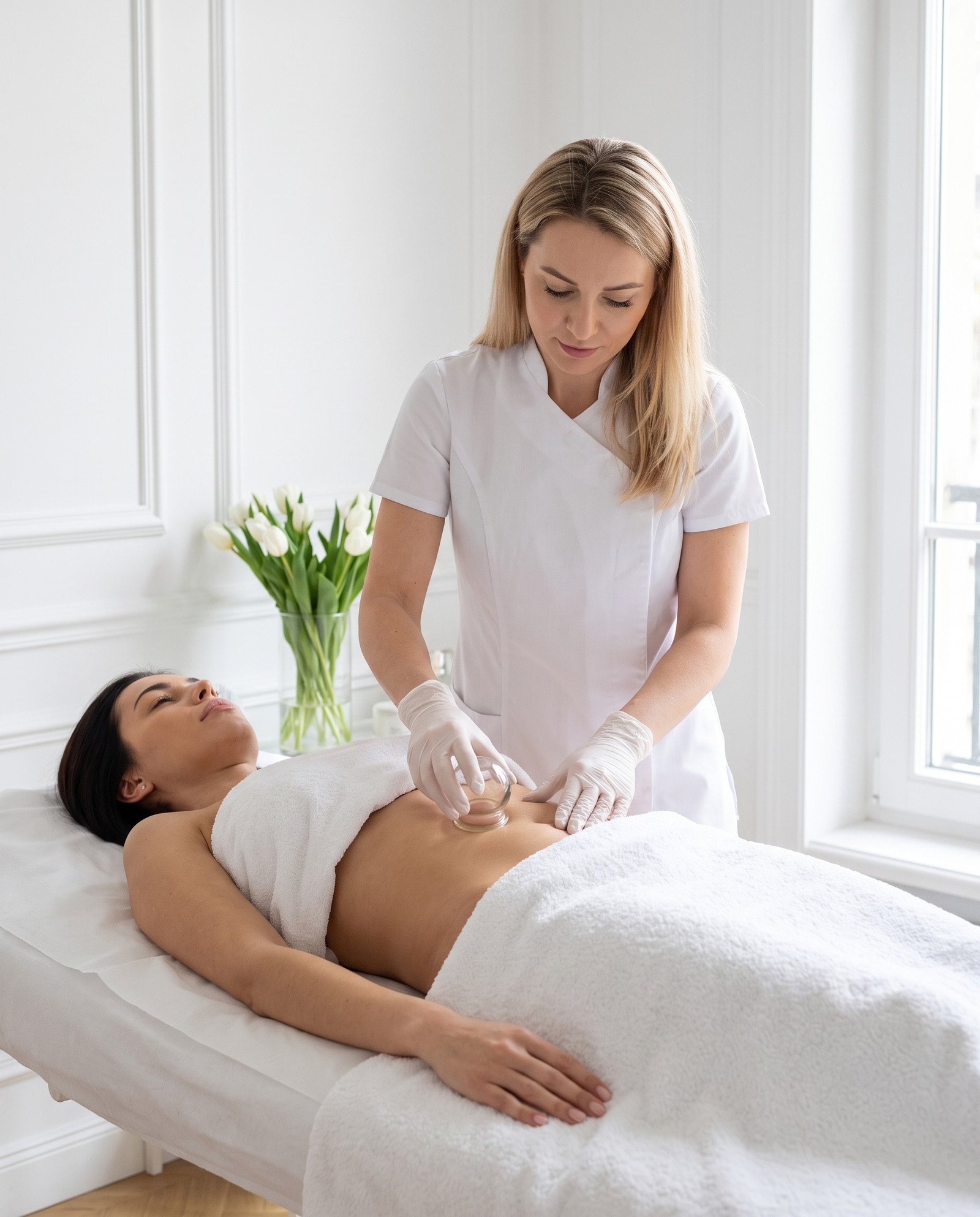
A vacuum cup creates negative pressure above the skin and draws tissue upwards. This seemingly simple mechanism triggers a range of responses in the body.
- Fascia release — reduces muscle tension, loosens deeper tissue layers
- Increased blood flow — oxygenates tissue, speeds up natural regeneration
- Lymphatic system stimulation — reduces swelling, speeds up removal of metabolites
- Breaking down adhesions — improves tissue mobility after injury and overuse
- Skin receptor activation — a relaxing effect delivered through the nervous system
Two cupping techniques
What we use cupping for at J'ADORE
There's no downtime after a back and neck treatment — you can return to daily activities straight away. Marks on the skin may last a few days.
Contraindications to cupping therapy
Does cupping hurt?
Static cupping creates a strong "suction" sensation — intense, but not painful for most people. Once the cup is removed, you feel warmth and relief.
Dynamic cupping on the body feels like pressure and warmth. With more pronounced cellulite, the first sessions can feel more sensitive — a normal tissue response.