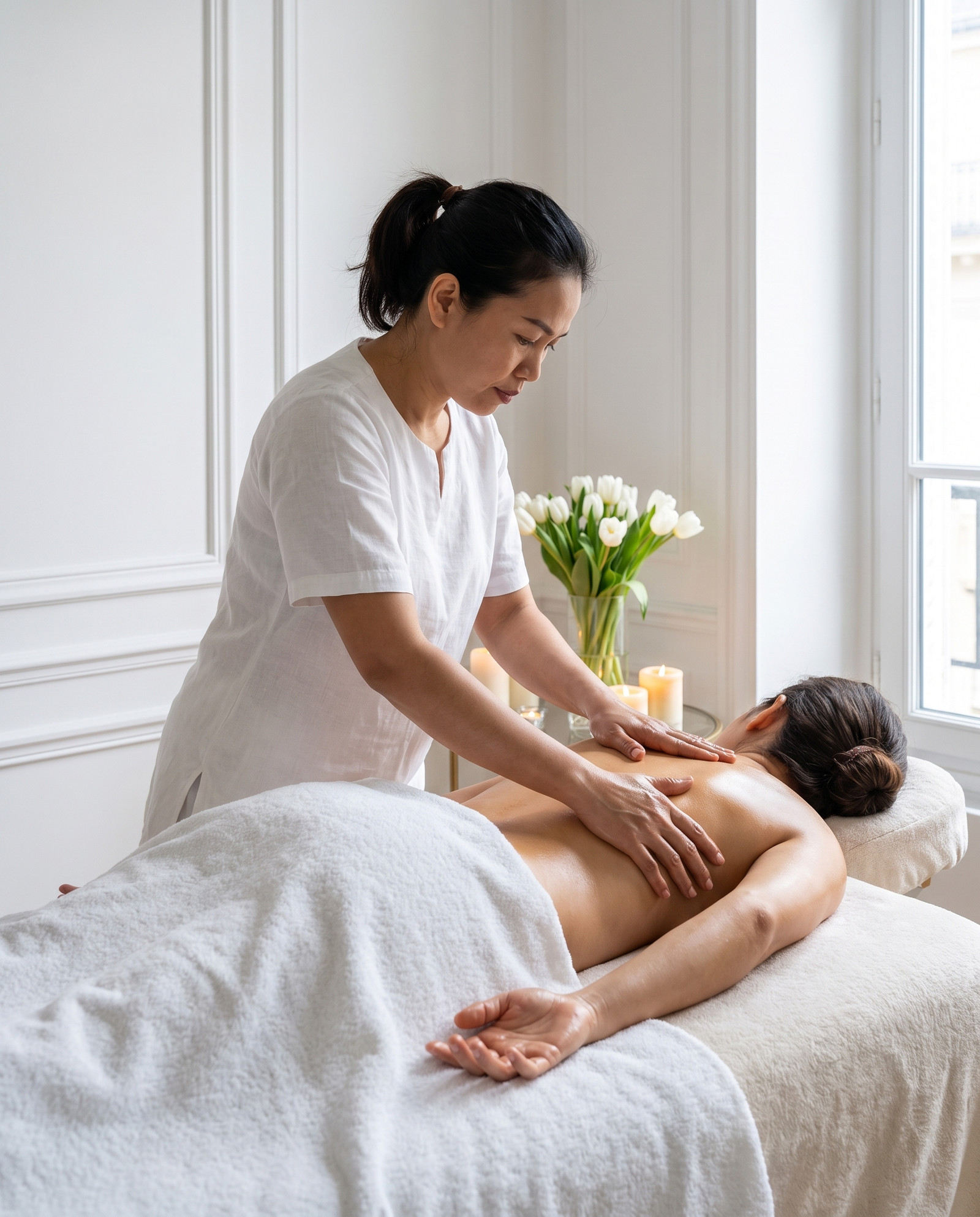
Two weeks before: check for conflicts with treatments, surgery, and medication
If you have recently had surgery, an injury, injections, laser, a body treatment, or have started new medication, ask your practitioner about the required interval. There is no single timeframe for all procedures. The location, healing process, and planned intensity are what matter.
Disclose pregnancy, vascular, clotting, heart, or bone conditions, neuropathy, and active oncological treatment. Do not stop taking painkillers or anticoagulants on your own. The therapist needs a true picture, not an "ideal form".
Two days before: do not add hair removal or strong exfoliation to your skin
Shaving, waxing, granular scrubs, acids, and intense tanning can leave micro-injuries. Oil, friction, and pressure will then become more irritating. If your skin is red, stinging, or has sores, reschedule your treatment or exclude that area.
Also, watch for infection and injury. Fever, unilateral calf swelling, sharp pain, or a fresh sprain are not problems to be massaged. Contact the salon instead of coming in to "see if it goes away".
The day before: skip record-breaking training and large amounts of alcohol
Normal activity is fine, but a new, very heavy workout can increase tenderness. Alcohol impairs hydration and your perception of sensations, and it may increase discomfort the next day. Massage is not a way to speed up sobering up.
Sleep as much as you usually need. Lack of sleep increases sensitivity to stimuli. You do not need to drink excessive amounts of water; maintain normal hydration.
On the day of your visit: eat lightly and give your stomach time
A full stomach makes it difficult to lie comfortably on your front. Eat a normal, light meal well in advance, rather than coming after a feast or a whole day without food. Hunger can lead to weakness and dizziness.
Take a shower for your own comfort, but do not scrub your skin. Do not apply multiple layers of lotion or perfumed oil; the salon will use the medium needed for the technique, and a mixture of scents can be irritating.
Clothing after a massage should tolerate oil and allow free movement
Choose loose clothing that does not press on warmed tissues and that you do not mind getting a trace of oil on. Remove jewellery that hinders work on the neck, wrists, and ankles. It is worth bringing a hair tie if you want to keep your hair away from the oil.
The salon should provide a cover and expose only the part of the body currently being massaged. Tell us if you do not want work on a specific area. Your boundaries do not require medical justification.
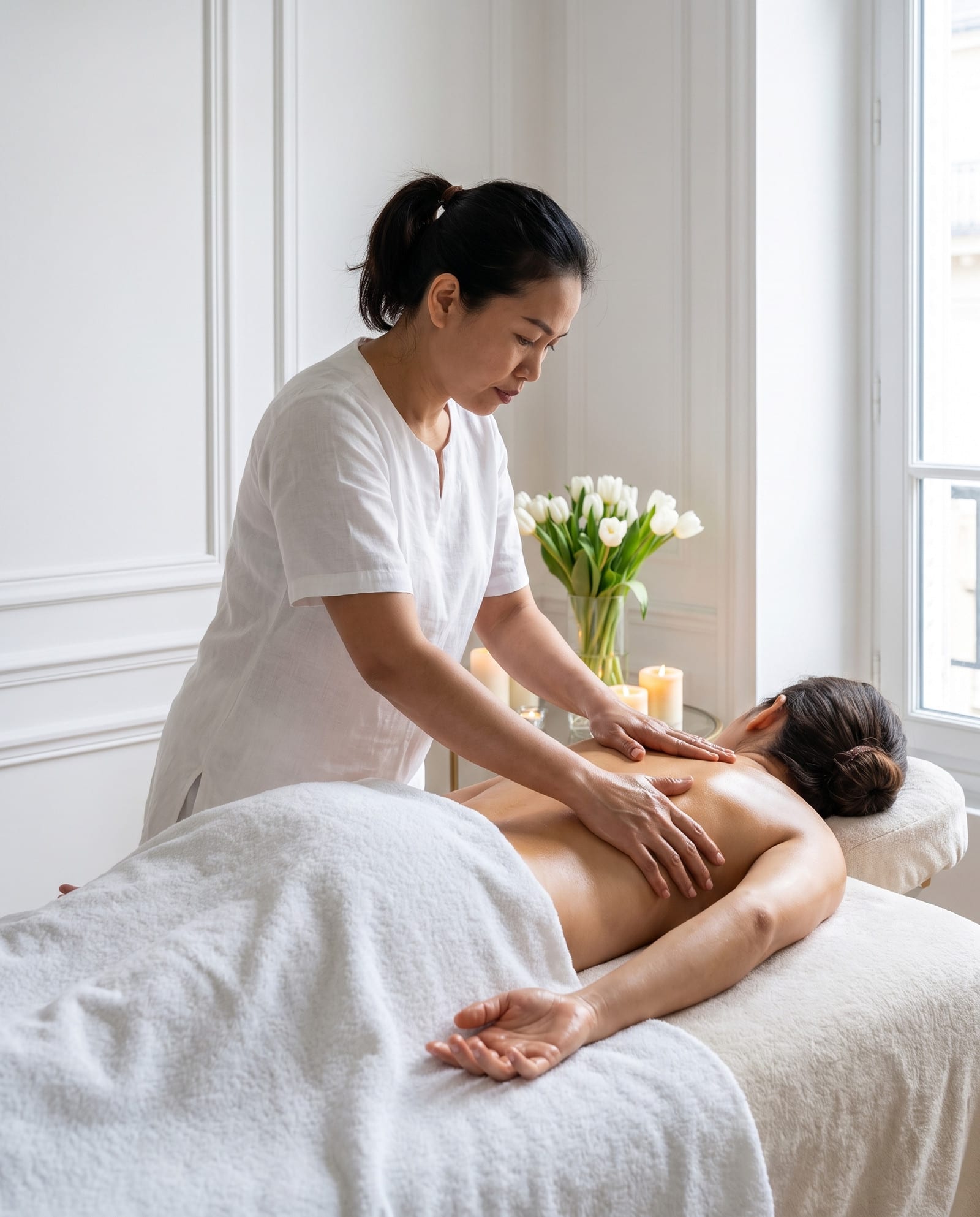
Five minutes of conversation before the session saves an hour of incorrect pressure
- Point out injuries, scars, varicose veins, moles, and painful areas.
- State whether you prefer light, medium, or strong pressure, but allow the therapist to verify safety.
- Report allergies to oils and fragrances.
- Establish whether there will be any stretching elements.
- Agree on a signal for immediate pressure reduction.
"Strong" does not mean the same thing to two different people. Describe the sensation functionally: whether you can breathe freely and relax the muscle. If your body recoils from the hands, tenses up, and holds your breath, the pressure is not helping.
During the massage, correct the pressure before sharp pain appears
Do not wait until the end of the movement. Report skin burning, tingling, numbness, radiating pain, nausea, or dizziness. The therapist can change the technique, position, or finish work in that area.
Balinese massage does not have to be strong all over the body. Tense shoulders may tolerate different work than calves after a run. Adjusting does not take away from the authenticity of the treatment.
In Warsaw, choose a salon and come with a short history of your body
J’ADORE INSTYTUT operates at Żelazna 59 and Mińska 29A/46. Details can be found on the Balinese massage page in Warsaw. When booking, report any issues that affect the choice of date; complete the full consultation before the session.
The best preparation consists of four decisions: no heavy meals or alcohol, no skin irritation, no hiding medical conditions, and no staying silent when pressure is too strong. The rest is just an addition.