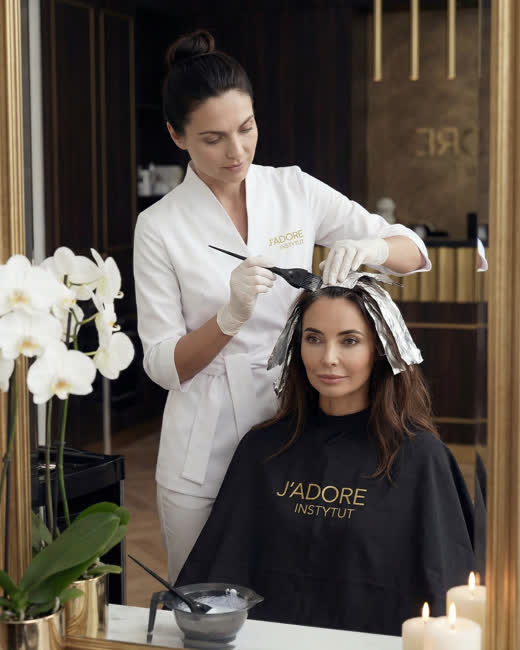
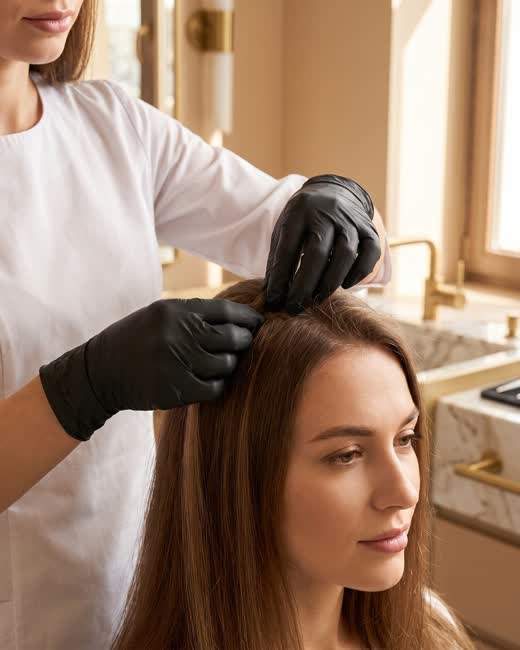
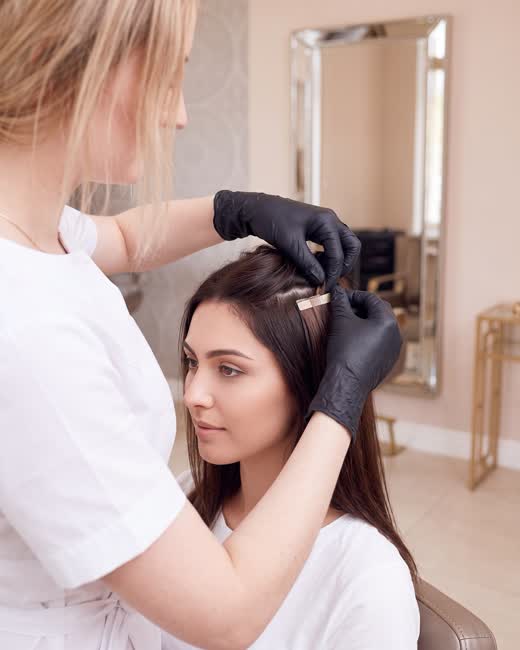
A treatment room at J'adore
SCALP & HAIR
An oily, itchy scalp, dandruff flakes on your shoulders, hair that "weighs down" a day after washing — this is usually seborrhoea and excess build-up on the scalp, not a fault of your shampoo. Scalp oxybrasion is gentle, mechanical cleansing with a stream (a saline and oxygen solution) delivered under controlled pressure: it washes away excess sebum, loosens and removes dandruff flakes and styling residue, and refreshes and oxygenates the scalp.
This is not a hair loss treatment, nor a medical procedure — it's a hygienic reset for the scalp, and it often works best as a first step before a course of treatment (mesotherapy, ampoules, a strengthening series), because clean skin absorbs active ingredients far better. At J'adore Instytut, the treatment is carried out by a trichologist or experienced cosmetologist. Below you'll find everything worth knowing before your first visit.
Single session or series — decided by your trichologist after trichoscopy
How it works
The scalp is skin like any other — it has sebaceous glands, sheds surface cells and collects everything that daily washing doesn't remove: excess sebum, dandruff flakes, dry shampoo residue, and hairspray or styling product build-up. Over time this layer clogs follicle openings, irritates the skin, and makes hair "weigh down" faster.
Oxybrasion cleanses this layer mechanically, not aggressively: a special applicator delivers a stream of saline and oxygen solution under controlled pressure to the scalp. The stream loosens and washes away build-up and flakes, while refreshing and oxygenating the skin. It's a gentle, "wet" version of microdermabrasion adapted for the scalp — no dry abrasion, no needles.
The result is hygienic and preparatory: the skin becomes clean, lighter, and better able to "breathe" — and, importantly, absorbs active ingredients better in the next stages of care. That's why we so often use oxybrasion as a lead-in to mesotherapy or a strengthening series.
Ideal for
Did you know: we care for our hair every day, but almost never for the scalp it grows from. It's a bit like tending a garden without ever caring for the soil. Oxybrasion looks after that "soil" — cleansing the base that healthy hair grows from.
For women and for men
Scalp oxybrasion for women is most often the answer to hair that "weighs down" too quickly, dandruff visible on dark clothing, or skin reacting to frequent styling (hairdryer, hairsprays, dry shampoo). It is also sometimes a deliberate reset before a treatment course — so that ampoules or mesotherapy work on clean skin.
What we work with
In men, the scalp tends to be more seborrhoeic, more exposed to sweat and hats, and short hair doesn't hide dandruff — which makes scalp oxybrasion for men a popular hygiene treatment. The goal is the same: cleanse, refresh, oxygenate and prepare the skin for further care.
What we work with
Important: the treatment itself is the same for everyone — what differs is the starting point (skin type, severity of seborrhoea) and what we do after it. For both, oxybrasion is hygiene and preparation, not a hair loss therapy.
What oxybrasion does NOT do
To avoid disappointment: oxybrasion is a hygiene and care treatment, not a miracle cure for everything happening with your hair.
If your hair has started falling out suddenly, in handfuls or patches, or if your scalp is very red, weeping or painful — this isn't a situation for a cleansing treatment. A consultation with trichoscopy comes first, often followed by a visit to a dermatologist or endocrinologist. Oxybrasion can wait. It's better to find the cause than to mask the symptom.
Contraindications
Oxybrasion is gentle, so there are few contraindications — and they're mostly temporary situations, where we simply postpone the treatment.
From the trichologist's chair
The most commonly postponed case: someone comes in saying "it itches and stings terribly," and the skin is heavily irritated or infected. In that case, a cleansing treatment could make things worse. It's better to calm the skin first, sometimes with a dermatologist's help, and do the oxybrasion once the skin has settled.
This isn't a complete list — we'll discuss your skin conditions, medications and previous treatments individually during your consultation with trichoscopy.

What to expect
What I hear most often: "I wash my hair every day and it still gets oily." This is a common vicious circle — aggressive washing worsens seborrhoea. Oxybrasion cleanses more deeply, but more gently, and we pair it with home care that doesn't "overstimulate" the sebaceous glands. The treatment itself is half the result — the other half is what you do in the shower.
Portfolio
A record of the work in our salons — the place where we publish treatment frames and, after photo sessions, results.
A record of results — in preparation. We publish photographs of our clients only with their consent.
Oxybrasion and your lifestyle
This is one of the gentlest scalp treatments — no downtime, no marks. Even so, it's worth giving your skin a day of rest to make the fresh feeling last as long as possible.
After your visit, the skin is cleansed — wash again as recommended, ideally with a gentle shampoo. It's worth holding off on dry shampoo and heavy pastes for a while, so as not to "weigh down" freshly cleansed skin.
Training is not a contraindication. If you sweat heavily, simply wash your hair with a gentle shampoo — sweat on freshly cleansed skin won't cause any harm.
No contraindications. If you have partings or thinning hair, remember to protect your scalp from the sun — a good habit regardless of the treatment.
It's worth planning cleansing and colouring together — your specialist decides the order and interval, so as not to affect how long your colour lasts or your skin's comfort.
Straight after oxybrasion, the skin absorbs active ingredients best — an ideal moment for mesotherapy, ampoules or a strengthening serum, if that's the plan we've agreed.
Active inflammation, abrasions, weeping or heavily reddened scalp skin — in these cases, we postpone the treatment until healing is complete. Calm skin first, cleansing after.
Scalp oxybrasion
These three things do different jobs and often complement each other. Simple logic: cleanse first, exfoliate more deeply if needed, then nourish and strengthen.
Cleanses and oxygenates with a stream
Doesn't stop hair loss, doesn't nourish follicles, doesn't cure seborrhoea permanently
Deeper exfoliation
Still hygiene/exfoliation — doesn't strengthen or thicken hair
Nourishes and strengthens
Less effective against residual sebum and build-up — hence cleansing comes first
Combine with
Oxybrasion works best as the opening move of a plan, not a stand-alone "fix." Your trichologist decides on order and intervals during consultation, but the general logic stays the same: clean skin first, strengthening after.
The most common mistake is jumping straight into "intensive treatment" on uncleansed skin. It's like applying cream to an unwashed face — some ingredients simply don't absorb. That's why with us, oxybrasion is often the first step, and the actual treatment follows it. Order matters.
Variants and support
"Oxybrasion" is primarily a stream-cleansing method, but it's tailored to your skin's needs and often finished with targeted care. You don't choose the intensity yourself — your specialist selects it after assessing your skin.
A saline and oxygen solution under controlled pressure washes away sebum and flakes, refreshing and oxygenating the skin.
Dla kogoSeborrhoea, dandruff, styling build-up, a "reset" detox.
A tonic, serum or ampoule that finishes the treatment and maintains the result between visits.
Dla kogoChronic seborrhoea and dandruff — support after cleansing.
Stronger exfoliation for stubborn, hyperkeratotic flakes.
Dla kogoWhen stream cleansing alone isn't enough.
Fact: Why do results vary between visits? It depends on your starting point (severity of seborrhoea, type of dandruff), whether the treatment is a single session or a series, and what we do after it — home care completes the result. What matters most is your specialist's assessment and plan, not one "stronger" session.
Price list
Checking free hours…
From the magazine
Editorial pieces on how this treatment works in practice — what happens during the session, how to prepare, where the limits are and what the first days after look like.
See also
The result lastsFreshness immediately visible; for seborrhoea/dandruff, best as a seriesJ’adore Instytut
Information. Scalp oxybrasion is a trichological and cosmetological treatment that supports scalp and hair condition; it is not a hair loss treatment or a medical procedure and does not replace dermatological or endocrinological diagnostics. If hair loss is severe or sudden, consult a dermatologist or trichologist. This text is for information purposes only. Indications and contraindications are assessed by a trichologist or experienced cosmetologist during a consultation with trichoscopy.
Home care
Cosmetics matched to what your skin needs after a treatment — so the clinic effect lasts longer.
 scalpSesdermaSEBOVALIS Medicinal Shampoo 200 mlView in the shop(opens in a new tab)
 hair lossDSD de LuxeVasogrotene GF Activator 011 50mlView in the shop(opens in a new tab)
 scalpestGenBalancing ShampooView in the shop(opens in a new tab)
 hair lossDermoMedicaGrowth Hair Serum 60mlView in the shop(opens in a new tab)
 scalpKV-13.2 Oily Dandruff Lotion 100ml – Anti-Dandruff BalmView in the shop(opens in a new tab)
 hair lossDSD de LuxeCrexepil Lotion Forte 3.4.1 100mlView in the shop(opens in a new tab)
 scalpKevin MurphyScalp.Spa BrushView in the shop(opens in a new tab)
 scalpOlaplexNᵒ0.5 Scalp Longevity Treatment 50mlView in the shop(opens in a new tab)