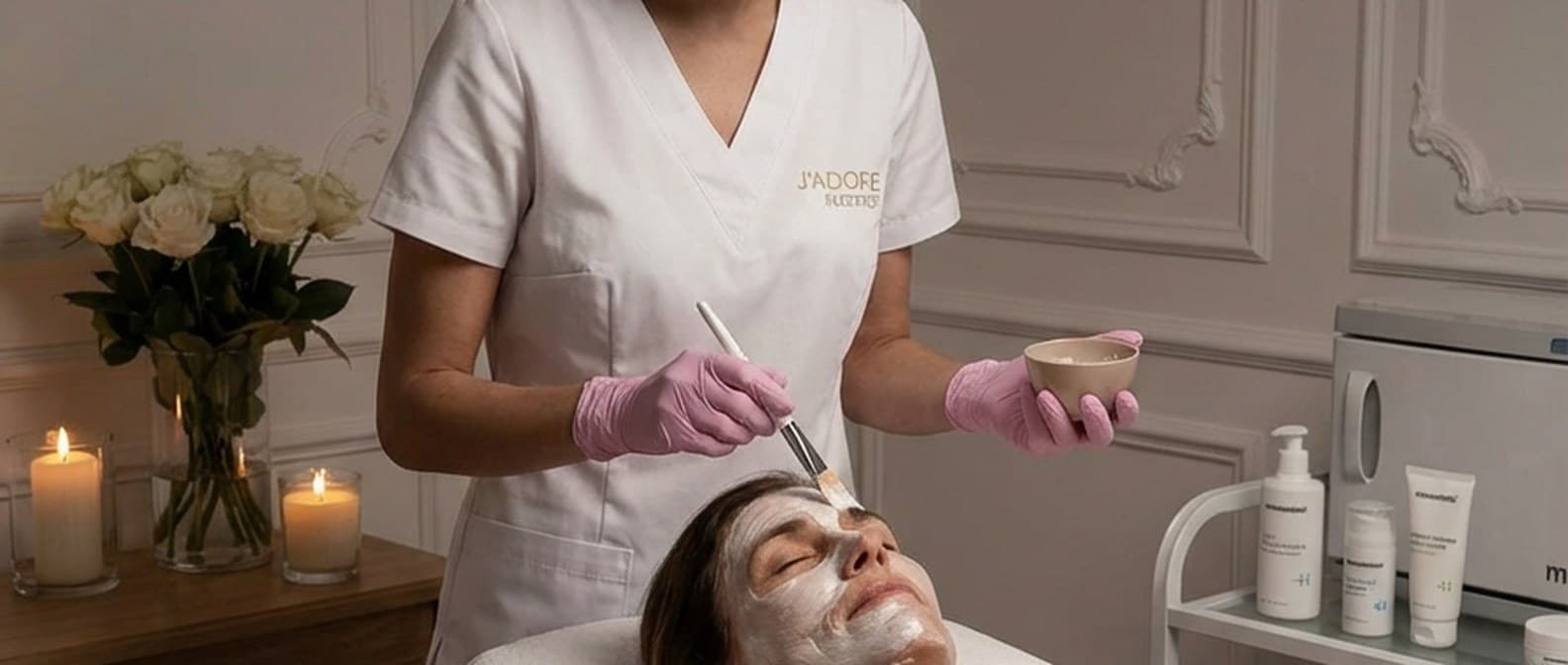
 A treatment room at J'adore
MEDICAL PEELS
The first wrinkles. Skin that has "lost its bounce".
Uneven tone after years in the sun. Fine hyperpigmentation and post-acne marks. This is the classic moment when a serum alone stops being enough, and something stronger comes to mind. Retises CT (Mediderma) is a retinol peel — a treatment built on retinol, the "gold standard" of skin rejuvenation. It works differently to acid peels: instead of simply dissolving the epidermis, it penetrates deeper and stimulates accelerated skin renewal — it boosts collagen production, speeds up cell turnover, evens out skin tone and smooths the surface. Its signature is a distinctive yellow film (hence "Yellow Peel") and a few days of light flaking, after which the skin is noticeably smoother and more radiant. It's a peel with visible impact, but not an aggressive, maximum-intensity one — done well, it delivers a lot without drama or weeks of downtime. At J'adore Instytut, it is performed by an experienced cosmetologist. Below you'll find everything worth knowing before your first visit.
Best results come from a series of 4–6 sessions every 2–4 weeks (outside the summer season), followed by seasonal maintenance.
How it works
Retises CT is a retinol peel from the Mediderma line. Retinol is a pure, active derivative of vitamin A — the most extensively studied rejuvenating ingredient in cosmetology. Unlike classic acid peels, which mainly dissolve the stratum corneum, retinol works through "signalling": it penetrates deep into the skin and prompts cells into accelerated renewal. The result is faster epidermal turnover, more visible collagen and elastin synthesis, an evener skin tone and a smoother surface.
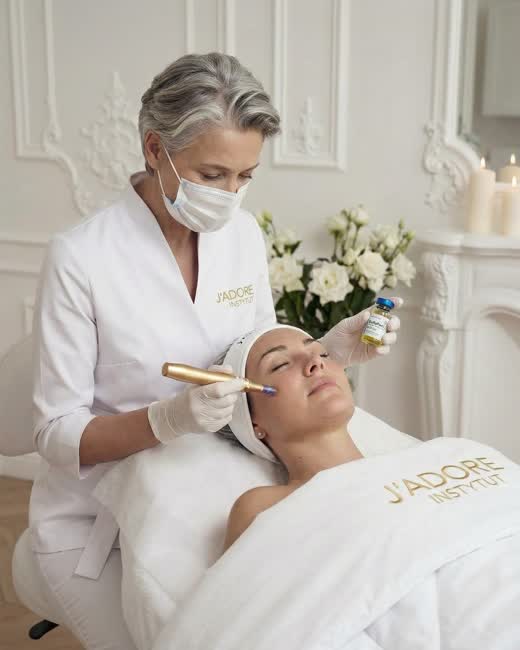
In practice it works like this: the product is applied in the salon and stays on the skin for several to a dozen or so hours (some protocols are "take-home" peels, which you wash off after a set time). The skin takes on a characteristic yellowish tint (hence the informal name "Yellow Peel"), and after 2–4 days fine flaking begins — this is when the old epidermis sheds, revealing smoother, brighter skin underneath. It's a controlled, planned process, not a complication.
In the salon, Retises falls into the category of peels for rejuvenation — wrinkles, hyperpigmentation and loss of firmness — with strong support for photo-ageing and post-acne marks. It's a peel with visible impact, but chosen with care: your cosmetologist determines its strength, variant and series after assessing your skin phototype and condition. The goal isn't "the strongest possible exfoliation" — it's the right dose of retinol for your skin.
Ideal for
The female zone and the male zone
Retinol peeling in women is most often the answer to the first wrinkles, loss of firmness and hyperpigmentation — after 30, after summer, after pregnancy (hormonal hyperpigmentation). Retises smooths, evens out skin tone and "thickens" the skin, and most often covers not only the face but also the neck and décolleté — that is, the zones that betray age the fastest. We usually carry it out in a series, during the cooler months.
What we work with
Men's skin is thicker and more prone to being oily, with larger pores, along with scars and unevenness from acne and, usually, no habit of using SPF — meaning faster photo-ageing. The retinol peel for men works wonders on this kind of skin: it evens out texture, smooths acne marks and refreshes tone, and thicker skin often tolerates retinol well. The goal: better skin quality without a "salon-fresh" look.
What we work with
Worth knowing: the yellow tint after Retises isn't "discolouration" or a side effect — it's the natural colour of retinol (a vitamin A derivative) settling on the skin. Hence the informal name "Yellow Peel". The film washes off and fades along with the flaking over the following days — and the skin turning yellow is actually a sign that the product has worked. Retinol is the only skincare ingredient with such strong scientific evidence for real skin rejuvenation that it's sometimes called the "gold standard" of anti-ageing.
Safety
A retinol peel sounds simple — "apply retinol to the face" — and that's exactly why it's easy to get wrong. Three things determine the result and safety, and they're worth asking about at any salon:
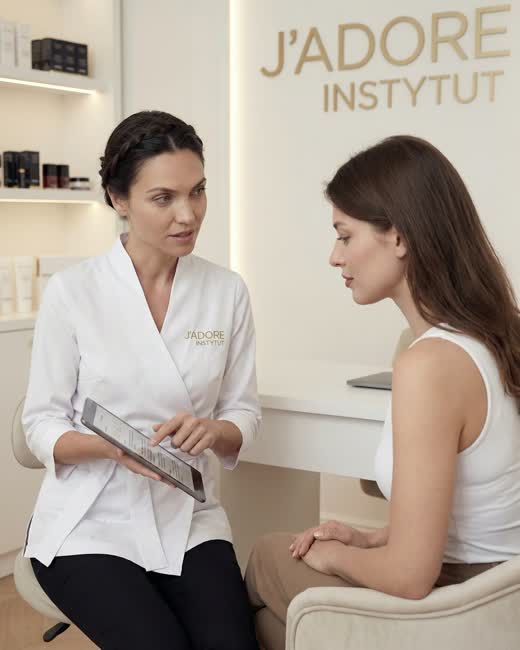
This is a beauty treatment — at J'adore it's carried out by an experienced cosmetologist, who assesses your phototype, skin condition, previous treatments and contraindications, then gives you clear instructions on how to manage things at home while the product works and the skin flakes. A retinol peel "without a consultation and without a phototype assessment" is a straightforward path to irritation or hyperpigmentation — especially with darker skin tones.
We use only original Mediderma products (Retises CT) from legitimate supply channels. Retinol is sensitive to light and oxidation — a product "from an unknown source" or stored incorrectly may be inactive and ineffective, and its strength unpredictable.
Retises is meant to renew the skin, not "burn" the epidermis. What matters is matching the retinol concentration and frequency to your skin, and a sensible series plan in the right season — not maximum strength on your first visit.
Red flags with retinol peels ·
MEDICAL PEELS
Contraindications
Some contraindications are permanent, others temporary — in which case we simply postpone the treatment until the situation passes. This is a chemical peel containing retinol, so skin condition, phototype, season and issues related to vitamin A and sun exposure are all key.
From the cosmetologist's chair
The most commonly underestimated factor with Retises is season and sun. Someone wants a retinol peel "right now", in the middle of summer or just before a holiday — and I advise against it and suggest a different time instead. This isn't fussiness: retinol makes the skin more sensitive to UV, and fresh tanning combined with full sun and no SPF is a straightforward route to hyperpigmentation — the opposite of what you want. That's why we prefer to run retinol peel series in autumn and winter.
This isn't a complete list — pregnancy, chronic conditions, medications you're taking (especially retinoids), phototype and previous treatments are all things we go through individually at consultation. With retinol peels, more than with most treatments, sensible choice of strength and season matters far more than "stronger and faster".

A chemical peel is a recognised trigger for reactivating herpes (cold sores). We don't peel over active herpes — we postpone the treatment until it has fully healed. If you deal with recurrent cold sores, be sure to mention this at consultation — with medium-depth peels, it's worth discussing antiviral prophylaxis beforehand to reduce the risk of a flare-up after the treatment.
What to expect
The key point: the retinol peel keeps "working" after you leave the salon, and flaking only appears after 2–4 days. Right after the treatment, the skin may look slightly pink and take on a yellowish tint; the actual, fine flaking begins after a few days and usually lasts a few days. This is a planned renewal process — once the flaking resolves, the skin is noticeably smoother, brighter and more radiant. The anti-ageing effect builds over a series — one session is a good "reset" for the skin, not the final result.
The most common surprise after a first session is: "I left the salon and nothing happened — then I started flaking on day three." That's completely normal, and exactly how a retinol peel is meant to work. Retinol doesn't "strip" the epidermis instantly like a strong acid — it penetrates first and stimulates the skin, and the flaking follows with a delay. So don't schedule this treatment "at the last minute" before an important event — leave yourself a few days for the flaking to resolve, so you go out glowing, not mid-process.
After the series, we maintain results with less frequent sessions and the right home care (including gentle retinol/retinoid, introduced gradually, under the cosmetologist's guidance). The most important "at home" condition for lasting results is daily SPF 50+ — retinol makes the skin more sensitive to sun, and skipping protection can quickly deepen hyperpigmentation and undo the rejuvenating effect.
Portfolio
A record of the work in our salons — the place where we publish treatment frames and, after photo sessions, results.
A record of results — in preparation. We publish photographs of our clients only with their consent.
Retises and your lifestyle
With peels, most questions aren't about the treatment itself, but about what comes after: sun, makeup, sauna, home acids and retinol, exercise, holidays. The rule is simple — for a few days after a retinol peel, the skin is more sensitive to UV and irritation, and it's flaking, so we protect it, hydrate it and don't "add" anything extra to it. With retinol, sun is topic number one.
This is the single most important point with a retinol peel. Retinol makes the skin more sensitive to UV, and freshly renewed epidermis reacts to sun more strongly; without daily SPF 50+ you risk hyperpigmentation and losing your results. Skip intensive tanning and sunbeds for the duration of the series — this is why we usually run retinol peels outside peak summer.
Give your skin a rest from makeup on the day of the peel. During the flaking days, foundation can collect on the peeling skin — it's better to focus on hydration, care and SPF, and leave heavier makeup until the flaking has resolved.
High temperatures intensify redness, and chlorinated water irritates freshly flaked skin. It's best to hold off on saunas, hammams and swimming pools for a few days, until the flaking is over.
After the peel, pause your home retinol, strong AHA/BHA acids and coarse scrubs. Applying actives to freshly flaked skin is the most common cause of irritation. We reintroduce your home retinol gradually, as agreed with your cosmetologist.
Intense exercise and heavy sweating right after the peel can sting and intensify redness. Training before the treatment doesn't block anything — just give your skin a moment of calm afterwards.
A retinol peel right before a holiday in full sun (or a series in the middle of summer without disciplined SPF) risks hyperpigmentation. Planning a trip? Mention it at your consultation — we'll choose the right timing and strength, ideally in a cooler season.
Retises CT — retinol
"Medical-grade peel" isn't a single tool — different products do different things and don't replace one another. The simplest way to tell them apart is by mechanism and goal:
stimulates renewal from within — wrinkles, firmness, tone
some downtime is unavoidable — peeling is part of how it works; it will not remove melasma with a single treatment, nor will it replace a treatment for deep laxity
exfoliates the surface — texture, tone, imperfections
works mainly on the surface and doesn't "rebuild" the skin as deeply as retinol; less impact on firmness and collagen
targeted suppression of melanin
this is a separate, targeted treatment for hyperpigmentation — not a "rejuvenating peel for wrinkles and firmness"
Combine with
Retises works beautifully as the "renewal engine" in a rejuvenation protocol — not as a stand-alone treatment for everything. The cosmetologist decides the order and intervals at consultation, but the logic is consistent:
From the cosmetologist's chair
I like to treat Retises as the "renewal engine" — it's the one that rebuilds the skin, while other treatments support it. On its own it resets the skin beautifully, but for wrinkles and firmness it works best as a series, and it's worth rounding off tone with brightening peels or mesotherapy. Trying to do everything at once, "because you happen to be in the salon anyway", usually ends in dryness and irritation rather than results — with retinol, the skin also needs time to recover.
The most common mix-up: someone wants a "retinol peel for pregnancy patches", but it's actually melasma — Retises can support skin tone, but won't remove it alone, so it often becomes part of a broader plan rather than a stand-alone solution. Simple rule: wrinkles, loss of firmness, comprehensive skin renewal → retinol peel (Retises, Retix.C). Texture, blackheads, minor pigmentation, glow "without flaking" → acid peel (Mandelac, Ferulac, salicylic). Melasma and persistent patches → depigmentation such as Cosmelan/Dermamelan. Choosing the right goal matters more than choosing the "strongest" peel.
Retises variants and related peels
Behind the term "medical-grade peel" sits a whole family of products, and Retises CT itself comes in different variants and strengths — from a gentler starting point to a fuller protocol, plus a choice of area (face / neck / décolletage). You don't choose a peel "off the shelf" — your cosmetologist chooses it for you, based on your goal, phototype and skin condition. Here are the variants and related peels you'll most often find with us:
The classic retinol peel protocol — the characteristic yellow film and a few days of flaking. Stimulates renewal, smooths wrinkles, evens out tone.
Dla kogoWrinkles, loss of firmness, hyperpigmentation, comprehensive skin rejuvenation.
A gel-based retinol version (Retises 1%) — a protocol with adjustable intensity; often used across series and when combining areas.
Dla kogoRejuvenation series; variant and strength chosen by the cosmetologist.
Not a different product — a choice of treatment area, from the face alone to the full face + neck + décolletage set (the zones that show age fastest).
Dla kogoComprehensive anti-ageing where the skin reveals age most (neck, décolletage).
A related retinol protocol from a separate, Polish line (not Mediderma) — retinol enriched with vitamin C, combining renewal with radiance and antioxidant support; also available in variants for the eye area.
Dla kogoRejuvenation plus brightening and glow; hyperpigmentation with photo-ageing.
Related acid peels (not retinol-based): Ferulac and C Peel focus on antioxidant support and glow, Mandelac (mandelic) is gentle for sensitive skin. Often alternated with Retises in a series.
Dla kogoTone, glow, gentle exfoliation — complementing retinol's work.
This is not a rejuvenating peel, but targeted depigmentation (in-clinic + home protocol) — targeted melanin suppression for melasma and stubborn spots.
Dla kogoMelasma, persistent hormonal hyperpigmentation (a separate approach from Retises).
Fact: Where do the differences come from, and how do we choose the strength? Retinol peels differ in retinol concentration, product form and protocol intensity, while related acid peels differ mainly in their active ingredient, pH and "specialisation". So it's not about which is "strongest" — it's about which one suits your concern, phototype and season. The cosmetologist sets the strength and series at consultation and adjusts it session by session — on your first visit, we often start more gently, to check your skin's tolerance to retinol.
Price list
Checking free hours…
From the magazine
Editorial pieces on how this treatment works in practice — what happens during the session, how to prepare, where the limits are and what the first days after look like.
See also
The result lastsSmoothing and radiance become visible once the flaking resolves. Wrinkle reduction, hyperpigmentation fading and firmness improve, and these effects build up and settle over the series.J’adore Instytut
This text is for information only and does not replace a consultation. Retises CT is a beauty treatment (a Mediderma retinol peel) — the term "medical-grade peel" refers to the class of product, not to the treatment being performed by a doctor. The choice of peel, its strength, the series and any contraindications are determined by a cosmetologist/specialist during an individual consultation, based on an assessment of your skin phototype and condition, among other factors.
Home care
Cosmetics matched to what your skin needs after a treatment — so the clinic effect lasts longer.
 wrinklesDSD de LuxeViper-Ake Anti-Aging Cream V001 50mlView in the shop(opens in a new tab)
 post-treatment regenerationCell Fusion CDermagenis pH Biome SerumView in the shop(opens in a new tab)
 sun protectionDermaQuestSunArmor SPF50 30 mlView in the shop(opens in a new tab)
 wrinklesMedidermaSens-Age Md Intensive-A PlusView in the shop(opens in a new tab)
 post-treatment regenerationSesdermaSERENITY mask 50 mlView in the shop(opens in a new tab)
 sun protectionSkeyndorProtective cream SPF 50+ – Age Photo DefenseView in the shop(opens in a new tab)
 wrinklesSelvert ThermalAdvanced Global Anti-Ageing Retinol EmulsionView in the shop(opens in a new tab)
 post-treatment regenerationVagheggiEmozioni Plus — Anti-Stress Face Mask 75mlView in the shop(opens in a new tab)