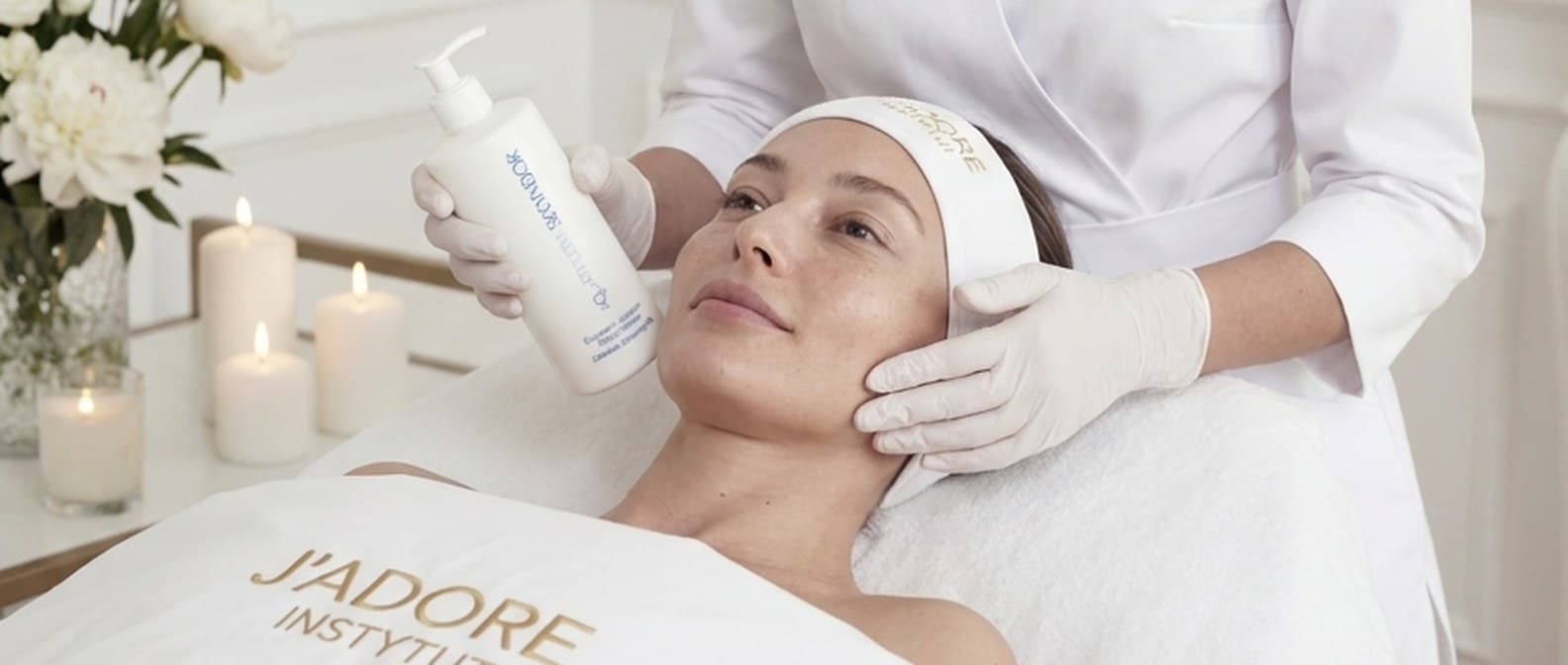
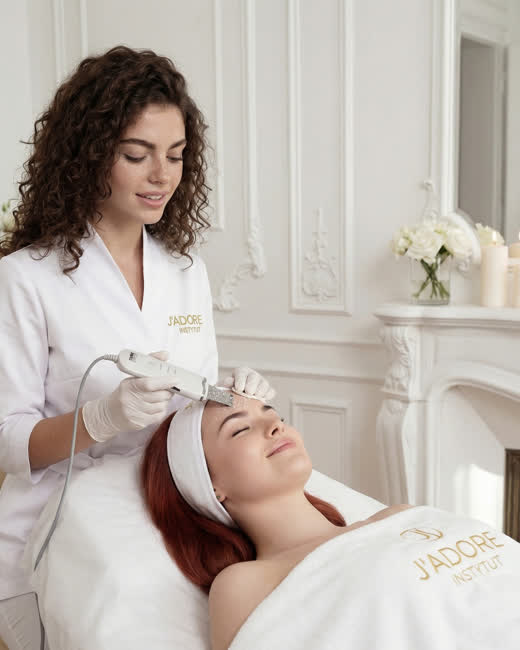
A treatment room at J'adore
MEDICAL PEELS
Dull, "lifeless" skin, tired after winter, after sleepless nights or after antibiotic therapy. Skin that has lost its radiance is matt, dehydrated and somehow "dimmed" — even though there is no specific wrinkle or spot to "fix".
This is one of the most common reasons why clients come to the clinic, and one of the harder ones to put into words. The SUCSES peel is based on succinic acid (succinic acid, the Mediderma line) — an ingredient that works quite differently from the classic "exfoliating acids". Succinic does not so much "strip" the epidermis as revitalise and stimulate the skin from within: it is a strong antioxidant, supports cellular respiration, oxygenates and moisturises, while also brightening the complexion. It is a gentle and superficial peel — its aim is not dramatic exfoliation, but restoring freshness and radiance to the skin. At J'adore Instytut the treatment is performed by an experienced cosmetologist. Below you will find everything worth knowing before your first visit: whether it really works, whether it stings, whether you will peel and for how many days, when the effect is visible, how many treatments in a series and why SPF cannot be skipped here.
Series of 4–6 sessions every 1–2 weeks (for tired, dehydrated skin)
How it works
SUCSES is a peel based on succinic acid — a substance familiar to the skin, closely related to the natural energy processes of cells. Unlike strong "exfoliating" acids, succinic acid works primarily as a revitalising and antioxidant agent: it neutralises free radicals, supports cellular respiration, oxygenates and hydrates the skin, and at the same time brightens and evens out skin tone. The skin does not so much "peel off" as regain its freshness and radiance.
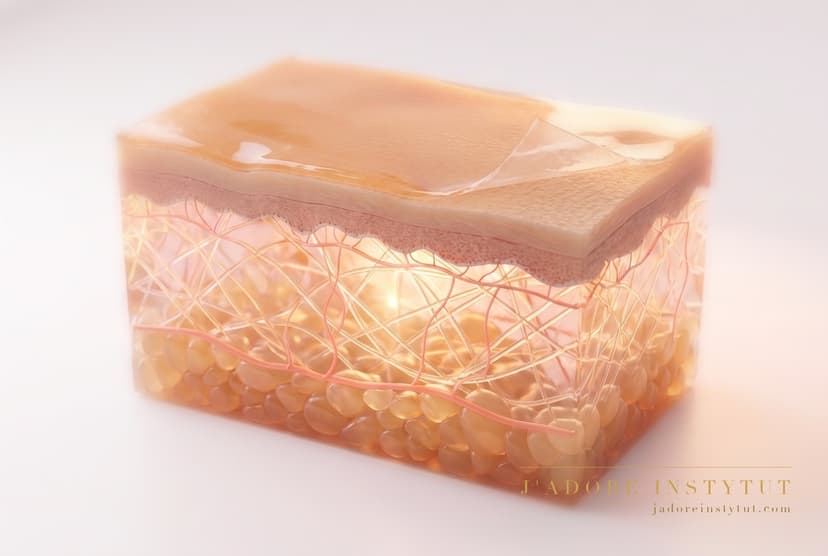
This is a superficial peel — it works mainly on the epidermis, in a controlled and safe way. Its aim isn't aggressive exfoliation. It's about "waking up" grey, tired and dehydrated skin that's lost its glow and looks switched off. That's why amber is one of the gentler peels we offer, well tolerated even by sensitive and reactive skin.
Ideal for
Amber is a "refreshing and revitalising" peel, not a resurfacing one. For deeper concerns — significant hyperpigmentation, advanced acne, noticeable scarring — your cosmetologist may combine it with other treatments or suggest a stronger protocol. More on that below.
Women's and men's skin
The most common reason women reach for the amber peel for women is grey, tired, dehydrated skin — after winter, after giving birth, during a busy period, or after a course of antibiotics. Skin loses its radiance and looks "switched off", even without one specific flaw. Amber is ideal here: it revitalises, oxygenates and brightens, while remaining gentle enough for sensitive and reactive skin.
What we work with
For men, the amber peel for men most often targets oily, dull skin, with acne marks, pigmentation and post-shave irritation. Men rarely have an SPF habit, so sun-induced pigmentation and general skin fatigue tend to build up. Amber refreshes, oxygenates and evens out tone, and works as an antioxidant — all discreetly, with zero downtime, which matters for men's skin and their reluctance to show a visible "after" effect.
What we work with
Did you know: succinic acid is a natural component of the cellular energy cycle — the very one that allows cells to "produce energy". That is why in cosmetology it works differently from classic exfoliating acids: instead of mainly "stripping" the epidermis, it stimulates the skin to work from within — oxygenating, hydrating and neutralising free radicals. Hence its reputation as a peel that "awakens" the complexion rather than "punishes" it.
Safety
With peels, results and safety depend on a few things worth asking about at any salon:
The SUCSES peel is performed by an experienced cosmetologist — after a skin analysis and consultation. It's the cosmetologist who assesses phototype and reactivity, and chooses the strength and number of layers. A peel done "on the spot", without assessing the skin, is asking for irritation.
We use only genuine Mediderma products from legitimate distribution. A peel of unknown origin means unpredictable pH and concentration — that's risk, not results.
There's no "one peel for everyone". Your cosmetologist decides the number of sessions and the spacing individually — amber works through revitalisation over a series, not as a single miracle without a plan.
After a peel, skin is more sensitive to UV. A good salon finishes the treatment with sunscreen and provides specific written aftercare instructions.
A red flag — when to walk away ·
Contraindications
Some contraindications are permanent, others temporary — in the latter case, we simply postpone the treatment until the situation passes. We'll go through the full list at your consultation.
From the cosmetologist's chair
The most commonly overlooked issue: cold sores. "It's just a small blister on my lip" — that's enough to postpone the peel. An active virus combined with controlled exfoliation risks spreading the outbreak. It's better to wait a few days, and if it recurs, simply plan antiviral protection before the series.
This isn't a complete list — we'll discuss your medications, skin conditions, phototype and previous treatments individually at your consultation.

Why the "reasonable" price
A superficial peel can be cheaper than more intensive in-salon treatments, and that's not a reason for suspicion — as long as it comes with a genuine product, a consultation and a plan. A low price only becomes a warning sign when it's paired with no skin assessment, an unidentified product, or a series sold "blind".
In other words: with amber, you're not paying for "heavy exfoliation" — you're paying for the right choice and safe management of a series. That's why a single session is affordable, while real radiance and revitalisation come from consistency, not a single "shot".
The visit
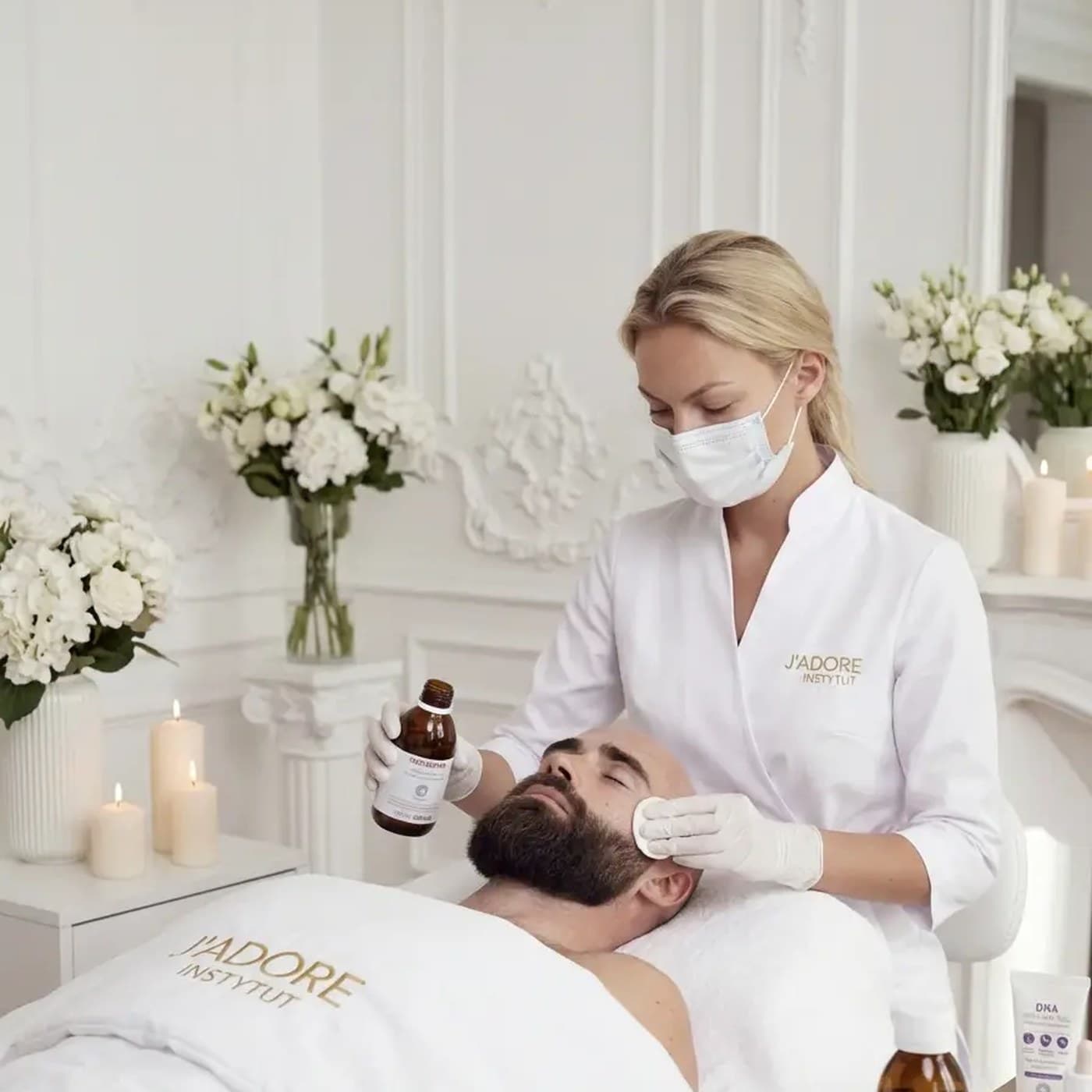
Consultation and skin analysis
your cosmetologist assesses your skin type, hydration level, tone, phototype and reactivity, rules out contraindications, and selects the peel strength.
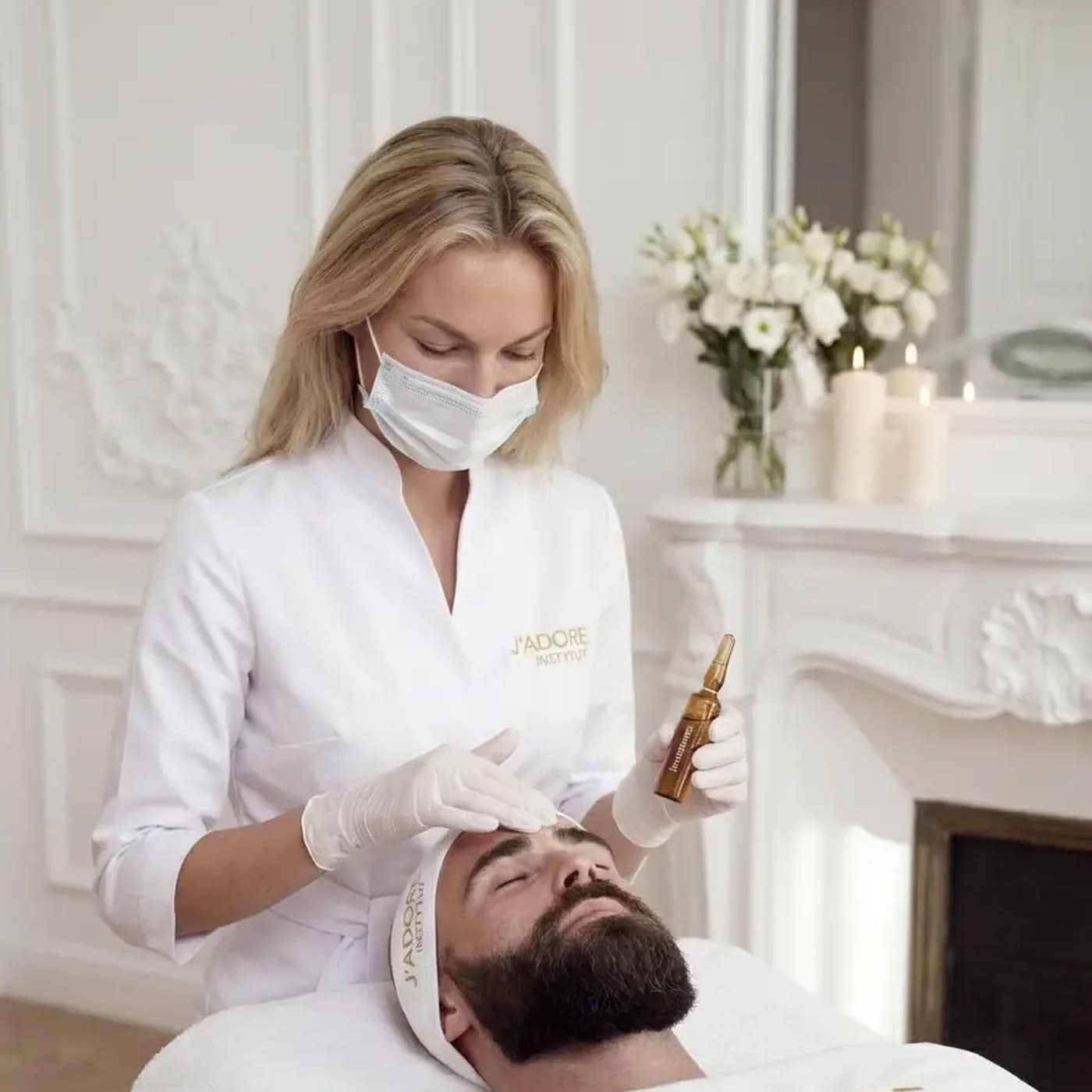
Skin degreasing
thorough makeup removal and skin preparation with a pH-balancing product, so the acid works evenly.
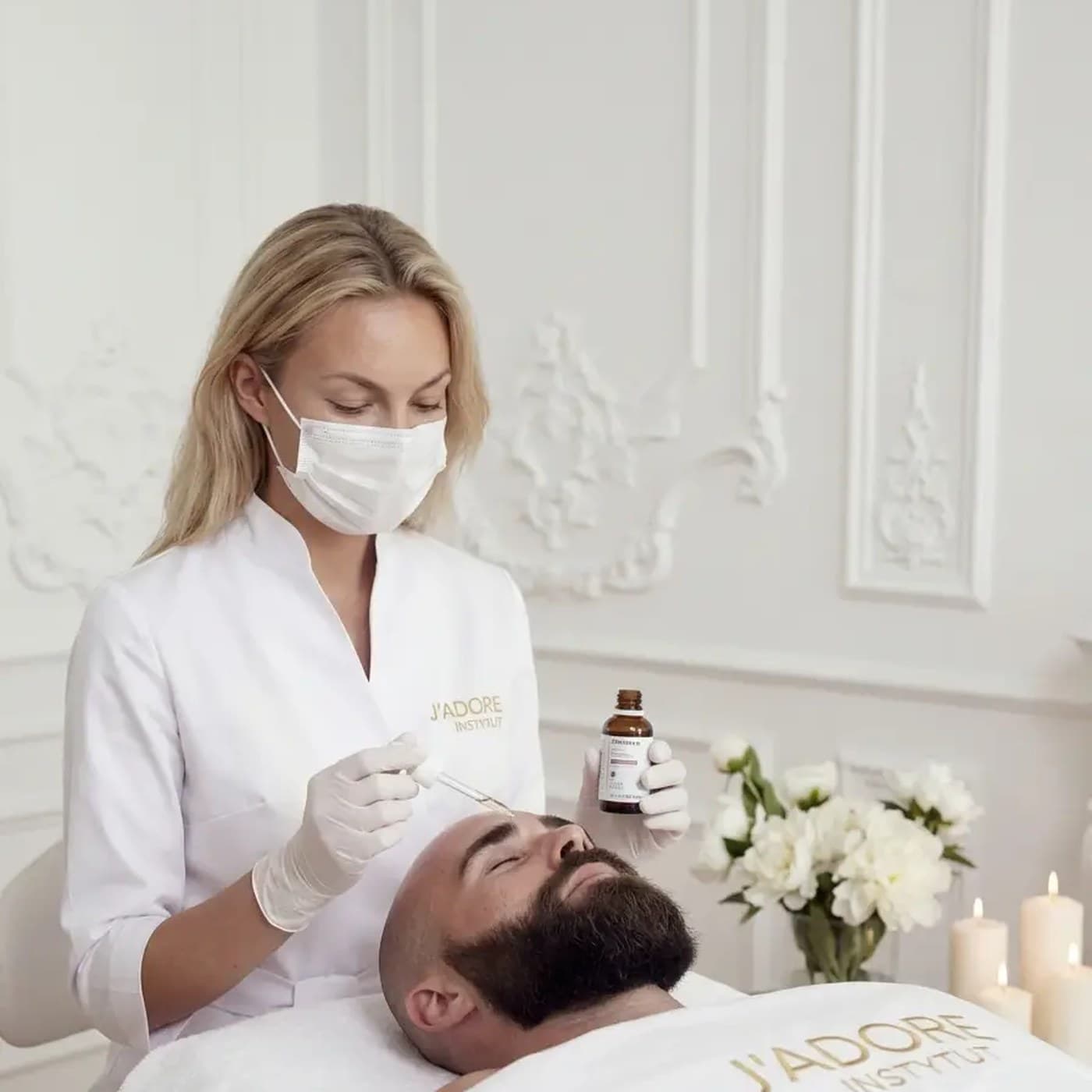
Peel application
the succinic acid product is applied in layers. Your cosmetologist watches how your skin reacts throughout and controls the exposure time.
Neutralisation / removal
the peel is neutralised or removed according to the product's protocol.
Soothing mask, hydration and SPF
a soothing and intensely moisturising preparation, and finally a filter SPF 50+. You receive written skincare recommendations.
I like amber precisely because it doesn't "punish" the skin. With very tired, dehydrated skin, I keep the first session gentle — it's more about nourishing and refreshing than heavy exfoliation. Full radiance builds through the series, not in one go. It's a "restorative" peel, not a punitive one.
Portfolio
A record of the work in our salons — the place where we publish treatment frames and, after photo sessions, results.
A record of results — in preparation. We publish photographs of our clients only with their consent.
What to expect
Most importantly: this is a gentle, superficial peel. Don't expect dramatic peeling. Temporary redness and a feeling of freshness are most common, and flaking tends to be mild, sometimes barely noticeable — small, dry flakes, not large patches.
Does it sting? You'll usually feel mild tingling, stinging or warmth during application — a normal reaction to the acid, controlled by your cosmetologist. Amber is one of the gentler peels, so sensations are generally well tolerated, even by sensitive skin.
Results? Brighter, fresher-looking skin can be visible after just one session — skin looks more rested, less grey. But real revitalisation of tired, dehydrated skin builds up over a series (usually 4–6 sessions every 1–2 weeks) and is reinforced through home care and consistent SPF.
From the cosmetologist's chair
The most common pleasant surprise after amber: "I barely flaked at all, yet I look fresh." That's exactly the point! With grey, tired skin, we're not aiming for heavy peeling — we're aiming for radiance and hydration. Judge the result by how rested and glowing the skin looks, not by how much "came off".
The peel and your lifestyle
With peels, most questions are about what happens afterwards: sun, makeup, sauna, home acids, exercise. There's one rule — during the first few days, skin is regenerating and more sensitive to UV, so sun protection isn't a suggestion, it's a condition for results.
This is the most important rule with any peel. After the treatment, avoid direct sun and sunbeds, and apply SPF 50+ daily for at least a few weeks. Without it, you risk post-inflammatory pigmentation — the opposite of the radiance you're aiming for.
With a superficial peel, makeup can usually be applied the next day. On the day of the treatment, let your skin rest and "breathe". Your cosmetologist will give you exact guidance based on how your skin reacts.
High temperatures, chlorine and sweat irritate freshly exfoliated skin and increase redness. Postpone the sauna, pool and hot baths for a few days after the treatment.
Pause strong AHA/BHA acids and retinol in your home care until your cosmetologist confirms it's fine to reintroduce them. Applying them straight after a peel is a quick way to irritate already dehydrated skin.
Intense exercise and heavy sweating right after the treatment can sting and increase redness. Give your skin 1–2 days of rest, then return to your routine without restrictions.
Sunbeds are off the table. Travelling into strong sun during a series risks pigmentation — mention your plans at your consultation, and we'll schedule sessions so your skin isn't exposed at a critical point.
SUCSES — succinic acid
"A peel to make skin look good" isn't a single tool. Amber (revitalising), a stronger superficial peel, and a depigmentation protocol each do different things, and are matched to the concern — sometimes they complement each other:
Revitalises and brightens
It's not an aggressive resurfacing treatment — it won't remove deep scars or advanced melasma on its own
Stronger exfoliation
May be too strong for very tired, dehydrated skin — the revitalising amber peel is often the better choice then
Targets stubborn pigment
This is a separate, intensive treatment programme — not a single peel for radiance
Combine with
Amber works best as part of a plan, not on its own. Your cosmetologist decides on the order and spacing during your consultation, but the general logic stays the same — first we refresh and revitalise the epidermis, then we lock in the result with deep hydration and nourishment:
If the skin is mainly grey, tired and dehydrated — I start with the amber one, because it "wakes up" and hydrates the complexion without irritating it. If the problem is very oily skin with blackheads — I often reach for a salicylic or mandelic peel. And if it is stubborn melasma — a peel alone is not enough, then we talk about a full depigmentation protocol. The choice is not "which peel is the strongest", but "which one suits your concern".
Products and variants
"The amber peel" at J'adore refers to a specific product — SUCSES from the Mediderma line, based on succinic acid. You don't choose a product "off the shelf" — your cosmetologist selects it based on your concern, skin reactivity and treatment area. The treatment area and the home-care support that extends results between visits also vary:
A professional in-clinic succinic acid peel: revitalising, antioxidant, oxygenating and moisturising. Gentle, well tolerated by sensitive and dehydrated skin.
Dla kogoGrey, tired, dehydrated skin; refreshed tone and radiance.
The same product, different treatment areas — from the face alone to face with neck and décolletage, which also lose radiance and dehydrate.
Dla kogoWhen skin fatigue doesn't stop at the face — the neck and décolletage can look "switched off" too.
A succinic acid line for home care and hydration — extends the revitalising effect between sessions in a series.
Dla kogoMaintaining radiance and hydration at home, between salon visits.
From the cosmetologist's chair
I often hear: "could we go straight for something stronger than amber?". With grey, dehydrated skin, stronger peels can be a mistake — they irritate and dry the skin out further. I choose amber precisely because it's gentle and revitalising: it lets radiance build up steadily, without "punishing" the skin.
Fact: Where do differences in strength and sensation come from? From the number of layers applied, the exposure time, and how your skin reacts — not from the name on the label. Two amber peels "with the same product" can feel different, because your cosmetologist dosages them differently for your specific skin. What matters is the choice, not "stronger equals better".
Price list
Checking free hours…
From the magazine
Editorial pieces on how this treatment works in practice — what happens during the session, how to prepare, where the limits are and what the first days after look like.
See also
The result lastsCumulative effect — builds and lasts with a series and proper home careJ’adore Instytut
Informational text. The description above is for educational purposes and does not replace a consultation. The SUCSES (amber) peel is a beauty treatment — the word "medical" in the category name refers to the class of the product, not to the treatment being performed by a doctor. The choice of peel, its strength, the number of sessions in a series and any contraindications are decided by a cosmetologist/specialist during an individual consultation, after a skin assessment.
Home care
Cosmetics matched to what your skin needs after a treatment — so the clinic effect lasts longer.
 post-treatment regenerationCell Fusion CDermagenis pH Biome SerumView in the shop(opens in a new tab)
 sun protectionDermaQuestSunArmor SPF50 30 mlView in the shop(opens in a new tab)
 hydrationSesdermaMANDELAC Moisturizing CreamView in the shop(opens in a new tab)
 post-treatment regenerationMedMelanoSkinbiotic Elixir Probiotic Repair Serum 50 mlView in the shop(opens in a new tab)
 sun protectionSkeyndorProtective cream SPF 50+ – Age Photo DefenseView in the shop(opens in a new tab)
 hydrationVagheggiEquilibrium — Universal Face Cream 50 mlView in the shop(opens in a new tab)
 post-treatment regenerationCell Fusion CPost Alpha Calming Down CreamView in the shop(opens in a new tab)
 sun protectionSesdermaREPASKIN Silk Touch Color SPF50View in the shop(opens in a new tab)