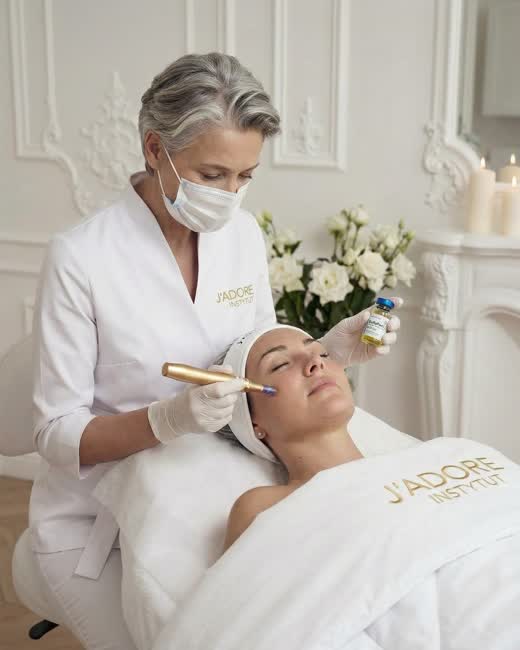
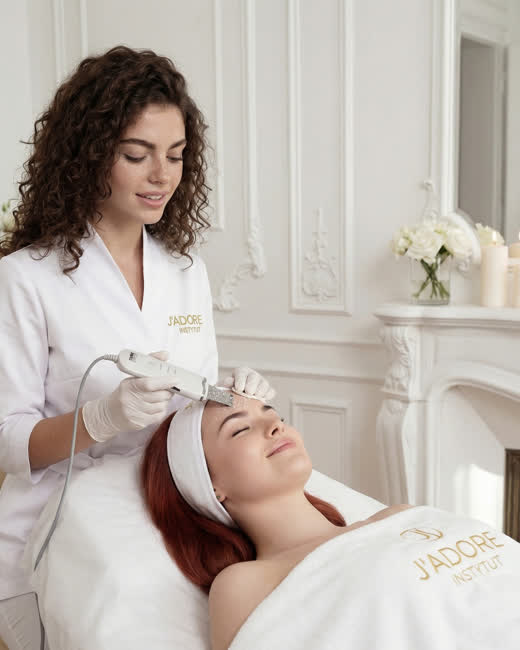
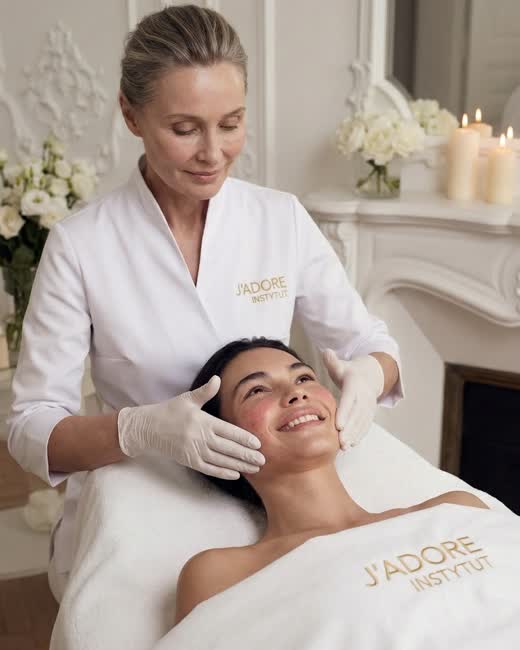
A treatment room at J'adore
MEDICAL PEELS
Uneven skin tone, summer sun spots, marks left by breakouts, grey and tired-looking skin with no radiance — this is one of the most common reasons you end up in the salon. It's not about one specific wrinkle.
It's about losing freshness and evenness across the whole skin. DermaQuest's Vitamin C Peel is designed for exactly this problem. This American professional-only skincare brand combines vitamin C with exfoliating acids to brighten hyperpigmentation, even out skin tone and protect the skin with antioxidants — without aggressively stripping the epidermis. Vitamin C is one of the best-researched "brighteners" in cosmetology. It lightens, supports skin tone and helps the skin defend itself against free radicals. That's why this peel works both as a standalone protocol for hyperpigmentation and as a "glow boost" before an important event. At J'adore Instytut, it's performed by an experienced cosmetologist. Below you'll find everything worth knowing before your first visit.
best as a series of 4–6 sessions every 1–2 weeks, then maintenance
How it works
Vitamin C Peel is a brightening peel with vitamin C from the DermaQuest portfolio — an American professional skincare brand available only through certified cosmetologists. Vitamin C (ascorbic acid and its derivatives) is one of the best-researched actives in skincare. It works as an antioxidant (neutralising the free radicals responsible for grey, tired skin and photoageing) and as a brightener (supporting a more even skin tone and curbing excess melanin production).
In this peel, vitamin C is combined with exfoliating acids. Together, they gently renew the surface of the epidermis while delivering the antioxidant exactly where it needs to work. The result is brighter skin tone, more evenness and radiance — not aggressive stripping of the stratum corneum. This sets it apart from stronger, intensely exfoliating peels: this treatment is about light and evenness, not dramatic peeling.
In the salon, Vitamin C Peel plays two roles: a standalone protocol for hyperpigmentation and grey skin (best as a series) and a "glow boost" — a quick refresh before an event, or part of a wider DermaQuest protocol. Whether Vitamin C Peel alone is enough, or whether it's better combined with another brightening peel or with depigmentation for melasma, is decided by your cosmetologist during a consultation.
Ideal for
The women's zone and the men's zone
DermaQuest Vitamin C Peel in women is most often the answer to hyperpigmentation and a dull, tired complexion without radiance — after summer, after winter, after sleepless nights. Vitamin C brightens, evens out skin tone and supports the fight against minor spots, including post-inflammatory and hormonal ones. We often combine it with other brightening peels and with LED in a series.
What we work with
DermaQuest Vitamin C Peel addresses the real problems of men's skin: it's thicker and more prone to oiliness, with post-acne scarring and hyperpigmentation added on top, plus usually no habit of using SPF. Vitamin C Peel evens out skin tone and brightens grey, tired-looking skin, with none of the "just had a salon treatment" look.
What we work with
Worth knowing: vitamin C is the same antioxidant your body needs to produce collagen — without it, collagen simply doesn't form properly. So this peel isn't just about stripping the epidermis: vitamin C is meant to brighten hyperpigmentation, protect the skin from free radicals and support it from a rebuilding angle. That's why Vitamin C Peel is considered one of the gentler, more "nourishing" brightening peels.
Safety
A chemical peel sounds simple — "applying acid to the face" — and that's exactly why it's easy to get wrong, especially when hyperpigmentation and skin phototype are involved. Three things determine the result and safety, and they're worth asking about at any salon:
This is a beauty treatment. At J'adore, it's performed by an experienced cosmetologist, who assesses skin phototype, skin type and condition, previous treatments and contraindications. A peel "with no consultation and no phototype assessment" is a simple route to irritation or — paradoxically — worse hyperpigmentation.
We use only genuine DermaQuest products from legitimate supply channels. Vitamin C is a sensitive ingredient — a product from an unknown source, or poorly stored, can be oxidised and ineffective, with unpredictable concentration and pH.
Vitamin C Peel is meant to brighten and nourish, not "strip the skin." What matters is matching the treatment to your skin and a sensible series plan, not maximum intensity on the first visit — especially with darker skin tones.
Red flags with peels ·
Contraindications
Some contraindications are permanent, others temporary — in the latter case, we simply postpone the treatment until the situation passes. This is a chemical peel, so skin condition, phototype and exfoliation-related factors are what matter most.
From the cosmetologist's chair
The thing most often forgotten with hyperpigmentation peels isn't the product itself — it's sun exposure and phototype. Someone comes in straight from holiday, or with a trip planned in a few days, and is surprised when I advise against the peel. It's not a whim — a recent tan and full sun without SPF is the quickest route to new hyperpigmentation, the exact opposite of the goal when you're trying to even out skin tone.
This isn't a complete list — pregnancy, chronic conditions, medication, phototype and previous treatments are all covered individually during your consultation. With peels, sensible selection matters more than anywhere else — not "stronger and faster."

A chemical peel is a recognised trigger for reactivating herpes. We don't peel active herpes — the treatment is postponed until it has fully healed. If you deal with recurring herpes, be sure to mention this during your consultation — with medium-depth peels, it's worth discussing antiviral prophylaxis beforehand to reduce the risk of a flare-up after treatment.
The visit
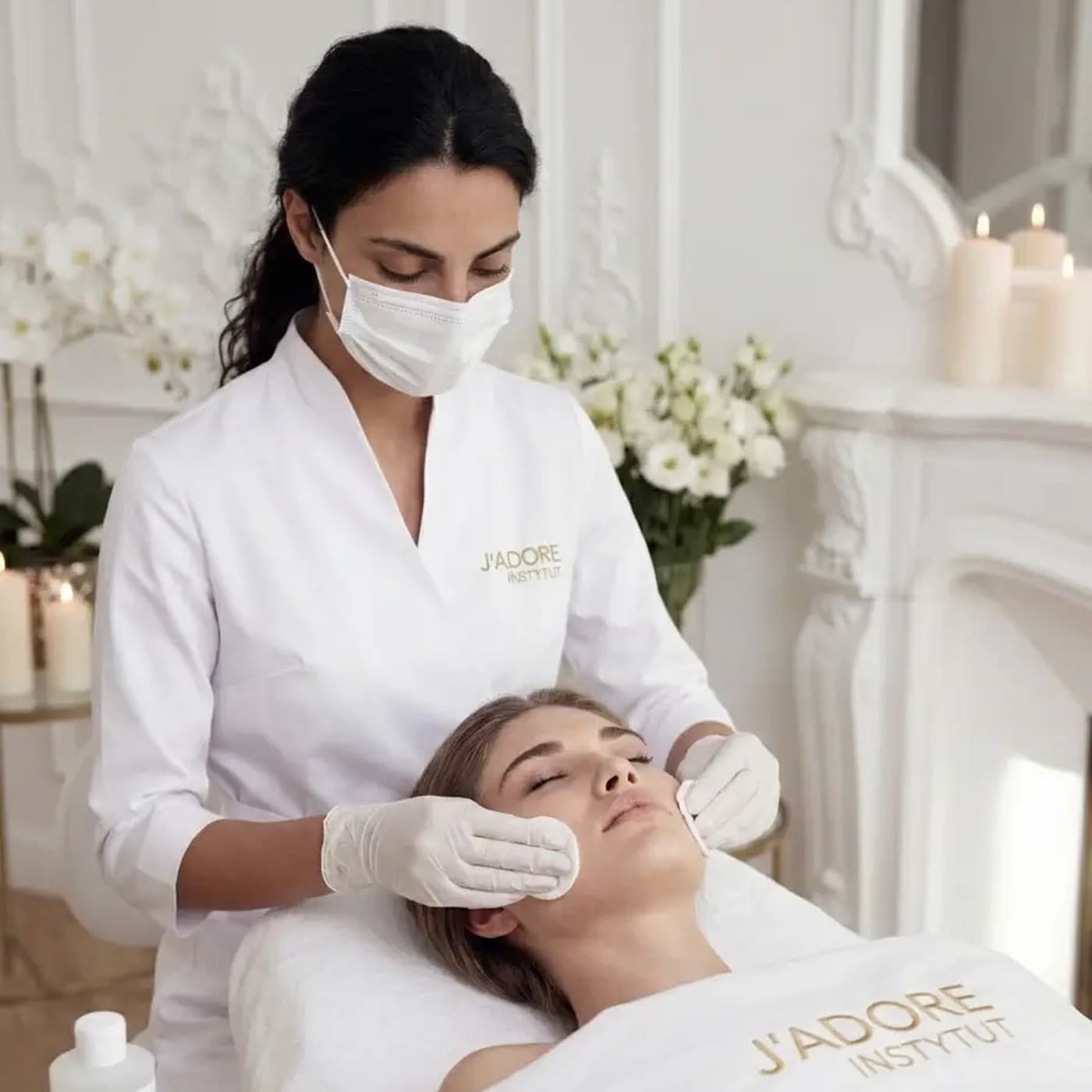
Consultation & skin assessment
your cosmetologist assesses your skin phototype, condition and type, your expectations, and rules out contraindications. They decide whether Vitamin C Peel alone is enough, or whether it should be combined with another DermaQuest protocol or with depigmentation for melasma.
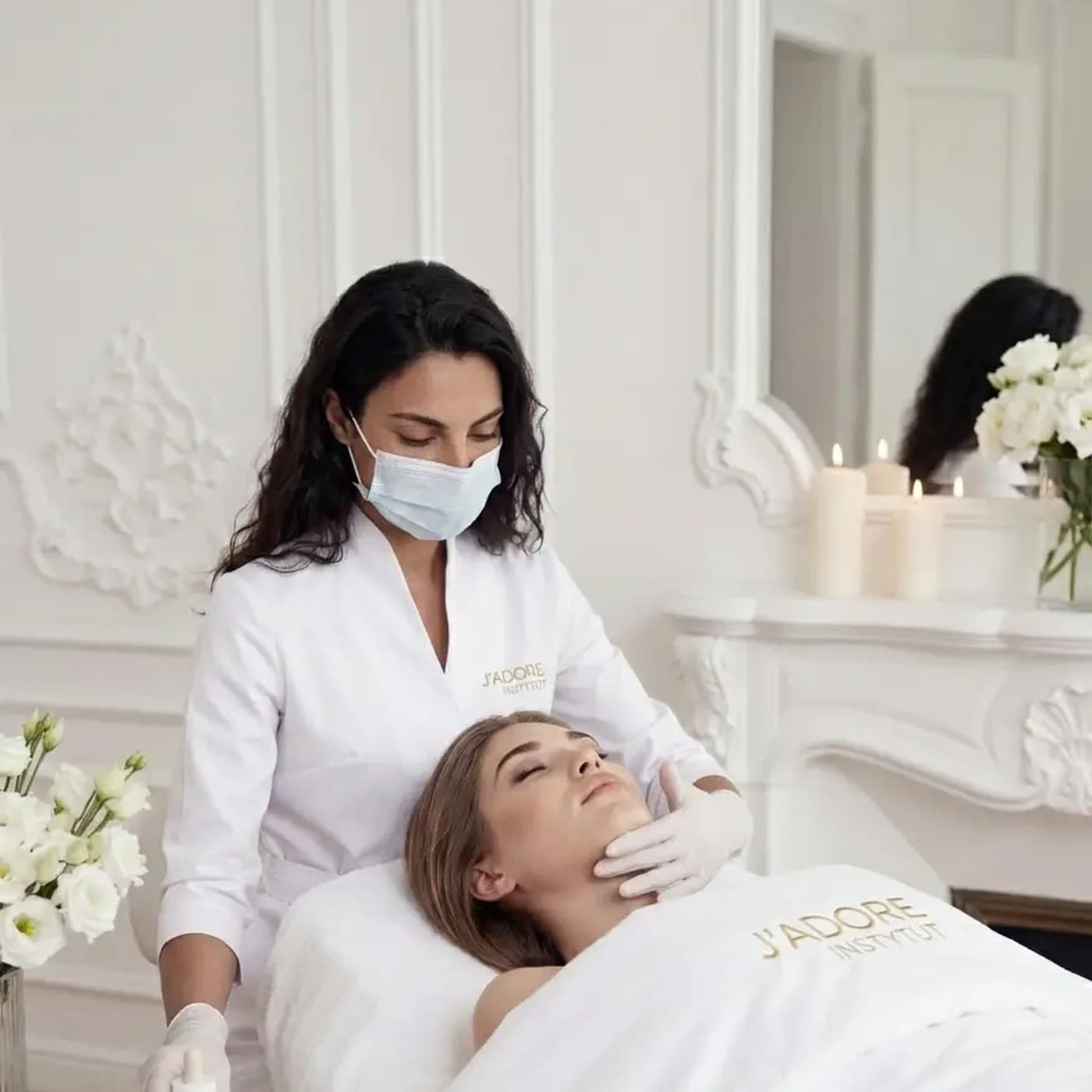
Cleansing and skin preparation
thorough makeup removal and degreasing with a preparatory product, to balance pH and ensure even absorption. This is a key step in any peel.
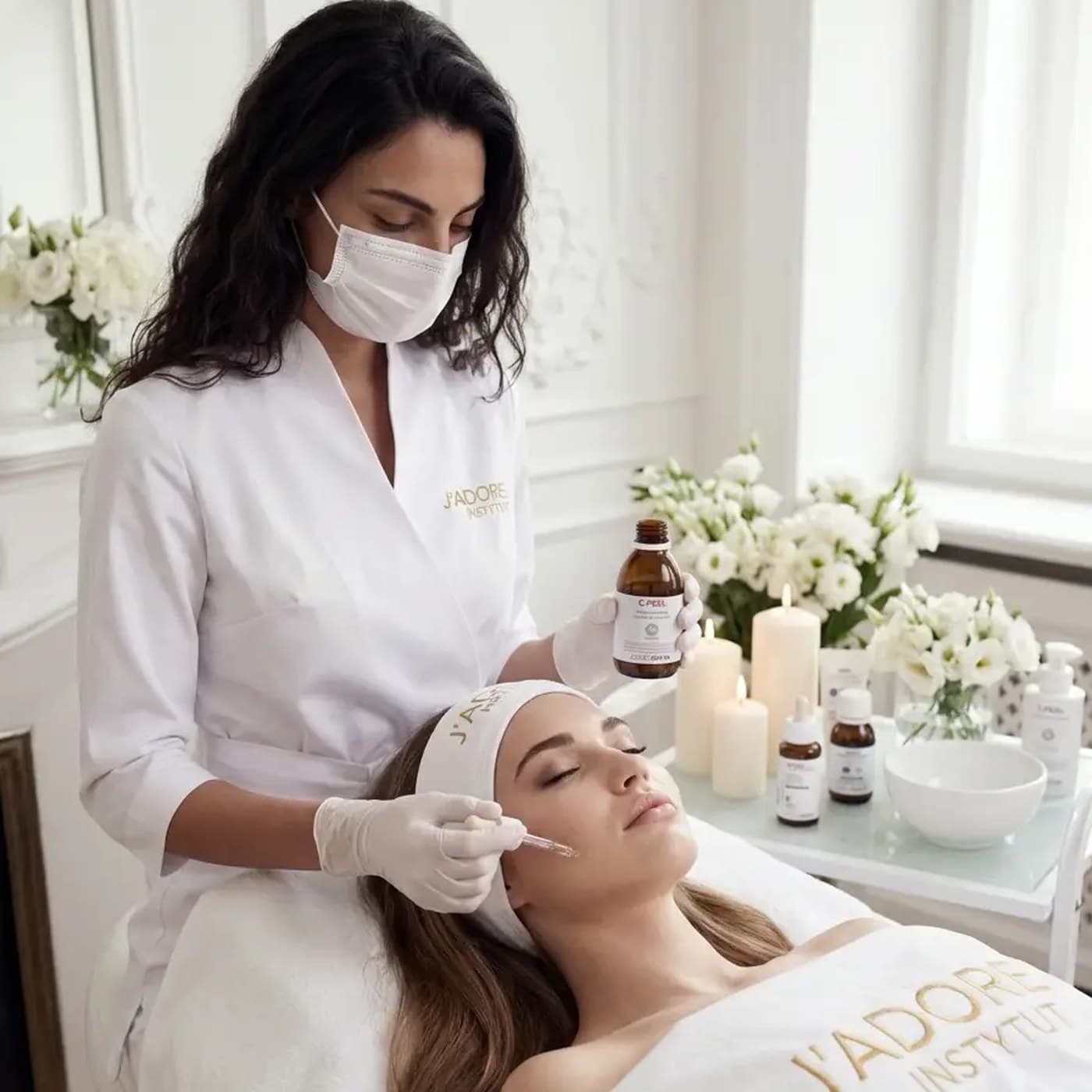
Peel application
the vitamin C product is applied to the skin in a controlled, layered way; you'll usually feel a mild tingling or warmth. This is a gentle peel, so there's no strong stinging as with stronger acids.
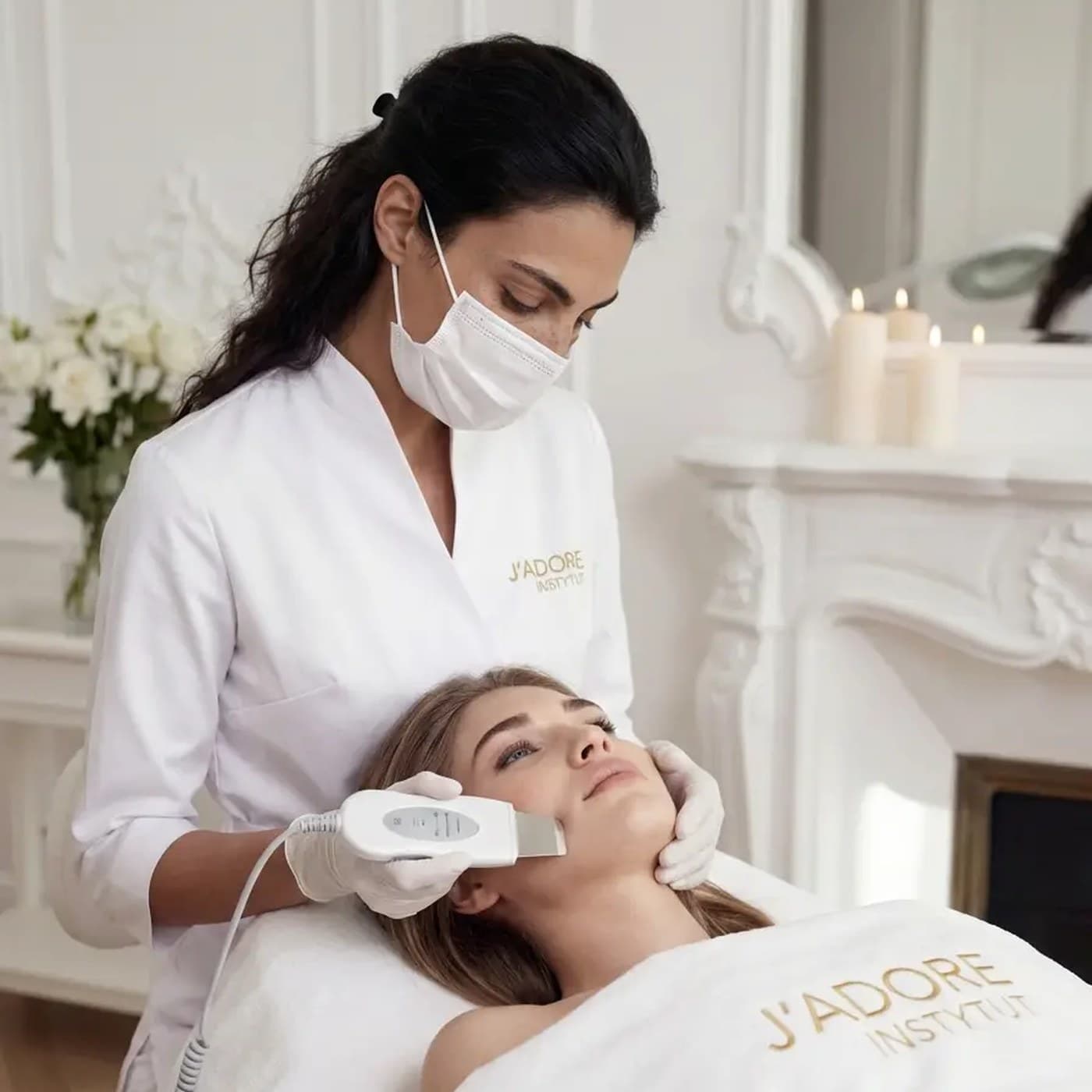
Neutralising / removal
the product is removed or neutralised according to protocol; your cosmetologist monitors your skin's reaction throughout.
Soothing mask and SPF protection
the treatment ends with calming the skin using hydrating, brightening ingredients (often combined with LED) and, crucially, a cream with high SPF. This isn't an add-on — it's part of the treatment.
What to expect
Most important: this is a gentle, brightening peel, not "heavy exfoliation." You'll notice radiance and a fresher skin tone almost straight away, but real evening-out of hyperpigmentation and lasting results build over a series — a single session is a great "instant glow," not the final word on spots. Afterwards, you'll usually notice only mild redness, with no visible peeling.
The most common disappointment after a first session is: "I thought I'd peel heavily and the hyperpigmentation would disappear straight away." Vitamin C Peel doesn't work that way — it's a peel that brightens and nourishes, not one that "strips" the epidermis. Peeling may be minimal or non-existent, yet skin still gets brighter, tone more even and spots fainter from session to session. With hyperpigmentation, patience and a series achieve more here than one intense treatment.
Portfolio
A record of the work in our salons — the place where we publish treatment frames and, after photo sessions, results.
A record of results — in preparation. We publish photographs of our clients only with their consent.
After the series, we maintain the effect with less frequent sessions and proper home care (including a vitamin C serum). The most important "at-home" condition for lasting results is daily SPF 50+ — the peel brightens and evens out skin tone, and unprotected sun exposure can quickly undo that and deepen hyperpigmentation.
Vitamin C Peel and your lifestyle
With peels, most questions aren't about the treatment itself, but about what comes after: sun, makeup, sauna, home acids, training, holidays. There's one rule — for a few days after the peel, skin is more sensitive to UV and irritation, so we protect it and don't add anything extra.
This is the most important rule with peels — especially with vitamin C and hyperpigmentation. After exfoliation, skin reacts more easily to UV; without daily SPF 50+, you risk new hyperpigmentation and loss of radiance. Skip intensive sunbathing and sunbeds for the duration of the series.
Let your skin rest on the day of the treatment. Makeup is usually fine from the following day — before that, focus on hydration and SPF instead of foundation.
High heat increases redness, and chlorinated water irritates freshly exfoliated skin. It's best to hold off on the sauna, hammam and pool for a few days.
Pause retinol, strong AHA/BHA acids and coarse home exfoliants after the peel. Applying actives to freshly exfoliated skin is the most common cause of irritation. A gentle vitamin C serum can usually be continued — confirm this with your cosmetologist.
Intense exercise and heavy sweating right after a peel can sting and increase redness. Training before the treatment doesn't cause any issues — just give your skin a moment to settle afterwards.
A peel right before a holiday in full sun (or a series over summer without SPF discipline) risks hyperpigmentation. Planning a trip? Mention it during your consultation — we'll choose the right timing and strength.
Vitamin C Peel
"Peel" isn't one single tool — different products do different jobs and don't replace each other. The simplest way to separate them is by purpose:
brightens hyperpigmentation, evens out skin tone, nourishes with an antioxidant
won't remove melasma or deep, persistent hyperpigmentation; won't replace strong texture exfoliation
renews texture and minor unevenness
targets texture and cleansing, less about radiance or targeted spot brightening
targeted suppression of melanin
this is a separate, targeted treatment for hyperpigmentation — not a “brightening peel for dull skin”
Combine with
Vitamin C Peel works well as part of a brightening protocol and a "glow boost," not as a standalone treatment for everything. The order and timing are decided by your cosmetologist during a consultation, but the logic stays the same:
From the cosmetologist's chair
I like to think of Vitamin C Peel as "the radiance that finishes off the work on skin tone" — on its own, it's a great refresh before an event, but with hyperpigmentation it works best as a series, alongside LED and other brightening peels. Trying to do everything at once, "because you're already at the salon," usually ends in irritation rather than results.
The most common mix-up: someone asks for "a vitamin C peel for post-pregnancy spots," when it's actually melasma — and vitamin C alone won't remove that. Simple rule: sun-related and post-inflammatory hyperpigmentation and grey skin → Vitamin C Peel (and related brighteners, e.g. Ferulac). Texture, blackheads, pores → an exfoliating peel (Mandelac, salicylic). Melasma and persistent hormonal spots → depigmentation such as Cosmelan/Dermamelan. Matching the right target matters more than peel "strength."
Vitamin C Peel and related brightening peels
Under the label "medical-grade peel" sits a whole family of products, each targeting a different skin problem. You don't pick a peel "off the shelf" — your cosmetologist chooses it to match your goal, phototype and skin condition. Among our brightening peels, you'll most often find these options:
A brightening, antioxidant peel combining vitamin C with acids — it brightens hyperpigmentation, evens out skin tone and protects against free radicals. Gentle, often a "glow boost" or part of the "glow protocol" with LED.
Dla kogoSun-related and post-inflammatory hyperpigmentation, grey skin, instant radiance.
A different brand in the same family — a brightening, antioxidant peel with vitamin C, also focused on radiance and evening out skin tone. The choice between this and the DermaQuest version depends on your skin and the protocol.
Dla kogoGrey skin with no radiance, mild hyperpigmentation, antioxidant protection.
An antioxidant peel with ferulic acid; improves skin tone affected by photoageing and fine lines, with variants for face, neck and décolletage.
Dla kogoHyperpigmentation, photoageing, grey and tired-looking skin, fine lines.
A peel with mandelic acid; gentle exfoliation and brightening, mild enough for sensitive and vascular skin.
Dla kogoHyperpigmentation, uneven skin tone, sensitive and reactive skin.
This is not a brightening peel, but targeted depigmentation (in-clinic + home protocol) — targeted melanin suppression in melasma and stubborn spots.
Dla kogoMelasma, persistent hormonal hyperpigmentation (a separate approach from Vitamin C Peel).
Fact: Where do the differences come from, and how do we choose strength? Each of these peels has a different active ingredient, a different pH and a different "specialisation." So it's not about which is "strongest" — it's about which fits your problem and phototype. Your cosmetologist sets the strength and series during a consultation, adjusting from session to session. Within this family, DermaQuest's Vitamin C Peel is the "brightening and gentle" option, not the "most exfoliating" — and that's its biggest advantage for hyperpigmentation and grey, tired-looking skin.
Price list
Checking free hours…
From the magazine
Editorial pieces on how this treatment works in practice — what happens during the session, how to prepare, where the limits are and what the first days after look like.
See also
The result lastsradiance and a more even skin tone show quickly; reduction of hyperpigmentation builds and lasts with a seriesJ’adore Instytut
This text is for information only and does not replace a consultation. DermaQuest Vitamin C Peel is a beauty treatment (a brightening peel with vitamin C, DermaQuest brand) — the term "medical-grade peel" refers to the class of the product, not to it being performed by a doctor. The choice of peel, its strength, the series and any contraindications are decided by a cosmetologist/specialist during an individual consultation, including an assessment of skin phototype and condition.
Home care
Cosmetics matched to what your skin needs after a treatment — so the clinic effect lasts longer.
 hyperpigmentationSesdermaMANDELAC Liposomal SerumView in the shop(opens in a new tab)
 sun protectionCell Fusion CAquatica Sunscreen 100 SPF 50+/PA++++View in the shop(opens in a new tab)
 post-treatment regenerationMedMelanoSkinbiotic Elixir Probiotic Repair Serum 50 mlView in the shop(opens in a new tab)
 hyperpigmentationPeel MissionMelasma & PIH Cream 50 mlView in the shop(opens in a new tab)
 sun protectionDermaQuestSunArmor SPF50 30 mlView in the shop(opens in a new tab)
 post-treatment regenerationVagheggiEmozioni Plus — Anti-Stress Face Mask 75mlView in the shop(opens in a new tab)
 hyperpigmentationDermoMedicaTRX C Foam Cleanser 150 mlView in the shop(opens in a new tab)
 hyperpigmentationMediderma1+1 Set — FR-Antiox MD Concentrate + Mela 360 Bellis TRX Brighter SPF 50View in the shop(opens in a new tab)