What is melasma and why is it different from other forms of hyperpigmentation
Post-acne hyperpigmentation, sunburn marks and freckles — each has a different mechanism and requires different treatment. Melasma is distinct because it is not caused by external damage or a single trigger. It results from overactive melanocytes — cells that produce pigment in the skin. Melanocytes in women with melasma are hypersensitive to triggers. They overreact to sunlight, hormonal fluctuations, inflammation and sometimes even heat.
This creates a characteristic pattern: brown or greyish-brown patches, usually symmetrical and most often found on the cheeks, forehead, upper lip and jawline. The skin looks unevenly coloured, as if ink had spilled and absorbed more deeply than it should. This is the key point — melasma can affect both the epidermis and deeper layers of the dermis. This means some methods only work at one of these levels.
Three drivers of hyperpigmentation from within
Melasma does not have a single cause. Its recurring nature comes from the fact that it is fuelled by several mechanisms at once. Each one can be enough to trigger it again. To keep it under control, you need to understand all three.
- UV radiation — the strongest trigger. Sunlight activates melanocytes directly — through UVA and UVB radiation, but also through visible blue light (VL). This is often underestimated. A broad-spectrum mineral sunscreen that also blocks VL delivers better results in women with melasma than a standard chemical sunscreen. Even brief unprotected sun exposure — five minutes cycling or an hour beside a car window — can reactivate hyperpigmentation within weeks.
- Hormones — a quiet driver. Oestrogen and progesterone increase melanocyte sensitivity to radiation. This is why melasma often appears during pregnancy, worsens with oral contraception and sometimes — though less often — with hormone replacement therapy. Importantly, switching to non-hormonal contraception does not reverse hyperpigmentation immediately. However, it can significantly slow its return. It is worth speaking to your gynaecologist if the timing shows a clear link.
- Inflammation and heat — weaker but real triggers. Melanocytes respond not only to UV radiation, but also to inflammatory triggers — including heat. Hot baths, saunas and intensive exercise in hot weather can worsen melasma in some women. This is why laser treatments used for other forms of hyperpigmentation may be contraindicated for melasma or require particular caution. Heat generated by the laser can paradoxically stimulate pigment production.
Epidermis versus dermis — why depth matters
One of the key but rarely explained aspects of melasma is the depth of hyperpigmentation. Pigment can be deposited in two ways: in the epidermis, closer to the surface, or in the dermis, deeper down, where melanophages — cells that absorb melanin — are located. Sometimes both levels are affected at the same time.
Epidermal melasma
closer to the surface
- Patches have a warm brown tone
- Clearly visible under a UV lamp (high contrast)
- Responds better to peels and acids
- Faster visible improvement after treatment
Dermal melasma
deeper, more difficult
- Patches have a cooler, grey-blue tone
- Less visible under a UV lamp (low contrast)
- Responds more slowly to peels and treatment
- Requires patience and consistent care over many months
This difference directly affects the choice of methods. A chemical peel — whether gentle or deeper — works mainly on the epidermis and upper layers of the skin. Results are clearer and faster with epidermal melasma. For deeper, dermal melasma, a peel still has a role as part of the strategy. However, it must form part of a broader plan — and never be the only tool.
What really helps — and why sunscreen is not optional
Treating melasma involves working on two fronts. The first is actively reducing pigment through treatments and brightening ingredients. The second is preventing new pigment formation through sun protection and trigger management. Without both, focusing on only one is counterproductive. You may have the best peel every month, but if you go outside without sunscreen, melanocytes catch up within a few weeks.
- 01
Diagnosis and depth
Assessment of whether melasma is epidermal, dermal or mixed. A Wood’s lamp, hormonal history and history of flare-ups are considered. This determines which methods make sense.
- 02
Sun protection as the foundation
Broad-spectrum SPF 50+ sunscreen (UVA/UVB + VL), used every day — even in winter and even indoors by a window. This is not an optional extra. It is a sine qua non condition for any treatment.
- 03
Brightening ingredients in home care
Azelaic acid, vitamin C, niacinamide, tranexamic acid and kojic acid — each inhibits different stages of melanin production. Home care does not replace treatments, but it supports their results and slows recurrence.
- 04
Chemical peels in the salon
Mandelic acid, ferulic acid, lactobionic acid and low-concentration TCA — selected for the depth of hyperpigmentation and your skin type. A series of treatments, not a one-off approach. Breaks are needed during summer or periods of intensive sun exposure.
- 05
Biostimulation and regeneration
In some cases, treatment can be complemented with procedures that stimulate skin renewal and support the skin barrier. This is particularly relevant when the skin is also thin, sensitive and reactive.
- 06
Consistency and trigger management
Avoid midday hours, wear a hat, and discontinue or change hormonal contraception after consultation with a gynaecologist. Melasma does not tolerate a seasonal approach.
Peels for melasma — how they work and what to expect
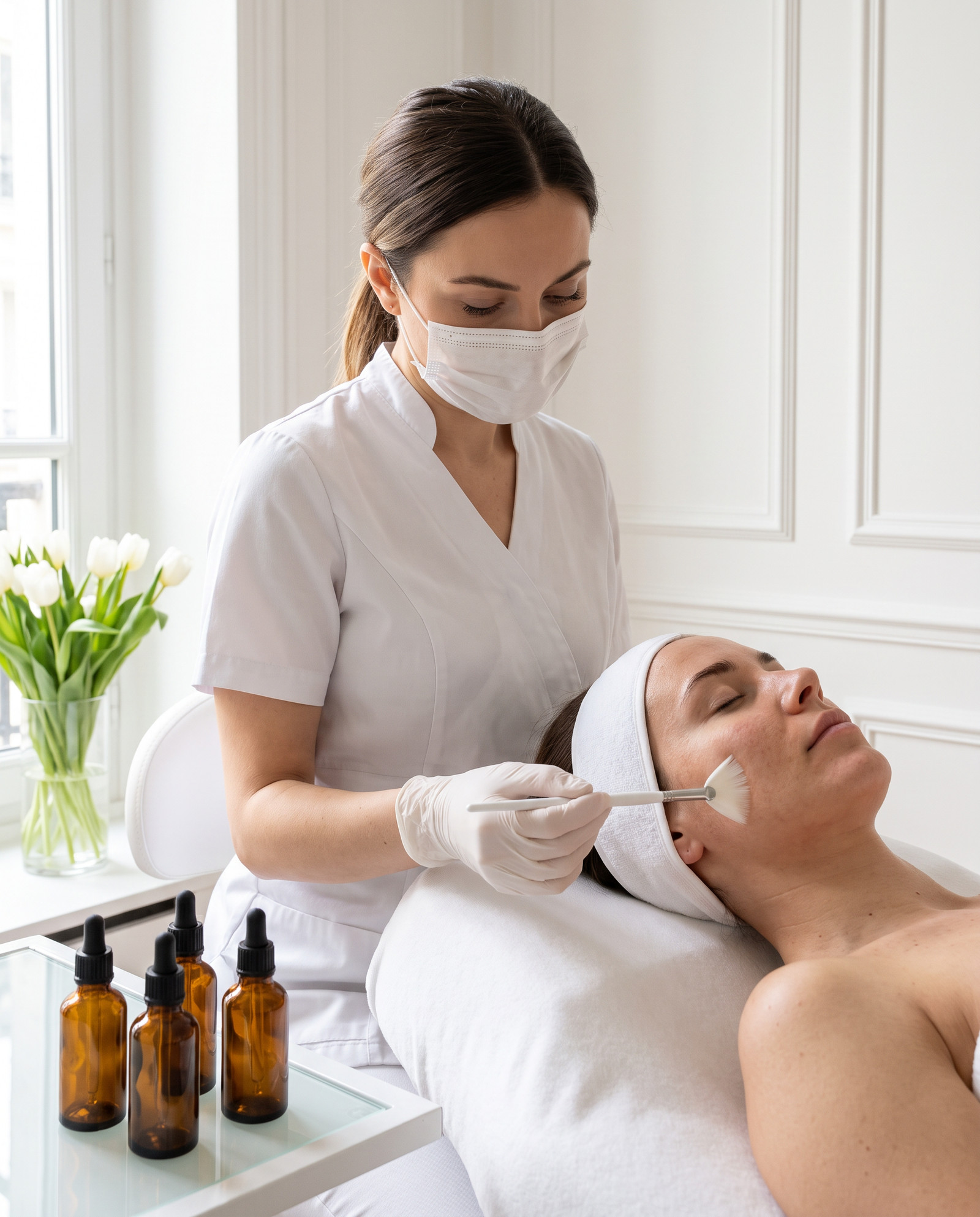
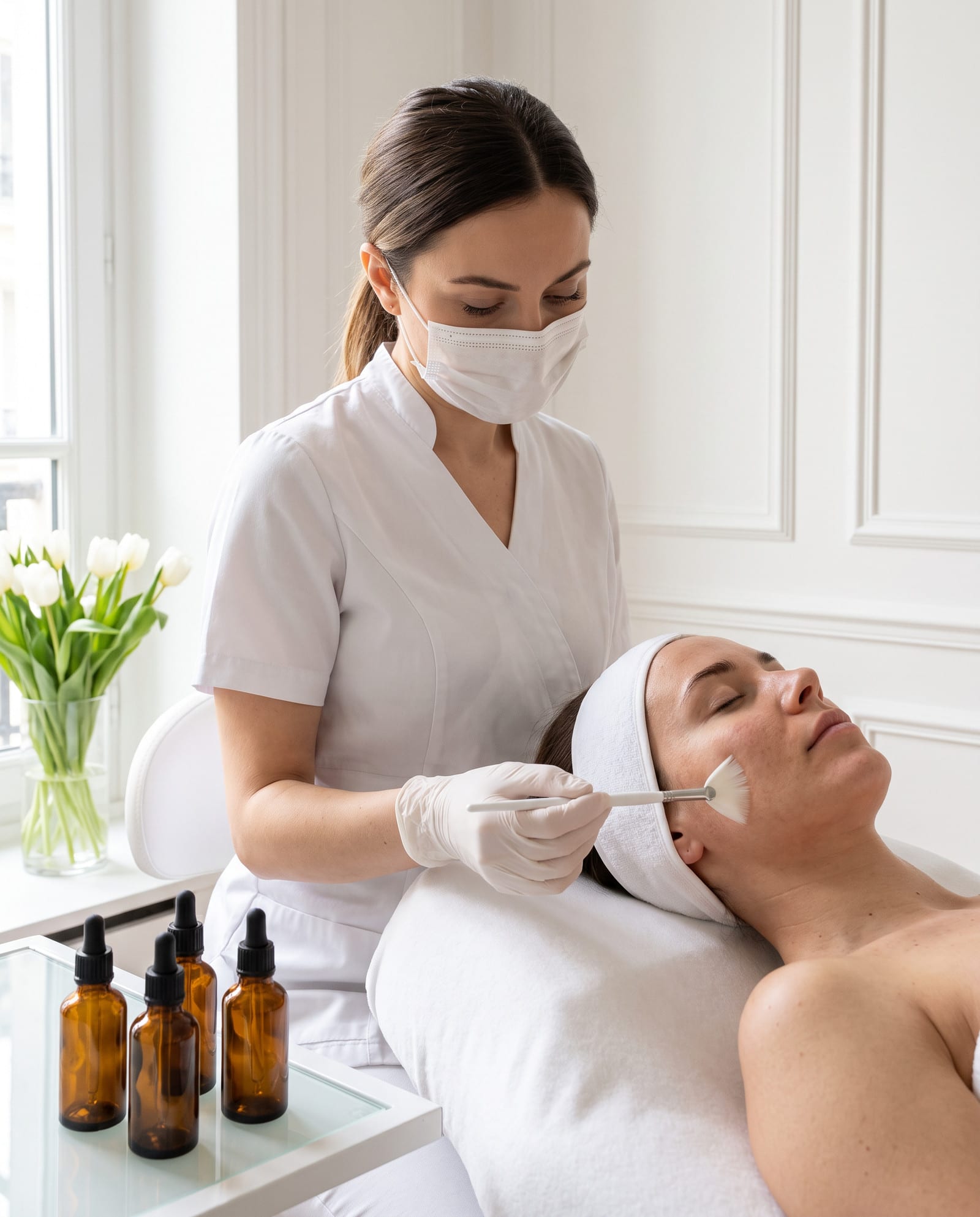
Chemical peels are among the longest-used and best-studied tools for treating melasma. They work in several ways. They accelerate epidermal renewal, pushing melanin-rich cells towards the surface, where they shed with flaking skin. With regular use, they also inhibit melanocyte activity and help strengthen the skin barrier. Results do not come after one treatment. A series — usually several to a dozen sessions, depending on the depth of hyperpigmentation — delivers a more lasting result than a one-off approach.
- Mandelic acid — gentle, with a large molecule that penetrates slowly. It is well tolerated even by reactive skin. Particularly recommended for sensitive skin with melasma and in summer protocols.
- Lactobionic acid and gluconolactone (PHA) — gentle, moisturising and antioxidant. A good option when skin is also dehydrated or irritated.
- Azelaic acid — inhibits the tyrosinase enzyme, which is key to melanin production, and has anti-inflammatory properties. Used both in the salon and in home-care products.
- Ferulic and tranexamic acid — newer ingredients with a growing body of scientific literature in melasma treatment. They are often combined with other acids in complex protocols.
- TCA at low concentrations — works more deeply and is reserved for more advanced cases. It requires an experienced practitioner and strict adherence to the sun-protection protocol after the treatment.
Peels + biostimulators
Combining brightening peels with treatments that stimulate skin regeneration may deliver better results than either approach alone. This is particularly relevant when skin is also weakened or thin. Biostimulation strengthens the barrier and reduces reactivity. This may reduce the risk of melasma being triggered by inflammation itself.
Peel + brightening serum (home protocol)
Salon treatments and daily home care with azelaic acid, vitamin C or tranexamic acid work synergistically. The salon accelerates cell turnover, while home-care products inhibit melanogenesis between visits. This model prioritises continuous care over a reactive approach.
Diagnosis + hormonal adjustment
When melasma clearly worsens after a change in contraception or during pregnancy, it is worth discussing alternative methods with a gynaecologist. Hormonal adjustment alone does not treat hyperpigmentation. However, it may be a key element in preventing its return.
Why melasma returns — and how to think about it
The good news is that, for many women, a consistent long-term strategy does bring visible and lasting improvement. Melasma does not disappear completely. However, it becomes much less intense and returns less often and less severely. The key is understanding that results are built over months, not weeks. Stopping sun protection at any point is a step backwards. This may sound demanding, but for women who feel more comfortable with an even skin tone, the effort is worthwhile.