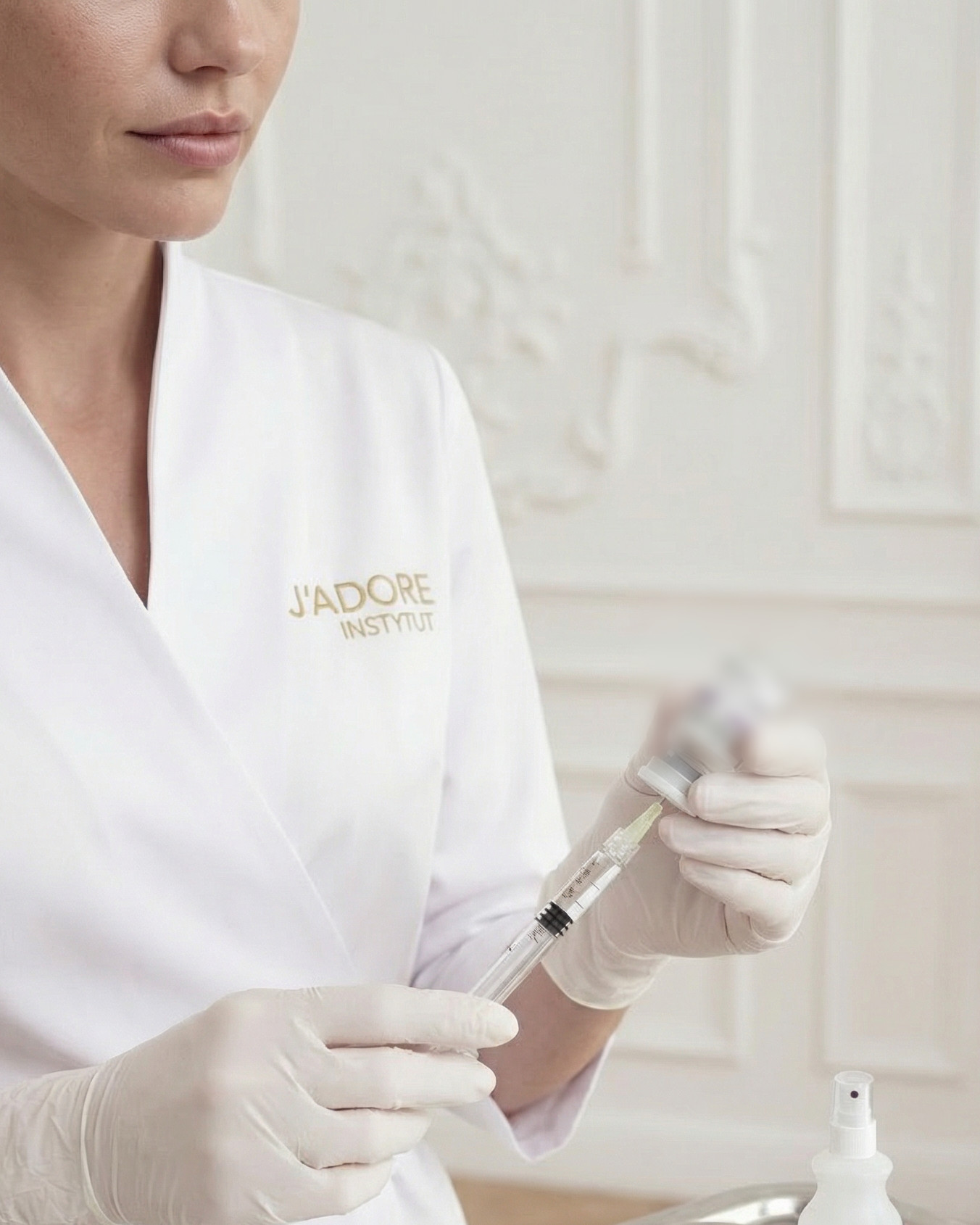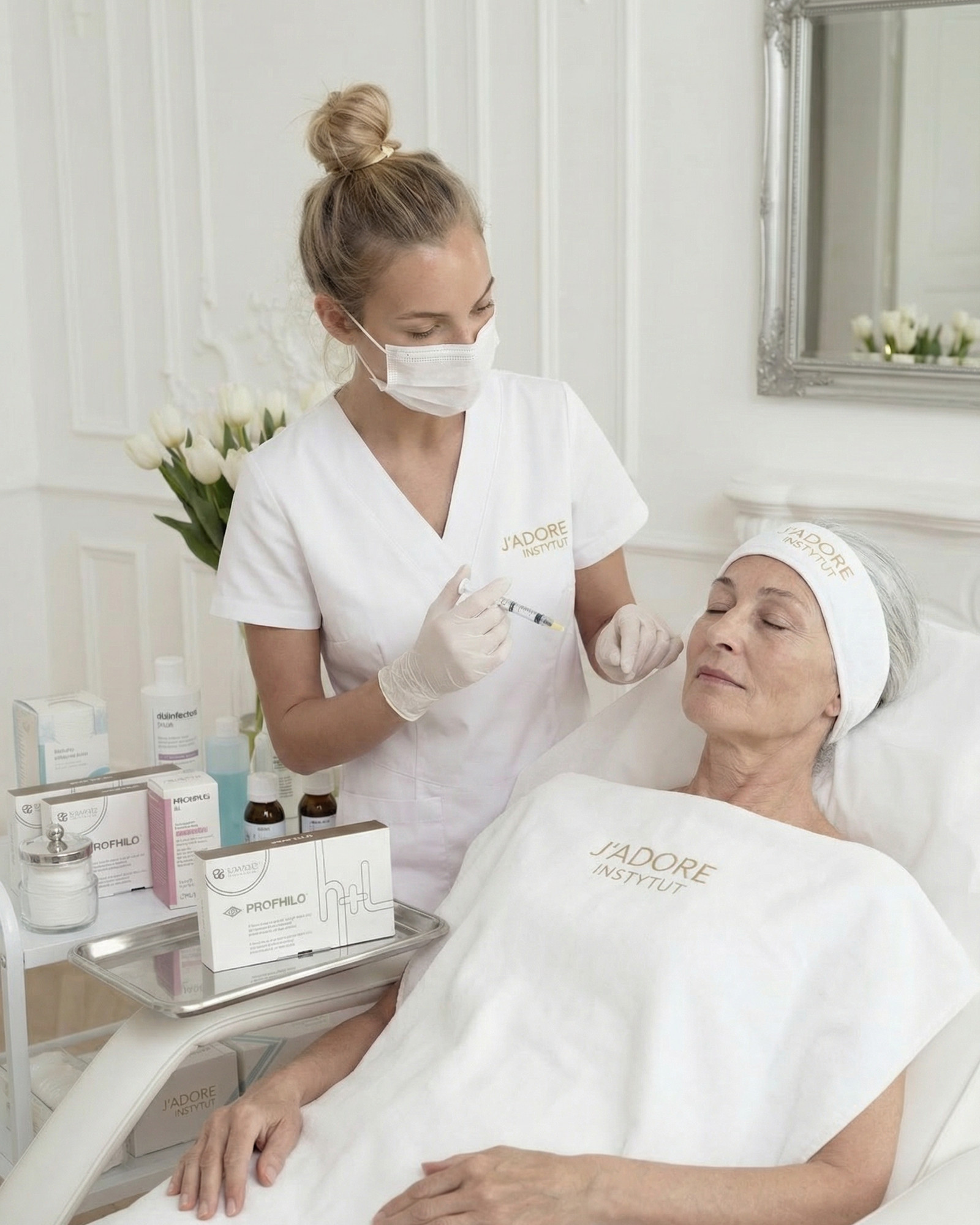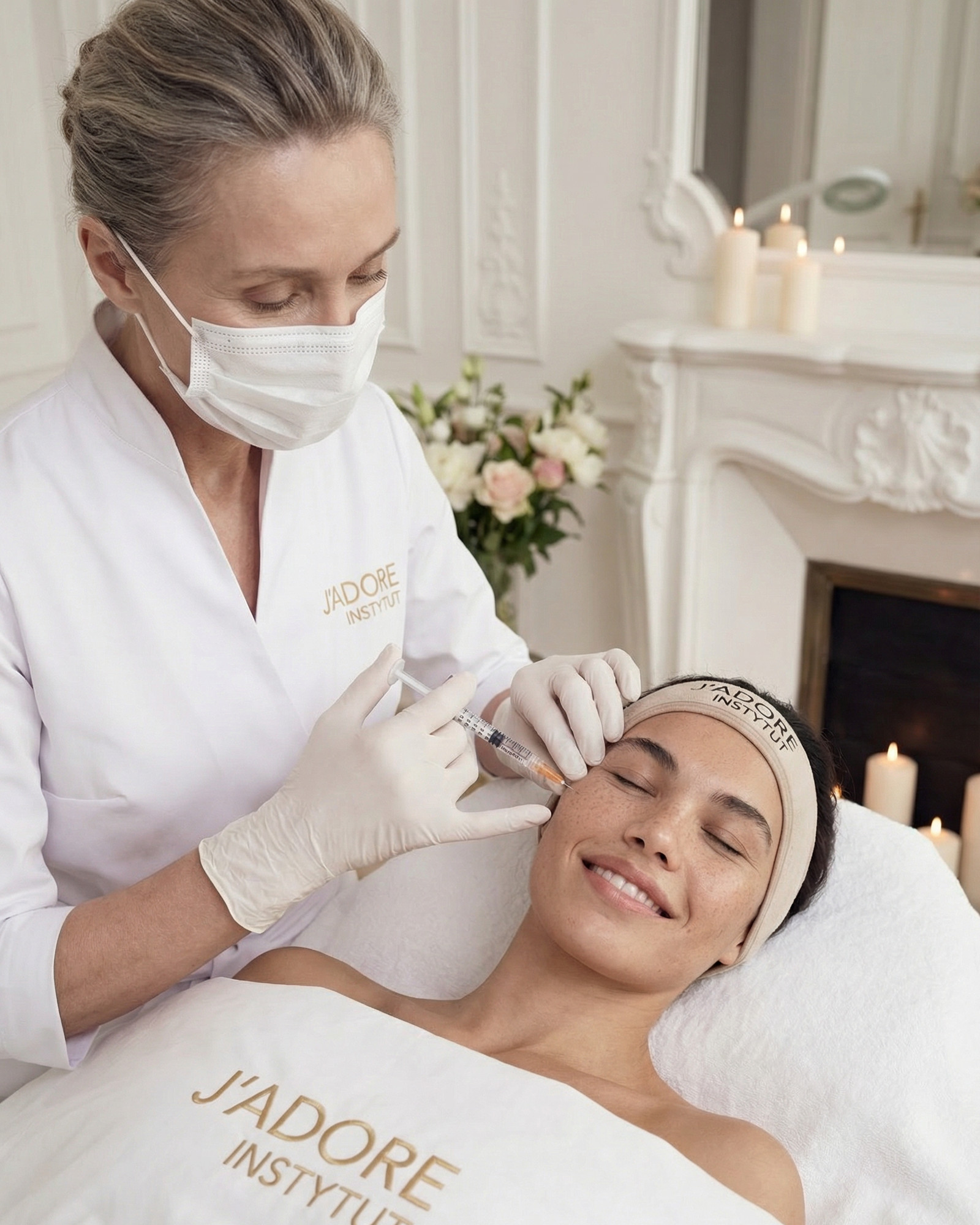
First, one thing: "skin quality" isn't a single problem
Before comparing treatments, it's worth unpacking the term itself. "Skin quality" is a catch-all for very different things: hydration, density, elasticity, tone, regeneration. Skin can be beautifully firm and still look grey and dehydrated. It can be hydrated, yet thin and "lifeless". That's why there's no single treatment "for skin quality" — there are tools that target a specific layer of the problem.
The common denominator of these three methods is the route of delivery: injecting hyaluronic acid or its derivatives directly into the skin, not underneath it. None of them contours features or adds volume like a classic filler — all three work "from the inside", on tissue condition. That's where the similarities end.
Three strategies, three different jobs
The simplest way to remember it: Profhilo remodels, mesotherapy nourishes, polynucleotides repair. Each triggers a different mechanism — which is exactly why they so often complement rather than replace one another.
Profhilo (bioremodelling)
stimulates the skin to produce its own collagen
- hybrid, stabilised hyaluronic acid
- lax, dull skin losing its elasticity
- spreads through the tissue and acts as a regenerative signal
- the effect builds over the series and lasts longer
Needle mesotherapy (cocktail)
delivers a "meal" of ingredients to the skin
- a blend of vitamins, amino acids, peptides, non-crosslinked HA
- grey, fatigued, dehydrated skin lacking radiance
- hydrates and brightens — quickly visible freshness
- a natural entry point into "skin quality"
Polynucleotides / skin booster (PDRN)
repairs and regenerates at cellular level
- polynucleotides (PDRN), including Nucleofill
- thin skin, "lifeless", slow to regenerate
- stimulates cell renewal, hydrates intensively, works as an antioxidant
- the effect builds up after a series of sessions
You can see a kind of "tiered" logic here: mesotherapy works most nutritionally (delivering ready-made ingredients), Profhilo works most through remodelling (making the skin do the work itself), and polynucleotides work most through repair (strengthening the tissue's capacity to regenerate). This isn't a "better–worse" ranking. It's three different answers to one question: what is your skin actually missing?
How to recognise what you need — a home test
Before anyone suggests a specific product, you can run a simple test in front of the mirror. It won't replace a consultation, but it takes a minute to set the conversation on the right track — because instead of "I want something for my skin", you'll be able to say exactly what's bothering you:
- Does your skin look dehydrated, grey, "tired", but is still reasonably firm? What it mainly lacks is hydration and radiance → direction: needle mesotherapy.
- Gently pinch the skin of your cheek and release it. If it "bounces back" noticeably slower than it used to, and the contour is starting to lose its elasticity → that's loss of structural firmness → direction: Profhilo / bioremodelling.
- Is your skin thin, "papery", slow to heal, quick to become irritated (especially around the eyes)? That's a sign of weakened regeneration → direction: polynucleotides / skin booster.
- Do you have a bit of everything — dehydration, laxity and thinness all at once? This is a very common scenario for mature skin, and it's exactly when methods are usually combined (more on that below).
A second point from the salon: don't judge by speed of effect as a measure of "better". Mesotherapy brings freshness faster, but more often needs series and maintenance. Profhilo and polynucleotides build results more slowly, but at a deeper level. "Slower" doesn't mean "weaker" — it means "deeper". These are two different ways of calculating value.
The most common myths that lead to the wrong choice
Plenty of poor decisions come from three simplifications repeated online. Worth debunking before you go into a consultation:
- "Profhilo is just a gentle filler". No. Profhilo doesn't fill anything and doesn't change your features — it's bioremodelling, meaning it prompts the skin to work. If you're hoping for cheek volume or "lifting" a specific fold, this isn't the treatment for that at all.
- "Mesotherapy is the same as Profhilo, just cheaper". Also no. Mesotherapy delivers ingredients, Profhilo prompts the skin to produce its own. Different mechanism, different rhythm of results, different indication.
- "A skin booster hydrates, so why bother with the rest". Hydration is one thing, but if the problem is laxity or weakened regeneration, hydration alone won't shift the structure. "Booster" is an umbrella category — very different products hide under that name.
When it's best to combine them
This brings us to a point rarely said outright: the best results rarely come from a single treatment. Mature skin usually has "a bit of everything" — it's dehydrated, less elastic, and slower to regenerate all at once. That's when a plan is put together, in which methods complement each other. The specialist decides on order and intervals, but the logic behind combining them is fairly consistent:
Mesotherapy + Profhilo
mesotherapy quickly hydrates and brightens "to start", while Profhilo rebuilds firmness at a structural level in the background. A classic combination of "quick glow + lasting structure".
Profhilo + polynucleotides
structural remodelling plus repair of regenerative capacity. Often spread out over time, not done together.
Mesotherapy + polynucleotides
nourishment here and now plus support for regenerating thin, irritated skin (for example around the eyes).
A year-round sequence
for mature skin, the plan is sometimes spread across seasons: one treatment "builds", another "maintains". This isn't excess — it's strategy.
- 01
Consultation
The specialist assesses your skin and names the problem: hydration, firmness or regeneration — and which one dominates.
- 02
Choosing the method
The treatment (or sequence of treatments) is chosen to match the specific concern, not the other way round.
- 03
Sessions
Most of these treatments work "as a series" — a single session is more of a down payment than the full result.
- 04
Maintenance
The result for skin quality isn't given once and for good — reminders are planned to help maintain it.
That's why a good salon doesn't sell "a treatment" — it puts together a plan tailored to your skin. If you leave the consultation understanding why that particular choice was made, that's a sign you've found the right place. And if you're still unsure: a free consultation exists precisely to turn three confusing names into one clear decision.